Keep part context reusable
Avoid rebuilding drawings, route decisions, supplier context, and quality rules for every request.

Use Case / Low-Volume Parts
Low-volume parts are often expensive to source, hard to prioritize, and too operationally important to manage through scattered files. They need a controlled path from record to production.
GhostMatter helps industrial teams prepare selected low-volume parts as production-ready digital inventory connected to files, specifications, routing, and traceability.
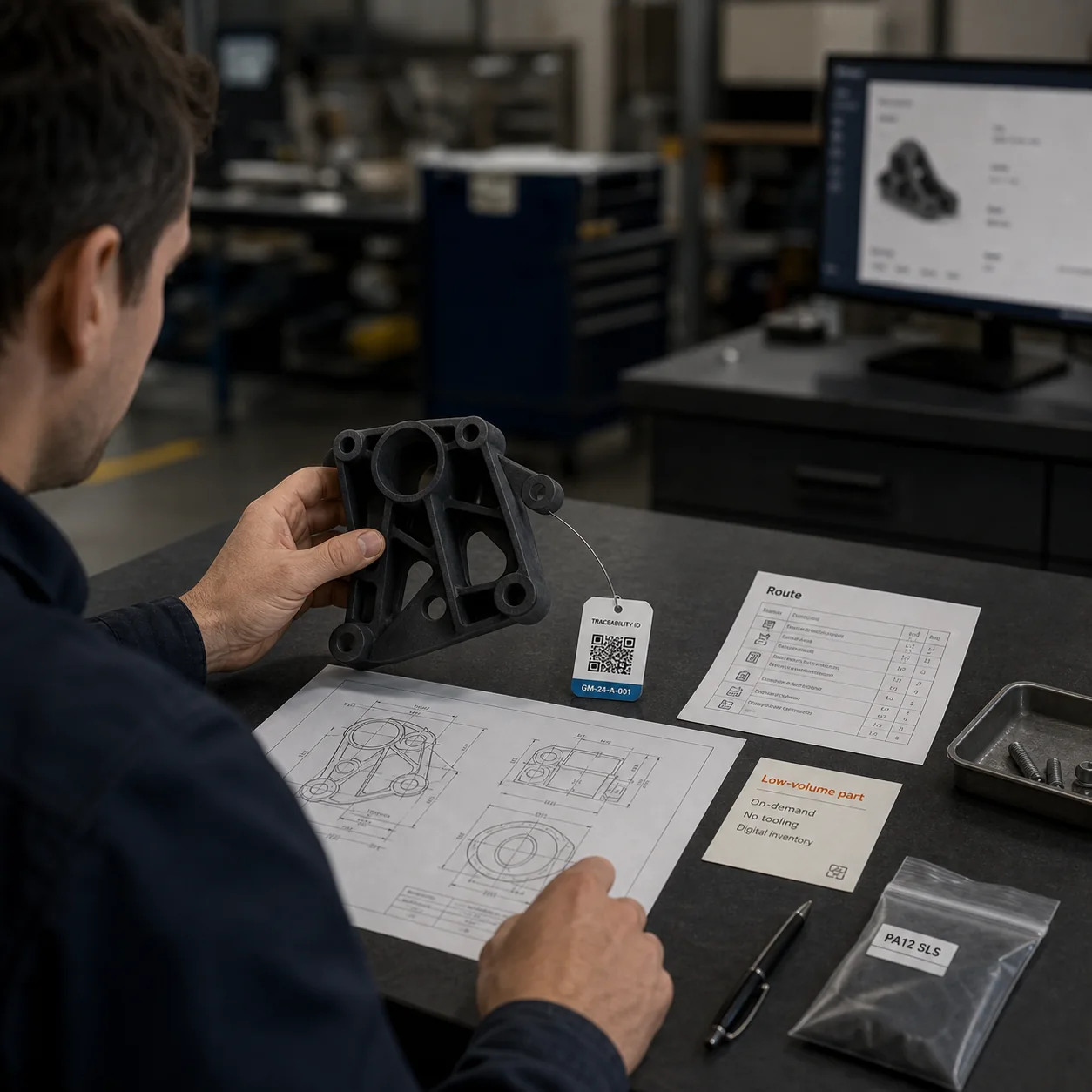
Low-volume references often sit between engineering, maintenance, procurement, and production. GhostMatter gives selected parts a governed record so they can be activated without rebuilding context each time.
Avoid rebuilding drawings, route decisions, supplier context, and quality rules for every request.
Treat low-volume production as governed activation, not informal file sharing.
Use internal or partner capacity only when the part record is prepared.
Traditional supply chains are not always optimized for small batches, irregular demand, or legacy references. Without readiness, every request becomes a one-off project.
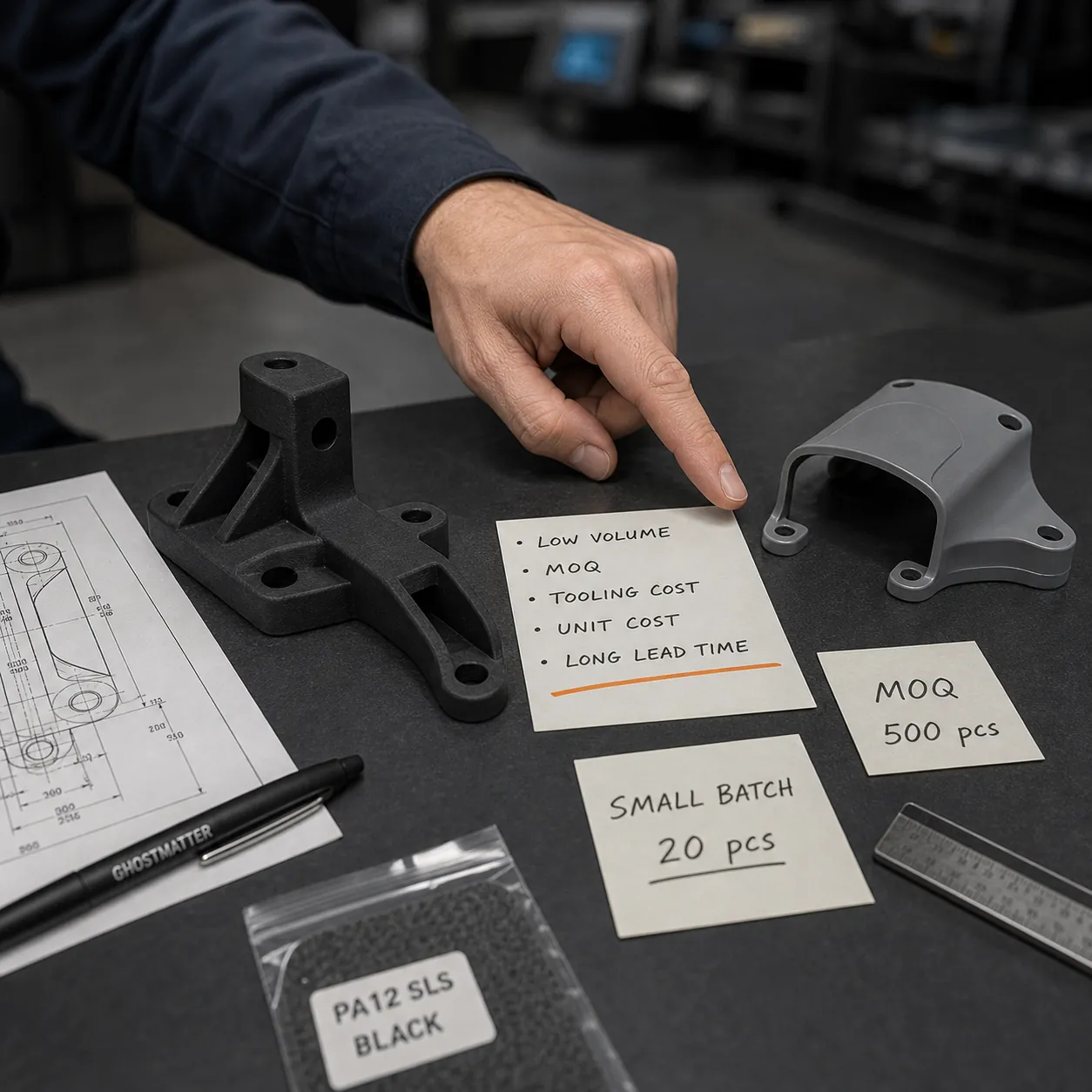
GhostMatter connects low-volume candidates to the technical, operational, and quality data needed to move from request to controlled production.
Prioritize low-volume parts with operational value and feasible production routes.
Capture files, specs, quality expectations, route context, and approval status.
Reuse the same governed record when demand returns.
The value comes from turning repeat exceptions into reusable digital records that preserve decisions, routes, and production evidence.
The workflow prepares low-volume references as governed records before a request forces manual sourcing or engineering work.
Review spare, obsolete, site-specific, or small-batch references.
Connect drawings, files, specifications, quality rules, and prior decisions.
Confirm whether the part is ready for internal or partner production.
Use approved capacity when demand returns.
Keep order history, route decisions, and quality evidence attached.
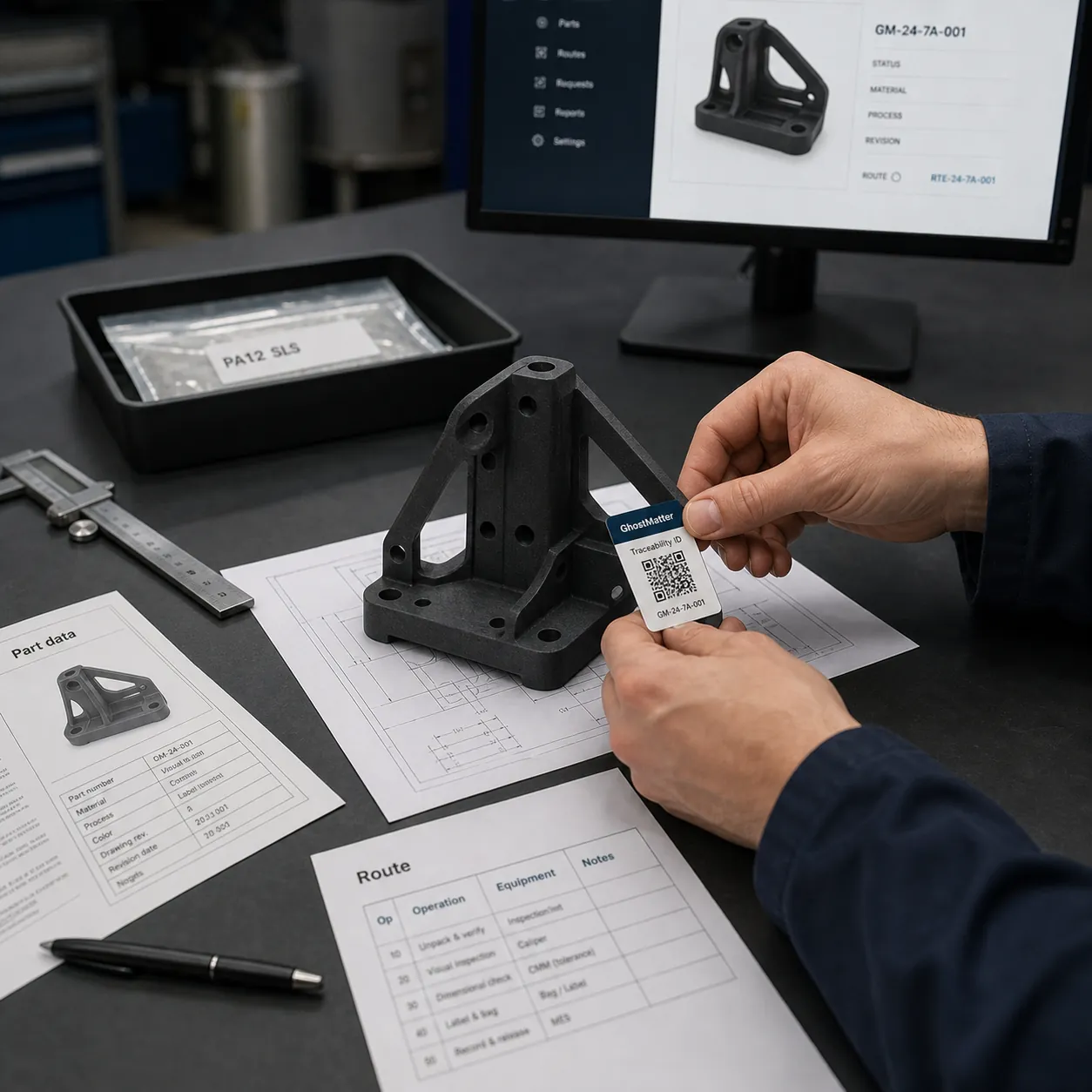
Start with parts where demand is irregular but the operational need, documentation, or production feasibility makes preparation worthwhile.
Start with small-batch references, spare parts, obsolete parts, or site-specific components. GhostMatter helps decide which should become controlled digital inventory.
No. GhostMatter governs digital inventory, readiness, routing, and traceability for selected parts; production can use approved internal or partner capacity.
Parts with irregular demand, useful documentation, high coordination effort, or feasible production routes are strong candidates.
Yes. The aim is to preserve decisions, files, quality context, and routes so future requests do not start from zero.
No. Additive manufacturing can be one route, but the core asset is the governed part record.