Platform / Digital Twin

Industrial Digital Twins for Manufacturing Readiness

An industrial digital twin is more than a 3D file. It is a controlled part record that carries the context needed to manufacture, validate, route, and trace production.

GhostMatter helps teams enrich part data with files, revisions, materials, requirements, approved production rules, quality context, and governance so every industrial digital twin can support controlled manufacturing activation.

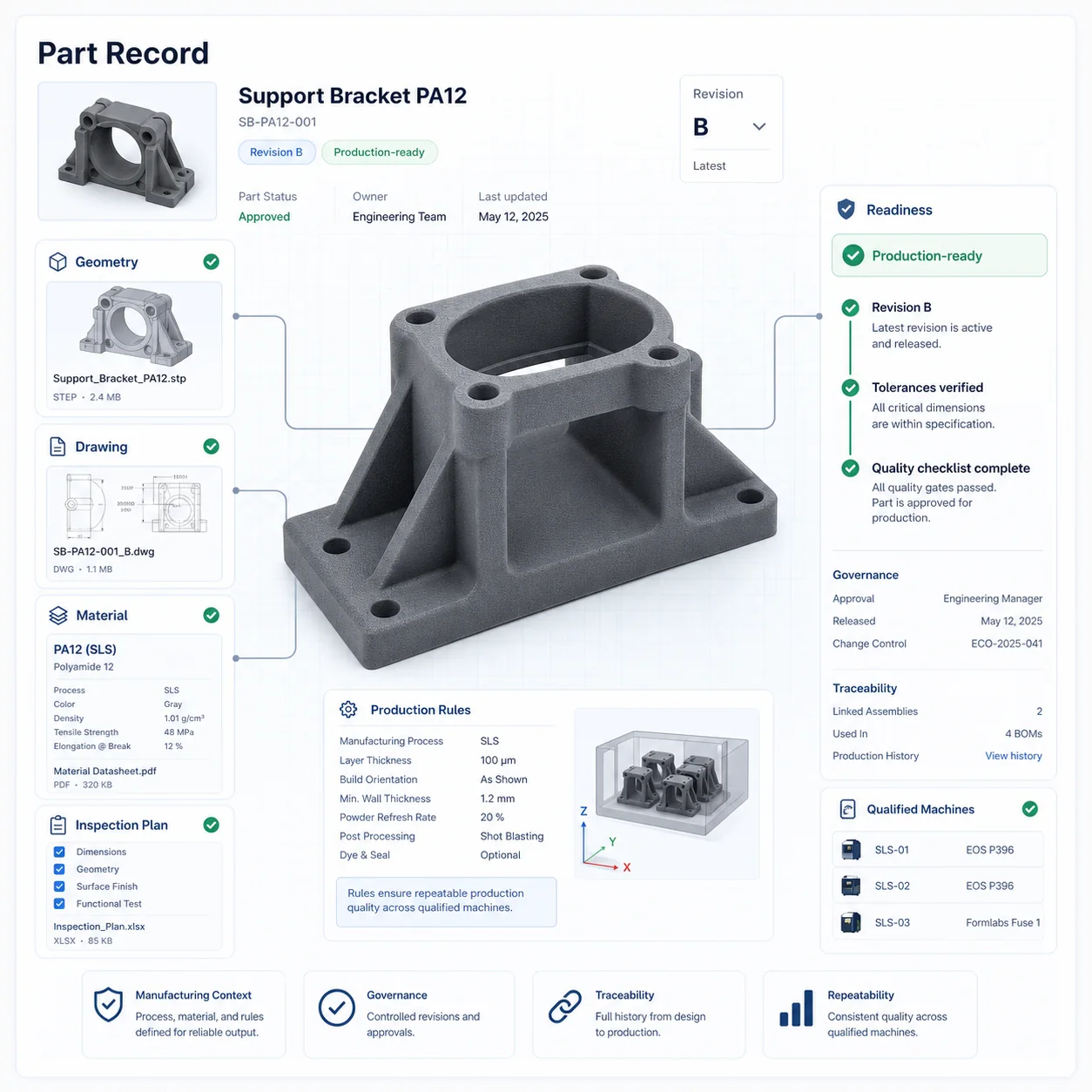
GhostMatter industrial digital twin interface showing part files, revision status, materials, quality requirements, production readiness, and traceability.

A production-ready digital twin is more than a CAD model

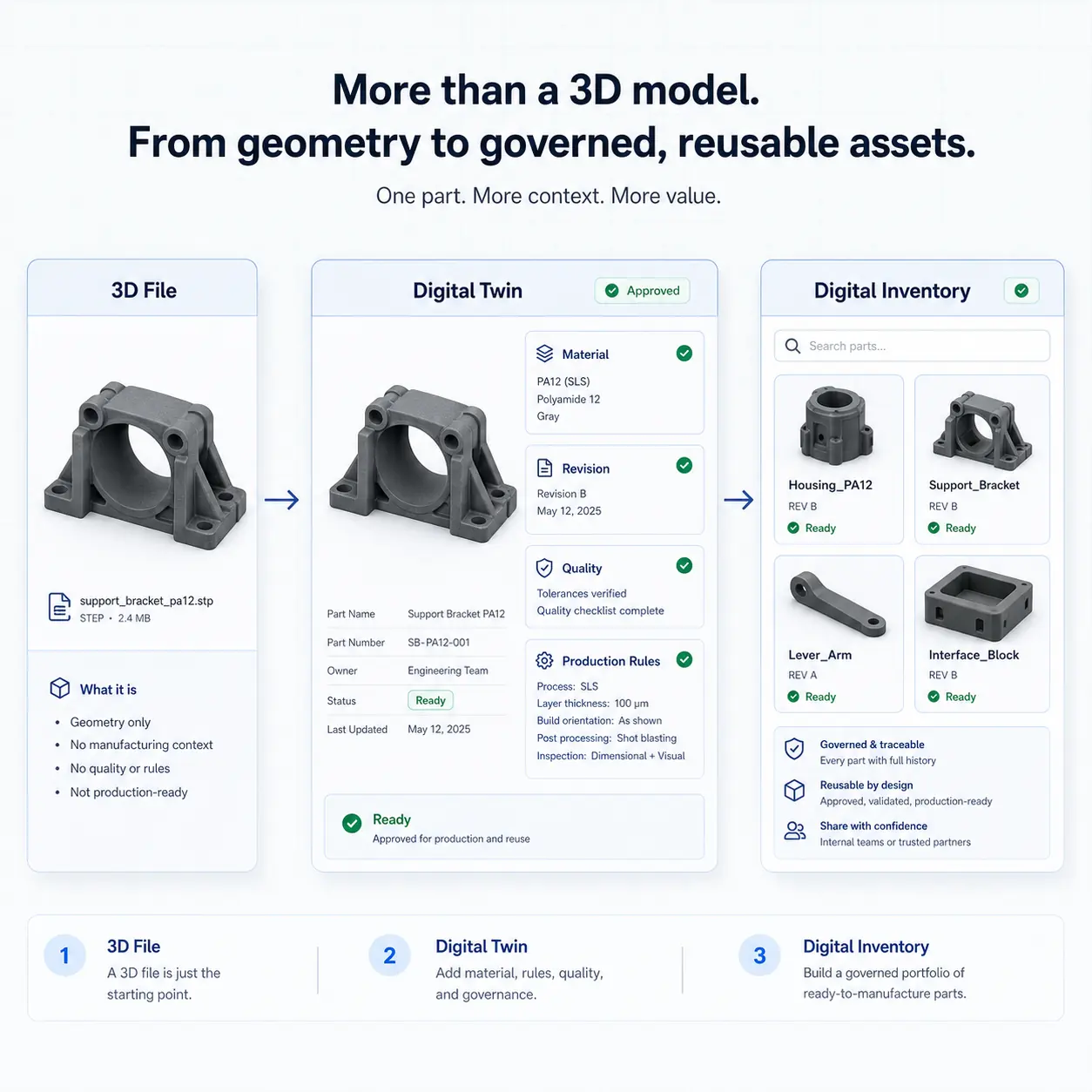
3D fileGeometry used to represent or manufacture a part.It does not carry the full production and governance context.
Digital twinEnriched part record with technical, production, quality, and lifecycle data.It is not just visualization.
Digital inventoryPortfolio of governed digital twins and part records ready for activation.It is not a passive archive.
GhostMatter interface comparing a 3D file, an enriched digital twin, and a governed digital inventory portfolio.

The data layer behind controlled industrial production

A part-centric digital twin brings together the data needed to move from technical definition to controlled execution. The goal is to reduce ambiguity before production, sourcing, routing, or qualification starts.

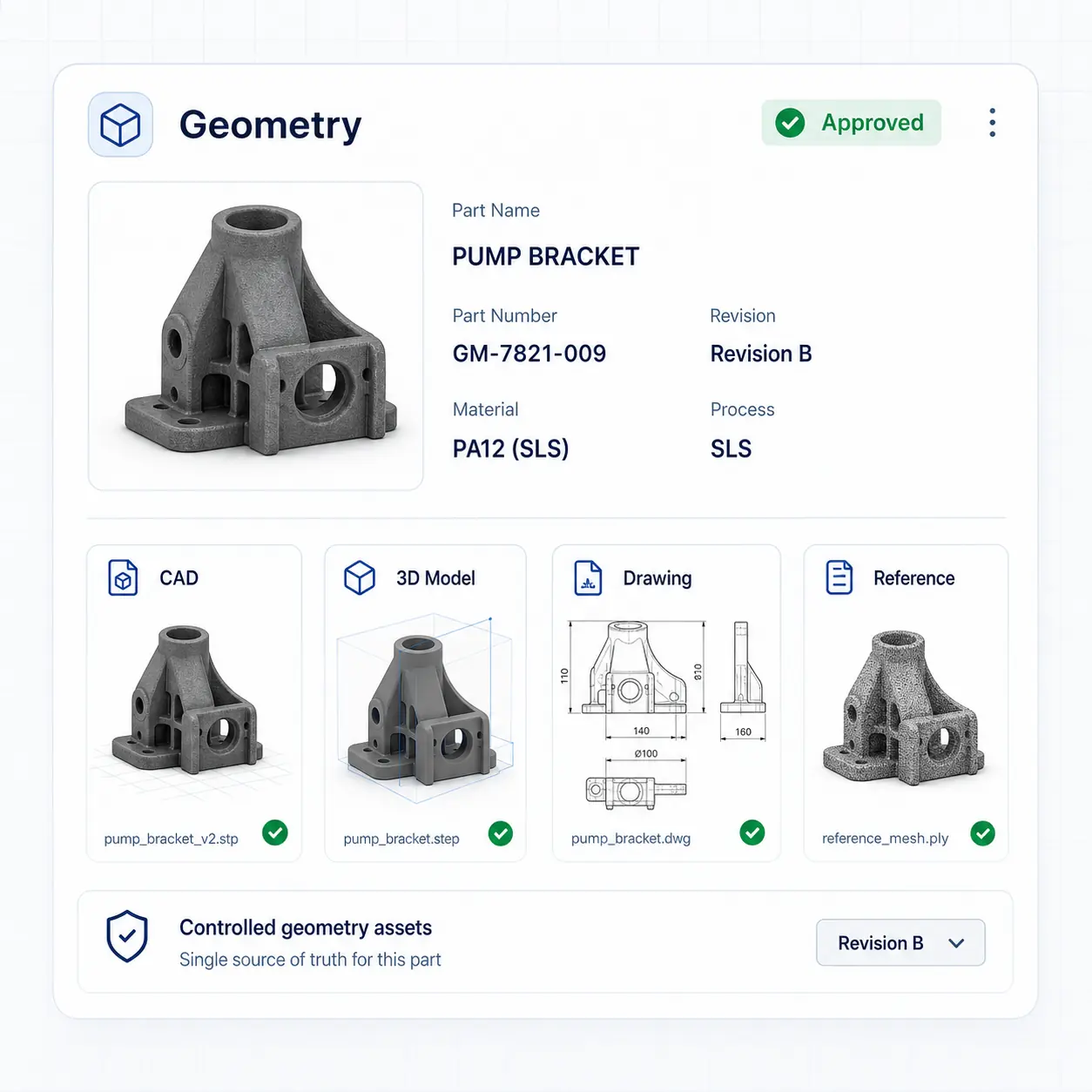
GhostMatter interface showing CAD files, 3D geometry, drawings, and reference documentation attached to an industrial part record.

Geometry and files

CAD files, 3D files, drawings, and reference documentation.

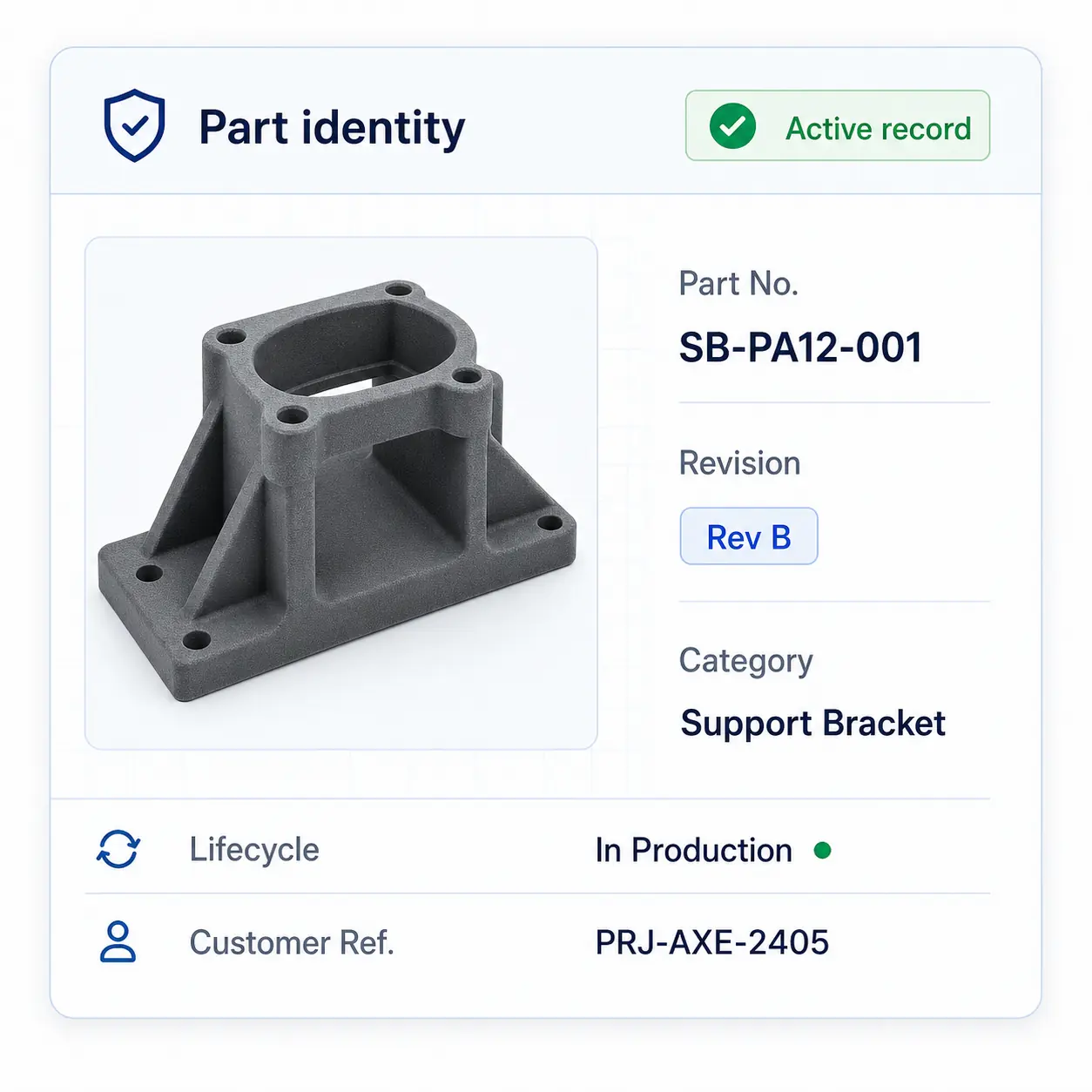
GhostMatter interface showing part number, revision, category, customer reference, and lifecycle status for a controlled industrial part record.

Part identity

Part number, revision, description, category, customer reference, and lifecycle status.
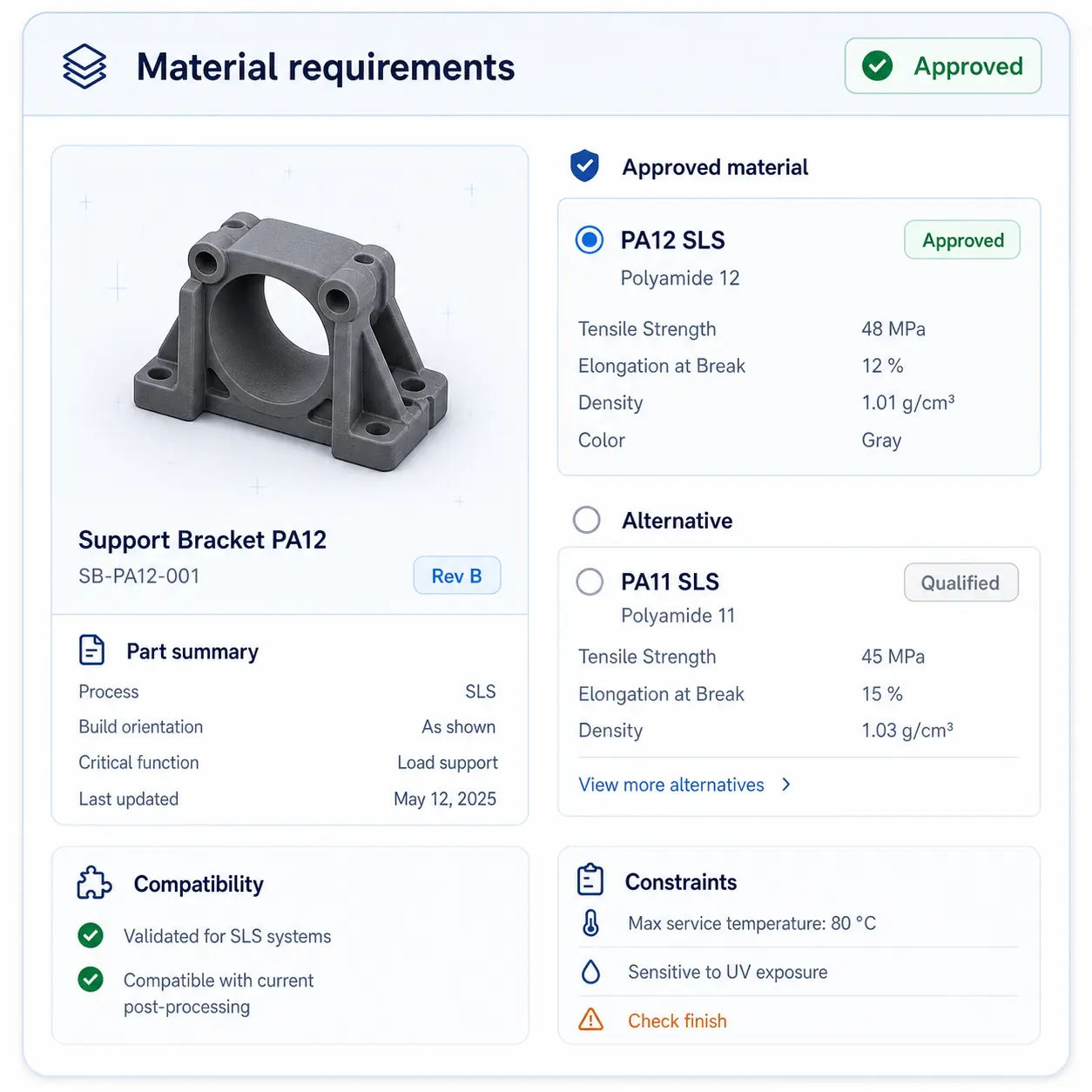
GhostMatter interface showing approved material, alternatives, compatibility notes, and material constraints for an industrial digital twin.

Material requirements

Approved material, alternatives, constraints, and compatibility notes.
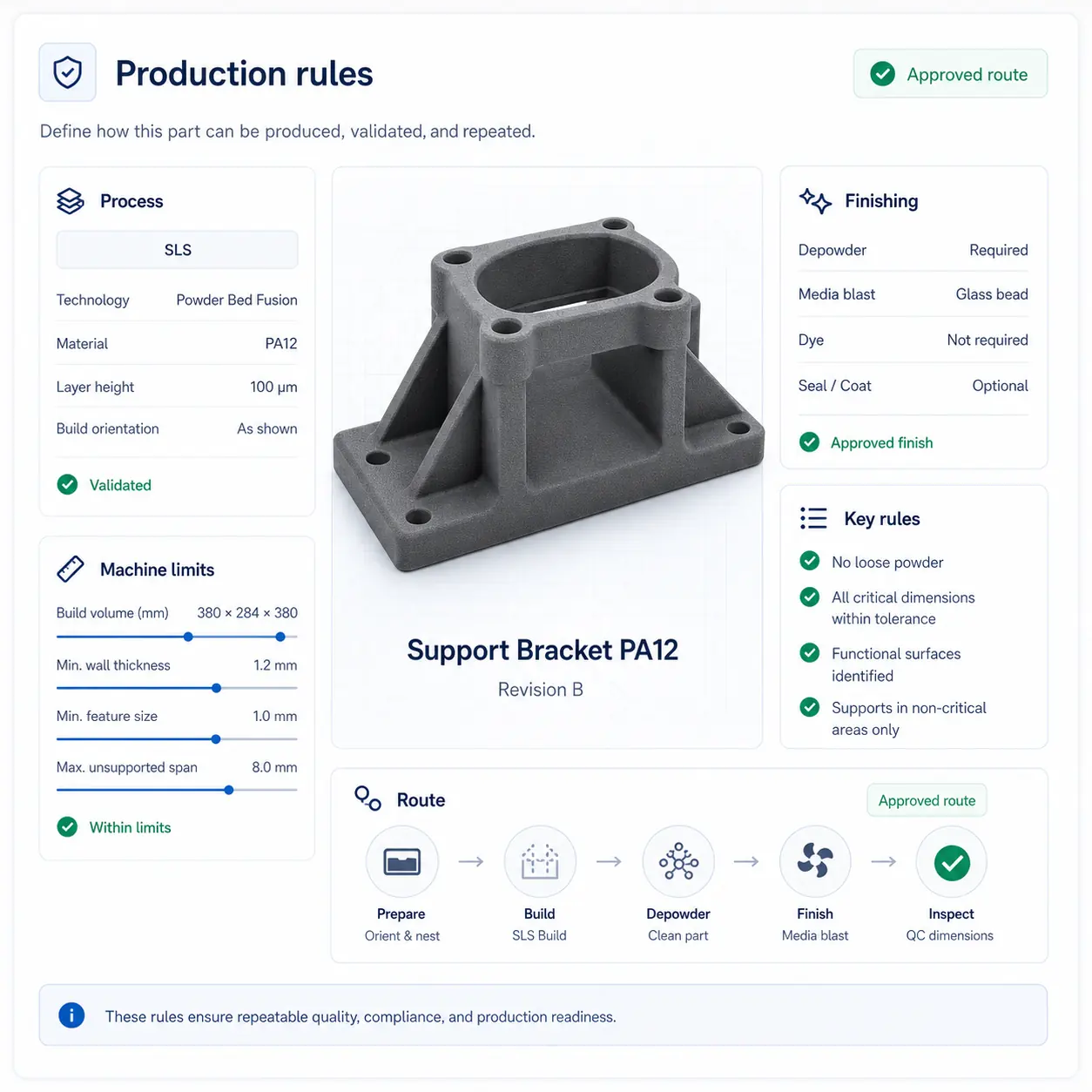
GhostMatter interface showing process envelope, machine constraints, finishing requirements, and approved production route for a part.

Production rules

Process envelope, machine constraints, finishing requirements, and approved production route.
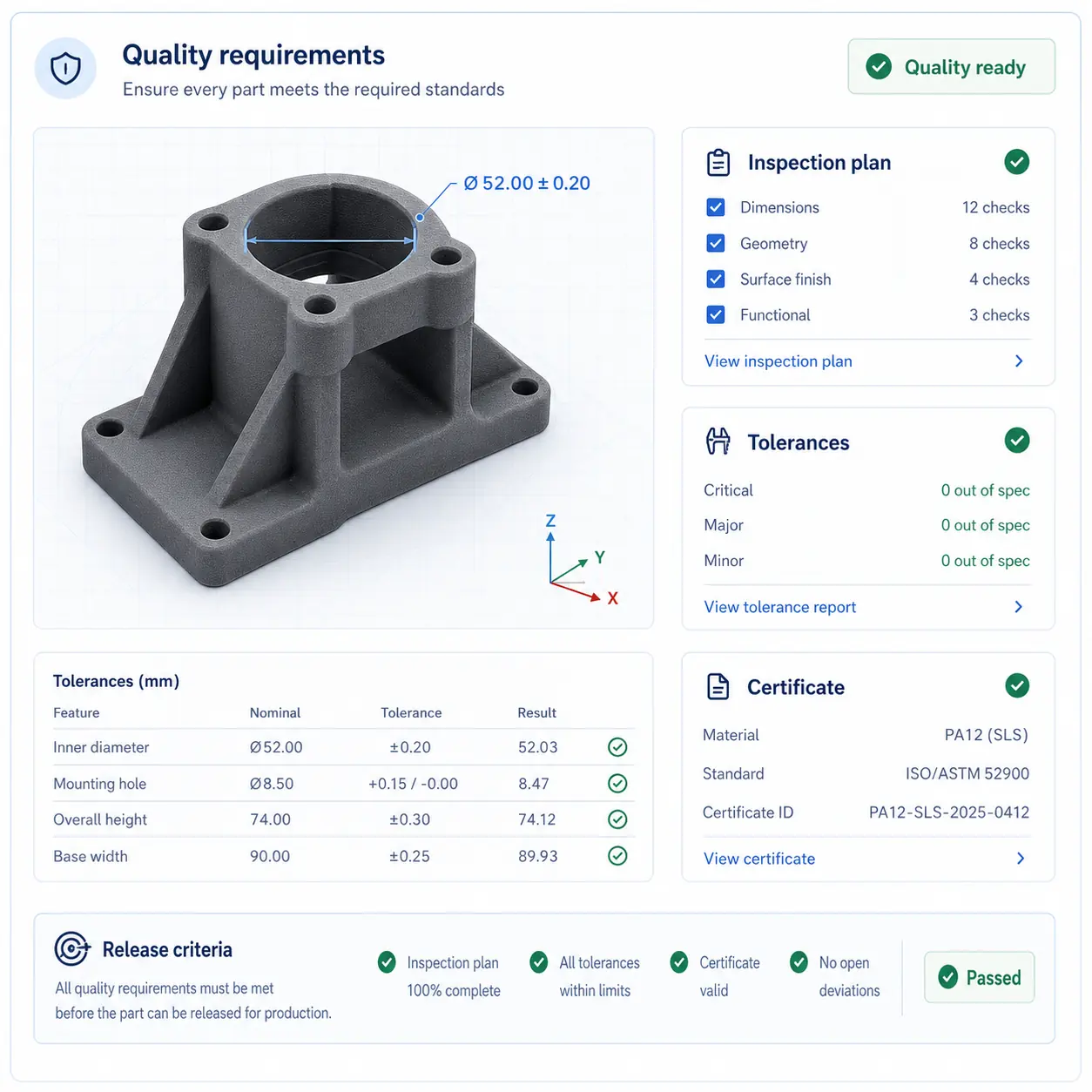
GhostMatter interface showing inspection plan, tolerances, certificates, and release criteria for controlled production quality.

Quality requirements

Inspection plan, tolerances, documentation, certificates, and release criteria.
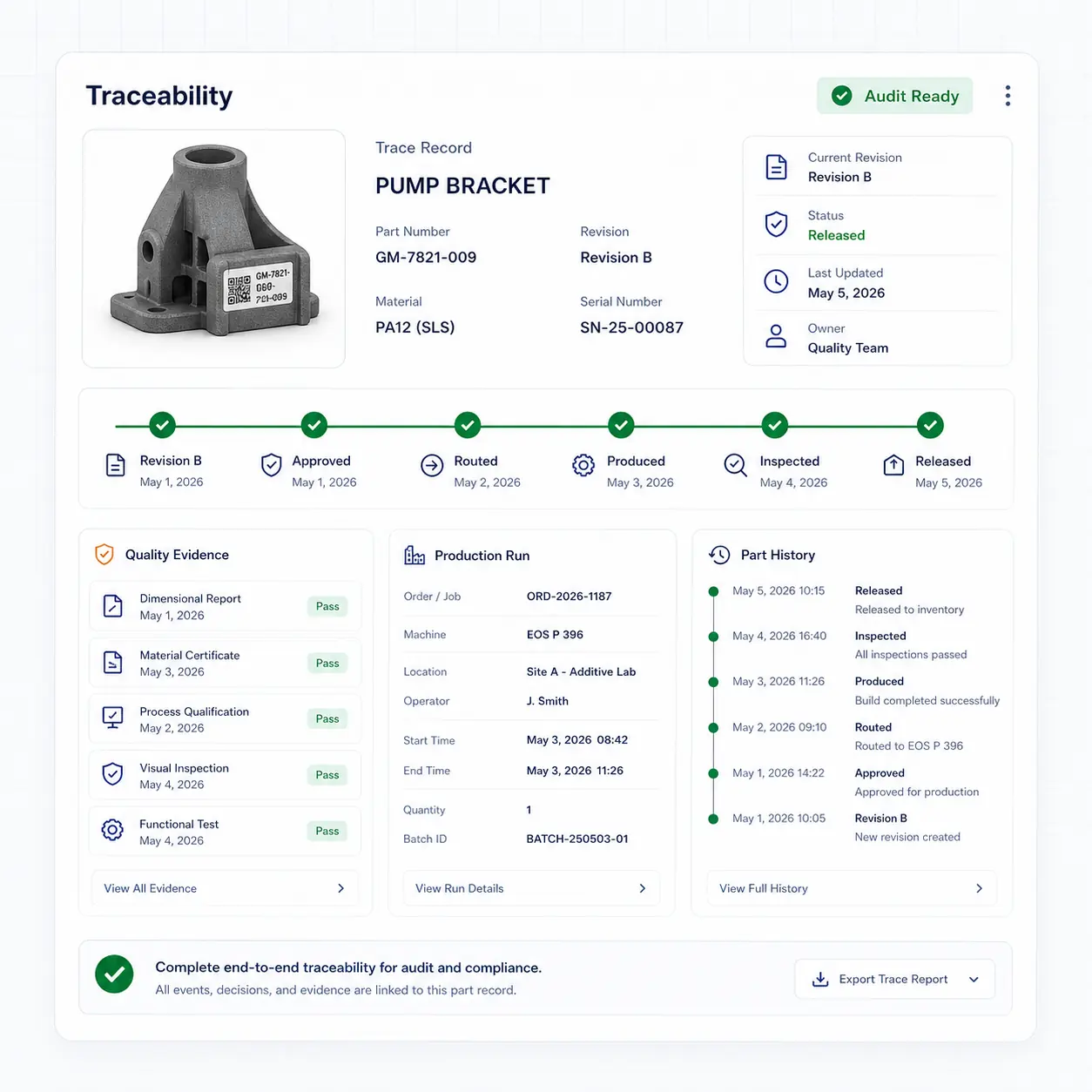
GhostMatter interface showing revision history, approval status, previous production runs, and update history attached to an industrial part.

Version history

Revision changes, approval status, previous runs, and update history.
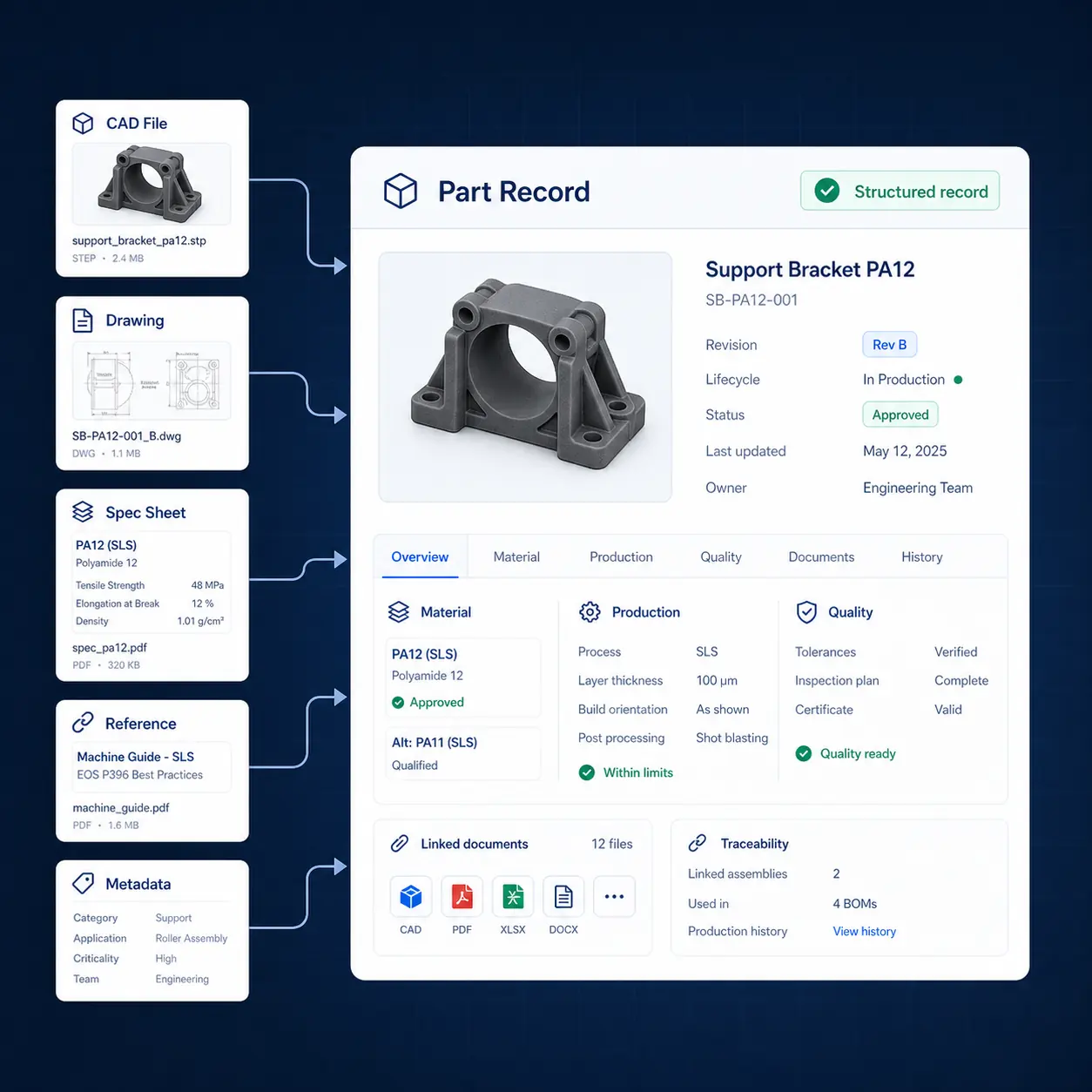
From engineering data to production-ready asset

GhostMatter interface consolidating CAD files, drawings, spec sheets, references, and metadata into one controlled part record.

Structure the part record

Bring files, references, documentation, and metadata into one controlled record.
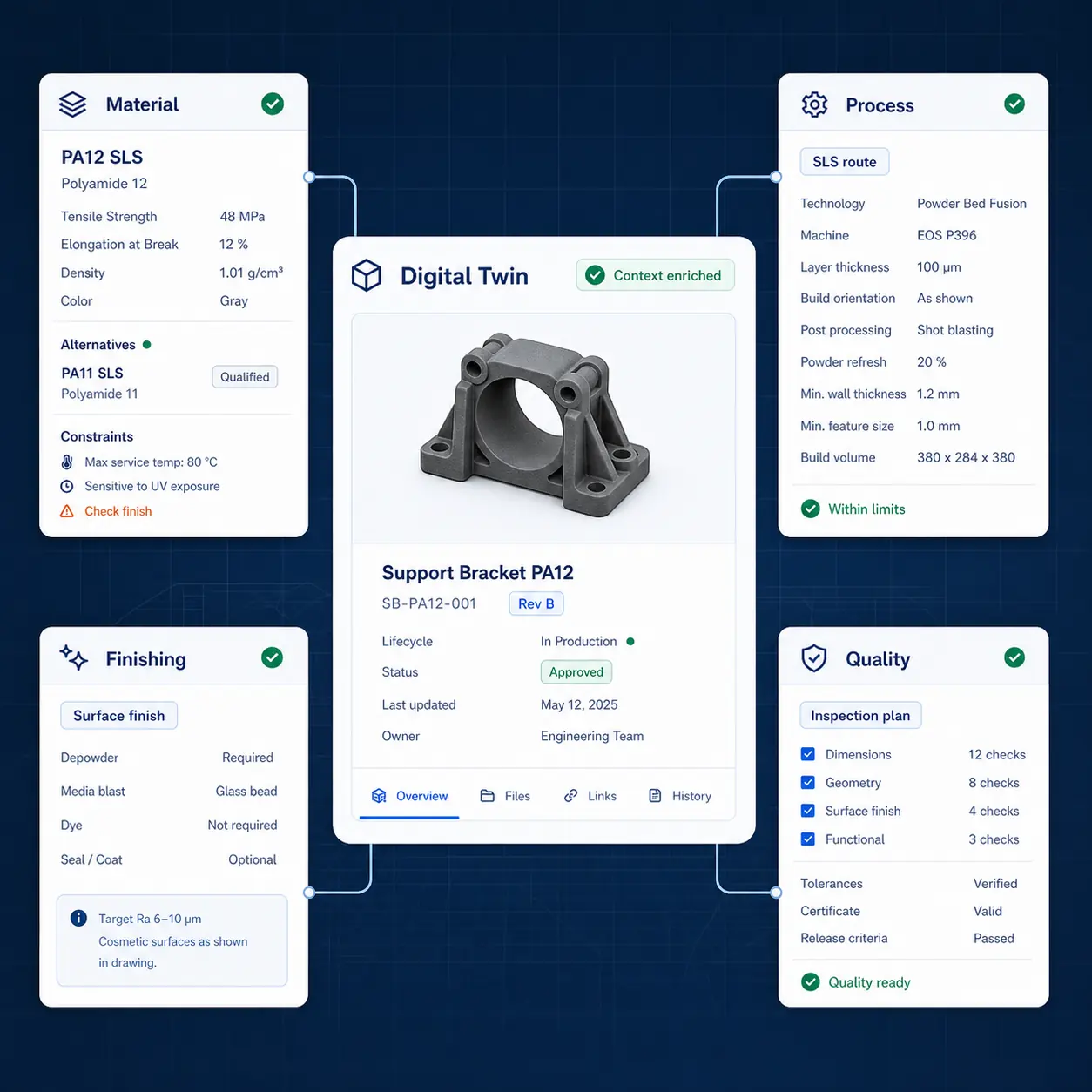
GhostMatter interface enriching an industrial digital twin with material, process, finishing, and quality context.

Enrich production context

Add process constraints, material requirements, finishing expectations, and quality data.
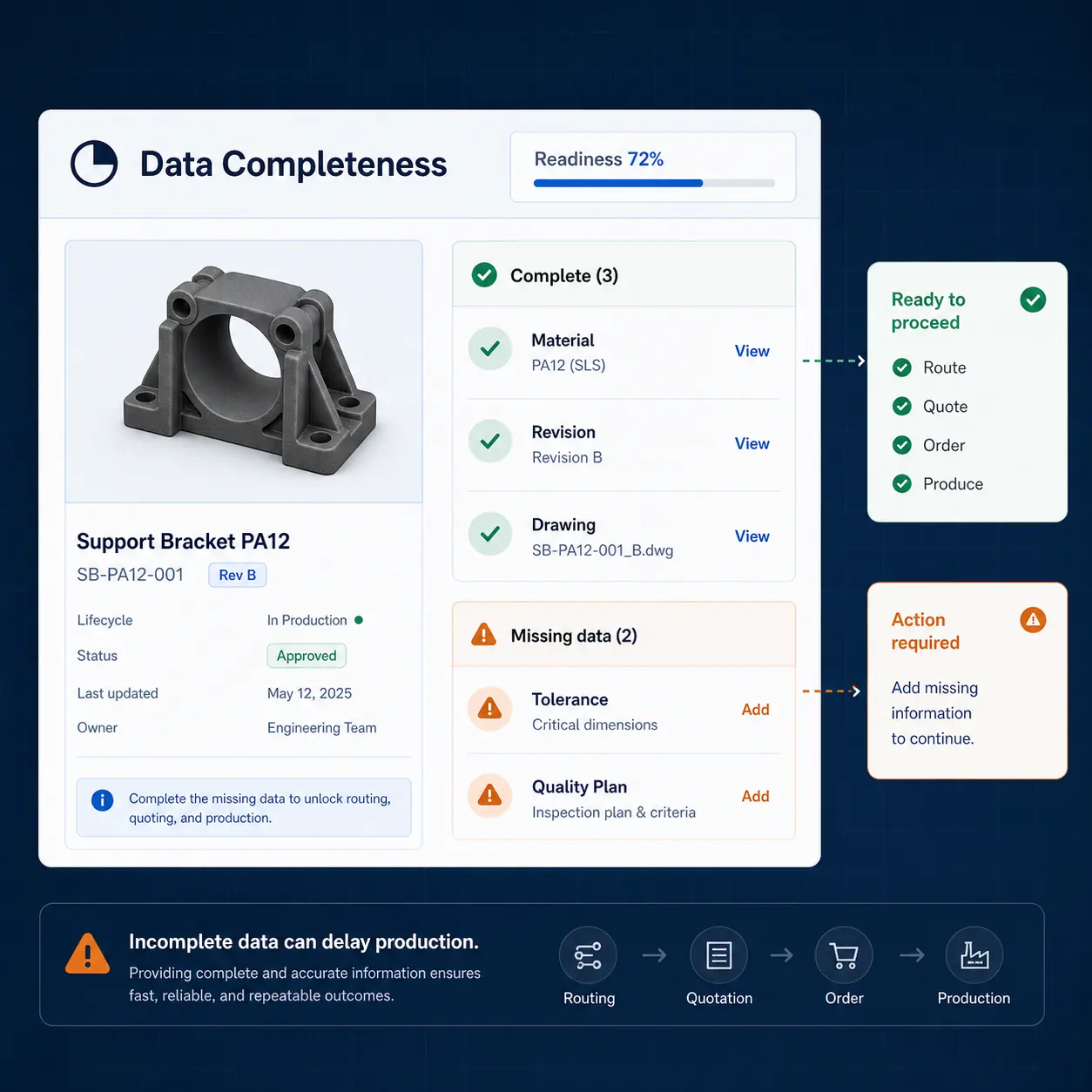
GhostMatter interface showing missing production-critical data and readiness gaps before routing, quotation, ordering, or manufacturing.

Identify missing data

Make gaps visible before a part is routed, quoted, ordered, or produced.
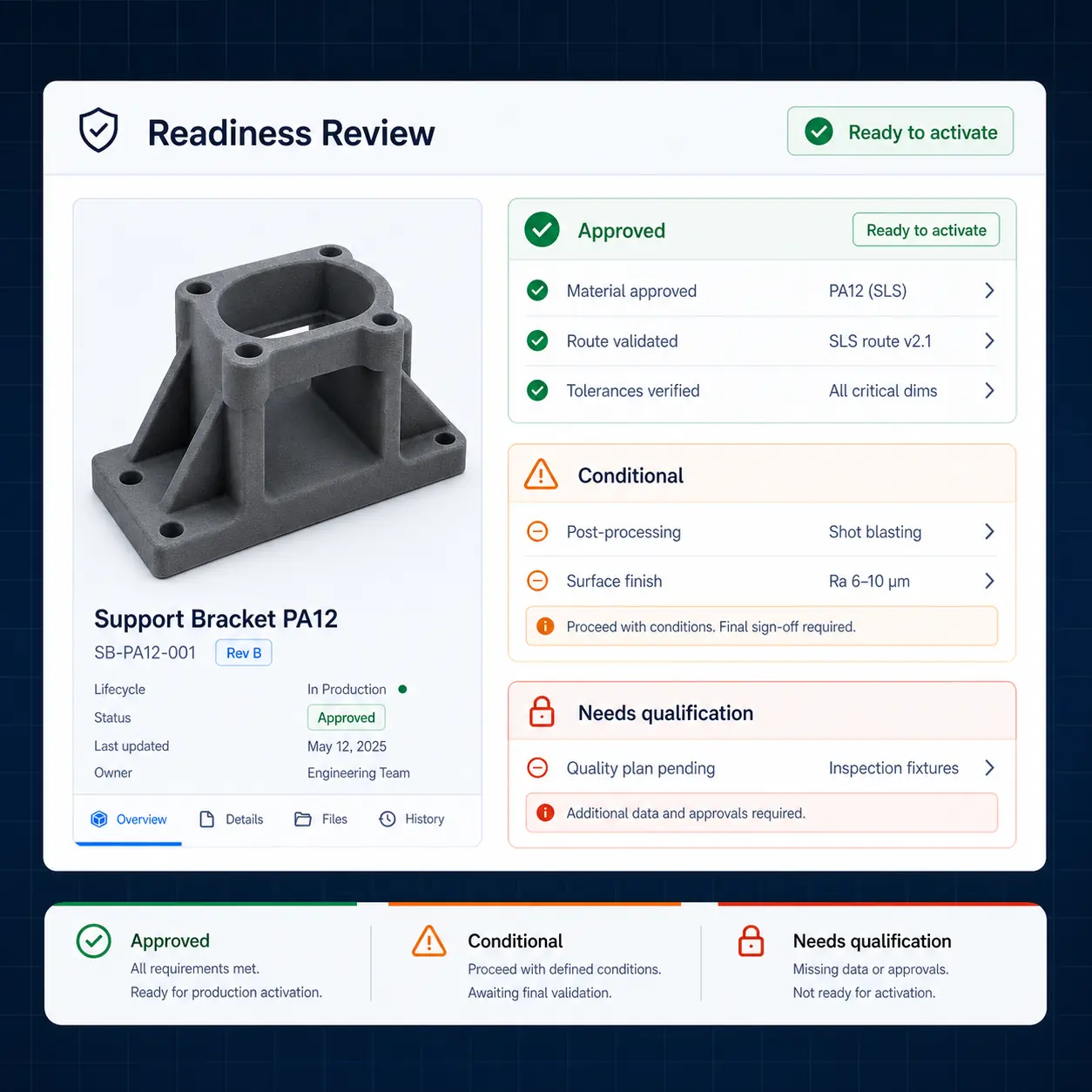
GhostMatter interface marking approved, conditional, and not-yet-qualified production data for readiness validation.

Validate readiness

Mark what is approved, what is conditional, and what still needs qualification.
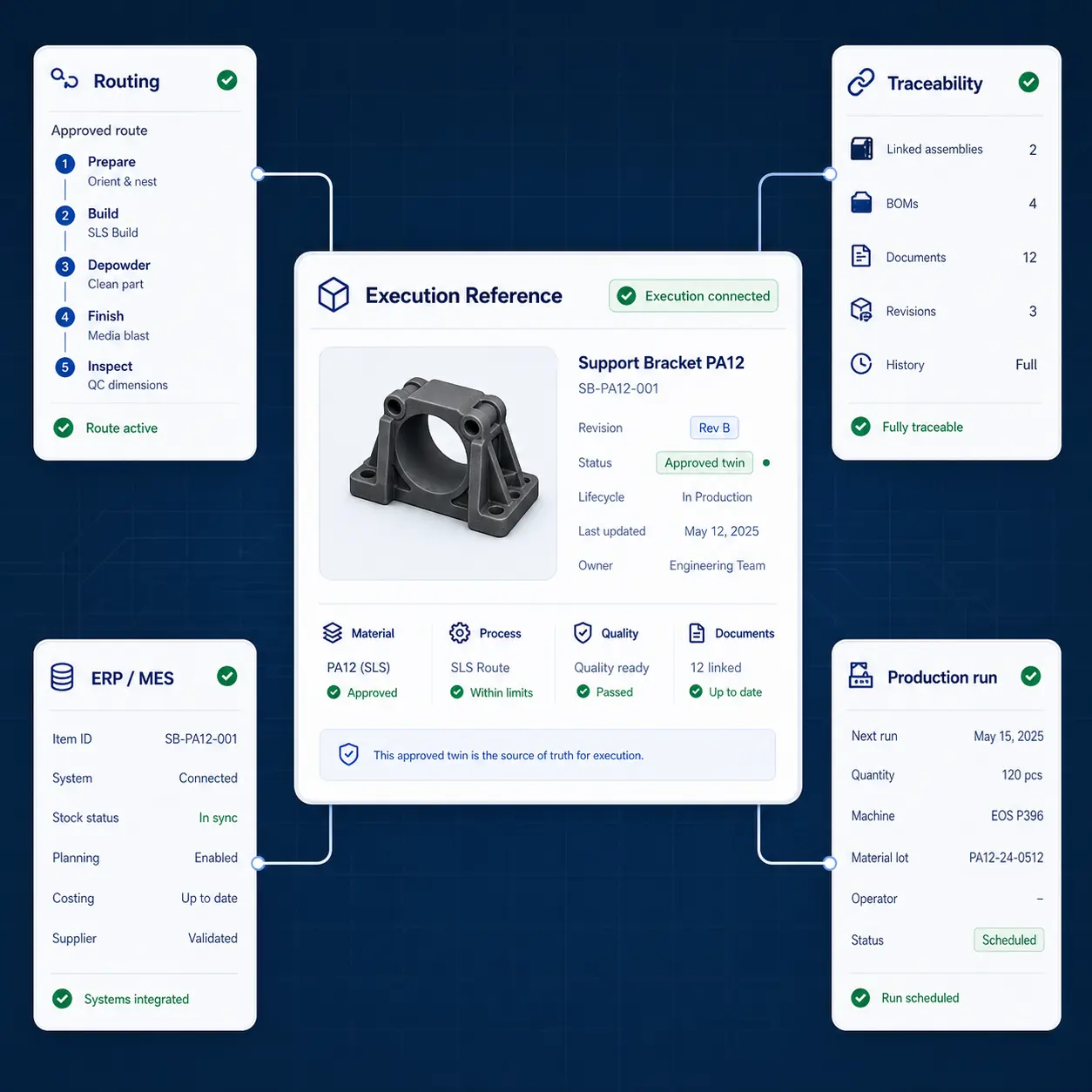
GhostMatter interface connecting an approved digital twin to routing, traceability, enterprise systems, and production runs.

Connect execution

Use the twin as the reference for routing, traceability, integrations, and future production runs.

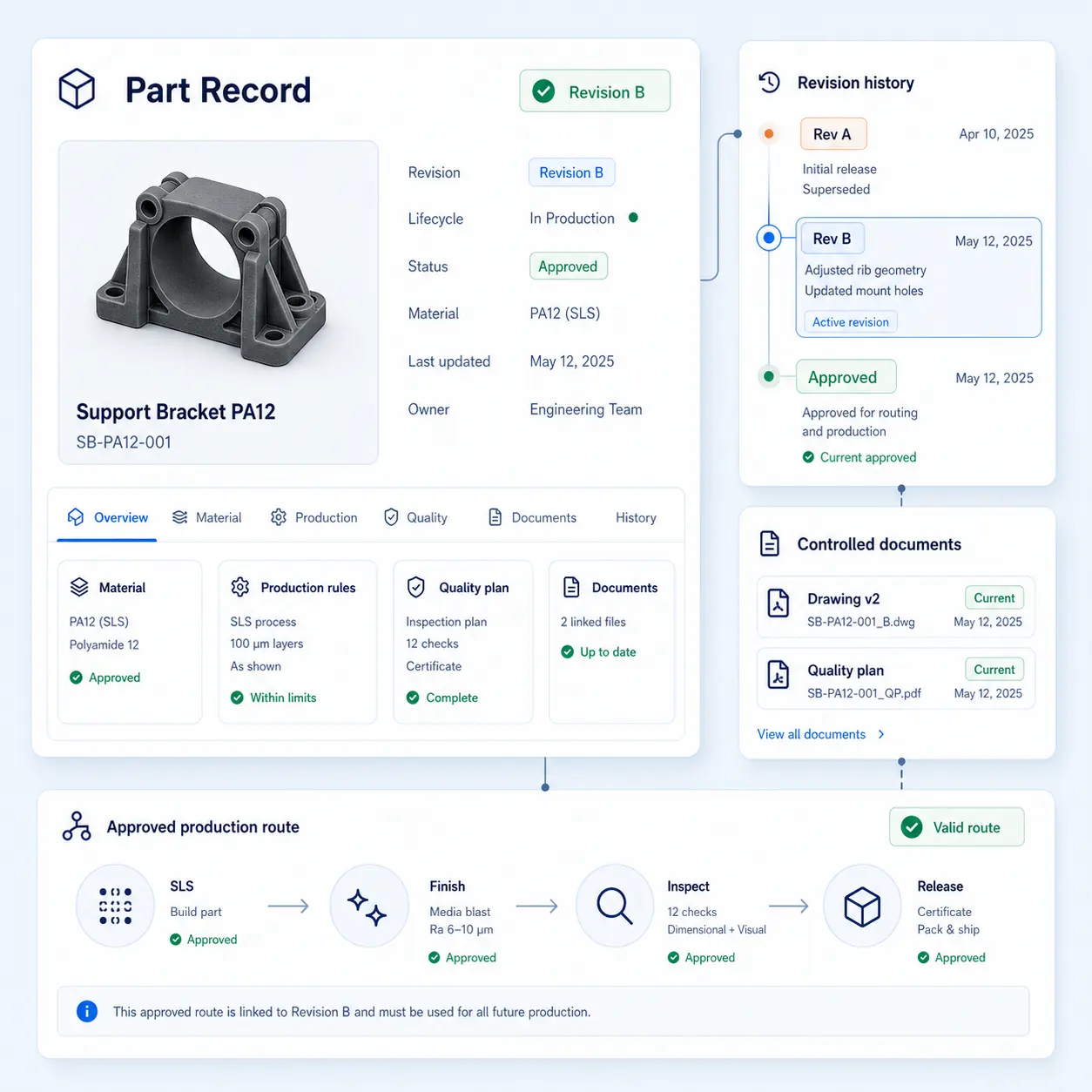
Keep the right version connected to the right production route

Production risk increases when teams use the wrong file, an outdated drawing, or an unclear revision. GhostMatter keeps version history, documentation, readiness, and approved production rules connected to the part record.
  • Revision tracking
  • Approval status
  • Valid production route
  • Change history
  • Documentation control
  • Quality requirements
  • Production evidence
GhostMatter interface connecting the right part revision, documentation, readiness status, and approved production route.

A digital twin becomes valuable when it drives execution

Once structured and qualified, the digital twin becomes the technical anchor for production readiness, routing, traceability, and enterprise integrations.

Digital inventoryThe twin becomes part of a reusable digital asset portfolio.
Production readinessMissing data and validation status become visible.
Production routingThe part can be matched with qualified capacity.
TraceabilityFinished parts can be linked back to the right version and requirements.
IntegrationsERP, MES, PLM, CMMS, QMS, and APIs can exchange more reliable data.

Where part-centric digital twins matter most

  • Critical spare parts
  • Obsolete or hard-to-source parts
  • Low-volume production
  • Industrial additive manufacturing
  • Distributed production capacity
  • Aftermarket service parts
  • Quality-sensitive parts requiring repeatability

Turn part data into production-ready digital twins

Start with a selected part portfolio. GhostMatter helps identify what data exists, what is missing, and how each part can become a governed digital twin ready for controlled activation.

FAQ

What is an industrial digital twin?

An industrial digital twin is a structured digital representation of a part, asset, or process that connects technical definition with operational context. In GhostMatter, the focus is part-centric digital twins for controlled production.

Is a digital twin the same as a 3D file?

No. A 3D file mainly represents geometry. A production-ready digital twin also carries metadata, documentation, versions, materials, production requirements, quality rules, and governance.

Why does a digital twin matter for digital inventory?

Digital inventory needs trusted, reusable digital assets. A digital twin provides the enriched part record that can be stored, governed, activated, traced, and reused.

Can a digital twin support additive manufacturing?

Yes. For additive manufacturing, the twin can connect geometry, material, process requirements, post-processing, inspection rules, and production route status.