Look beyond supplier count
A second supplier does not help if the part record, files, or quality rules are not ready.

Use Case / Supply Chain Resilience
Supply chain resilience is not only about adding suppliers or stock. For critical industrial parts, resilience improves when selected references are ready to be activated through controlled digital inventory and approved production routes.
GhostMatter helps teams identify parts exposed to disruption, structure their technical records, and prepare controlled activation paths before supply risk becomes downtime.
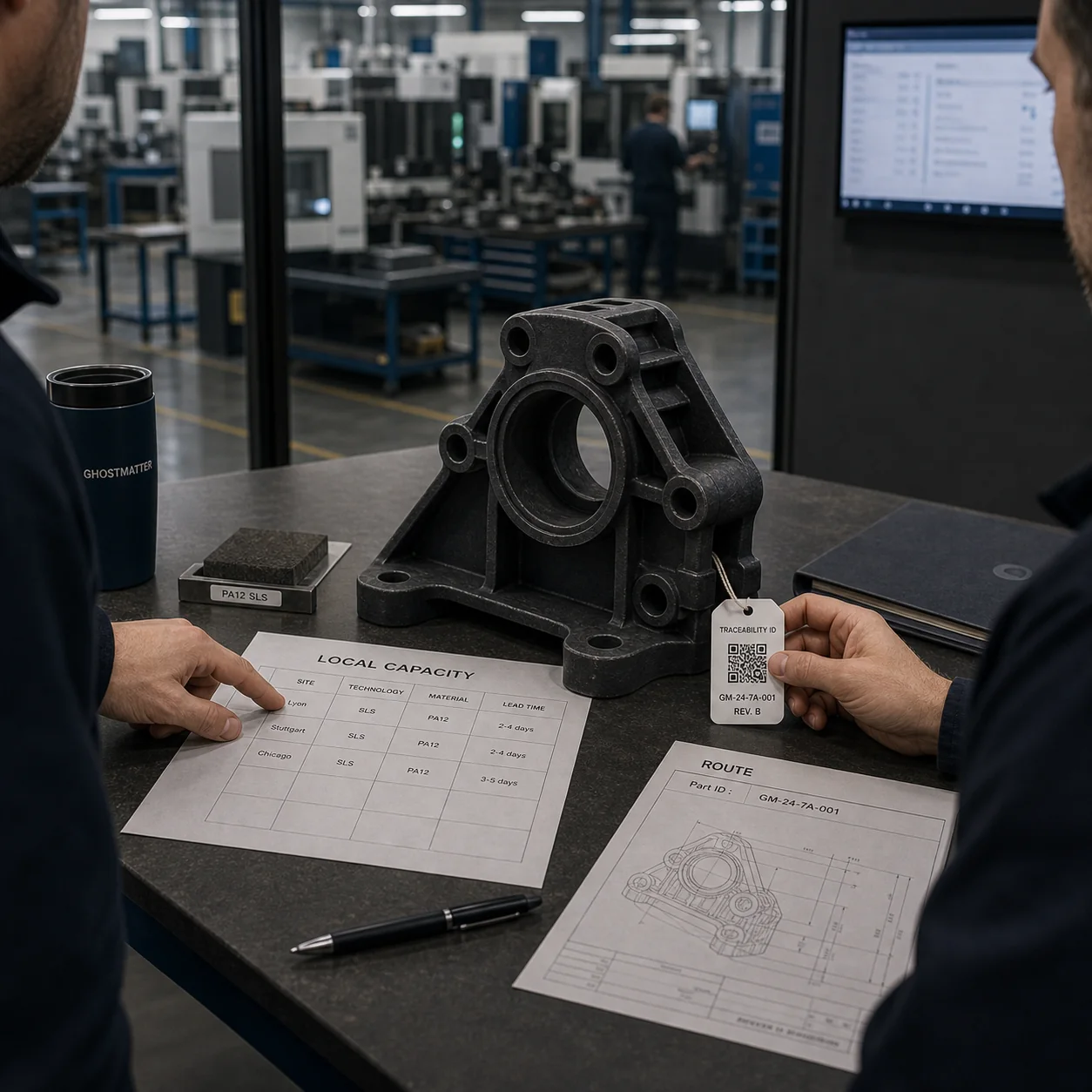
Extra suppliers and safety stock can help, but they do not solve missing files, unclear approvals, route uncertainty, or quality evidence gaps. GhostMatter focuses on the selected parts that should be prepared for controlled activation.
A second supplier does not help if the part record, files, or quality rules are not ready.
Prioritize the parts where disruption would create measurable operational pressure.
Use digital inventory and approved routes without losing governance or traceability.
Supply risk often appears at the part level: one missing component, one obsolete supplier, one long lead time, or one undocumented reference can create operational exposure.
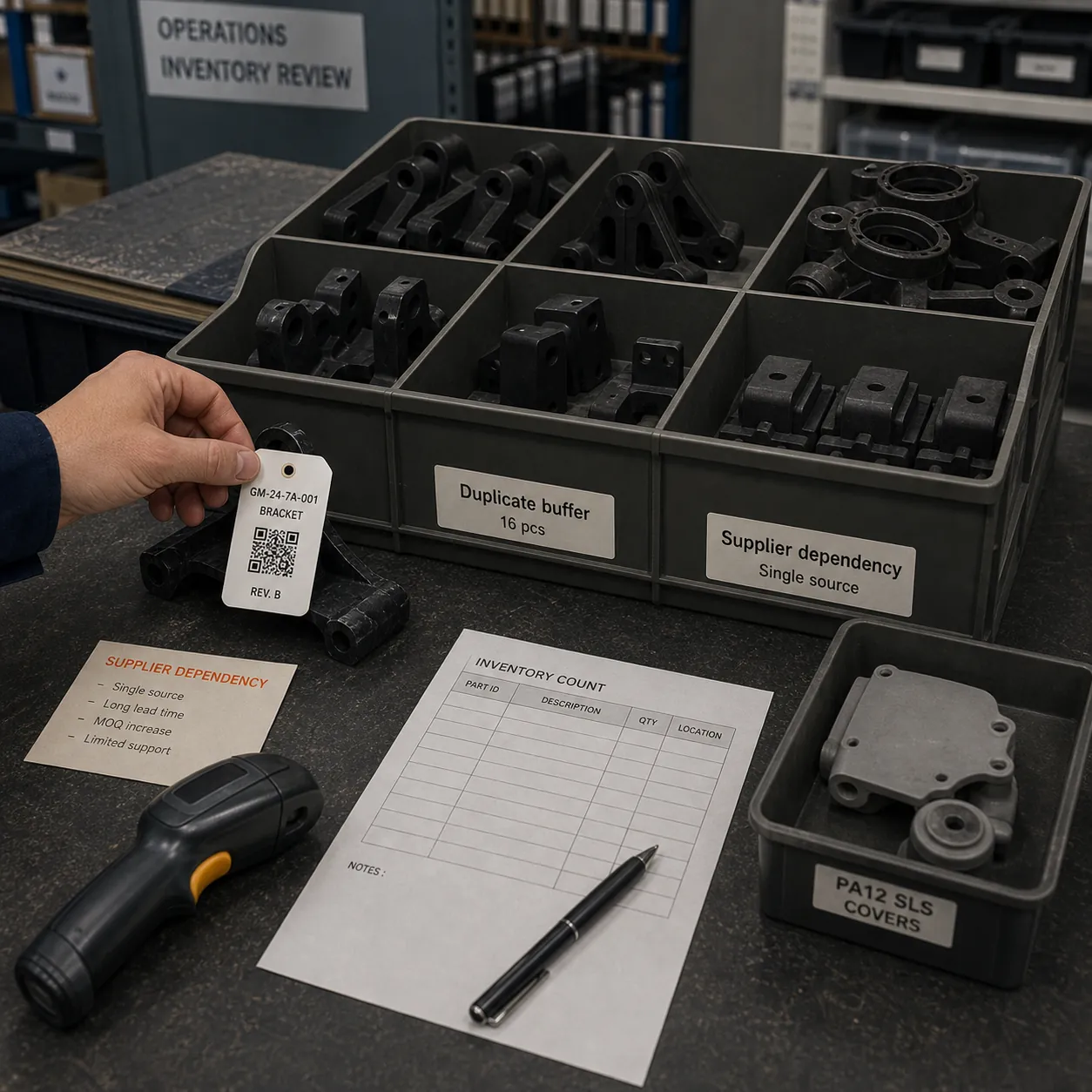
GhostMatter structures the references that matter most, connects them to production readiness, and preserves the route and traceability needed to act under disruption.
Select parts where resilience preparation has operational value.
Connect technical data, readiness, quality context, and access rights.
Prepare production routes before disruption forces rushed decisions.
The goal is to reduce exposure by preparing selected parts for controlled digital or hybrid inventory, not by treating every reference the same way.
The workflow turns supply-risk references into governed records that can be assessed, approved, routed, and traced when disruption appears.
Review supplier risk, lead time, downtime impact, inventory cost, and obsolescence.
Connect files, specifications, quality rules, route assumptions, and approval context.
Confirm which parts can become digital or hybrid inventory candidates.
Associate the part with approved internal or partner production routes.
Keep release, route, production evidence, and outcome tied to the part.
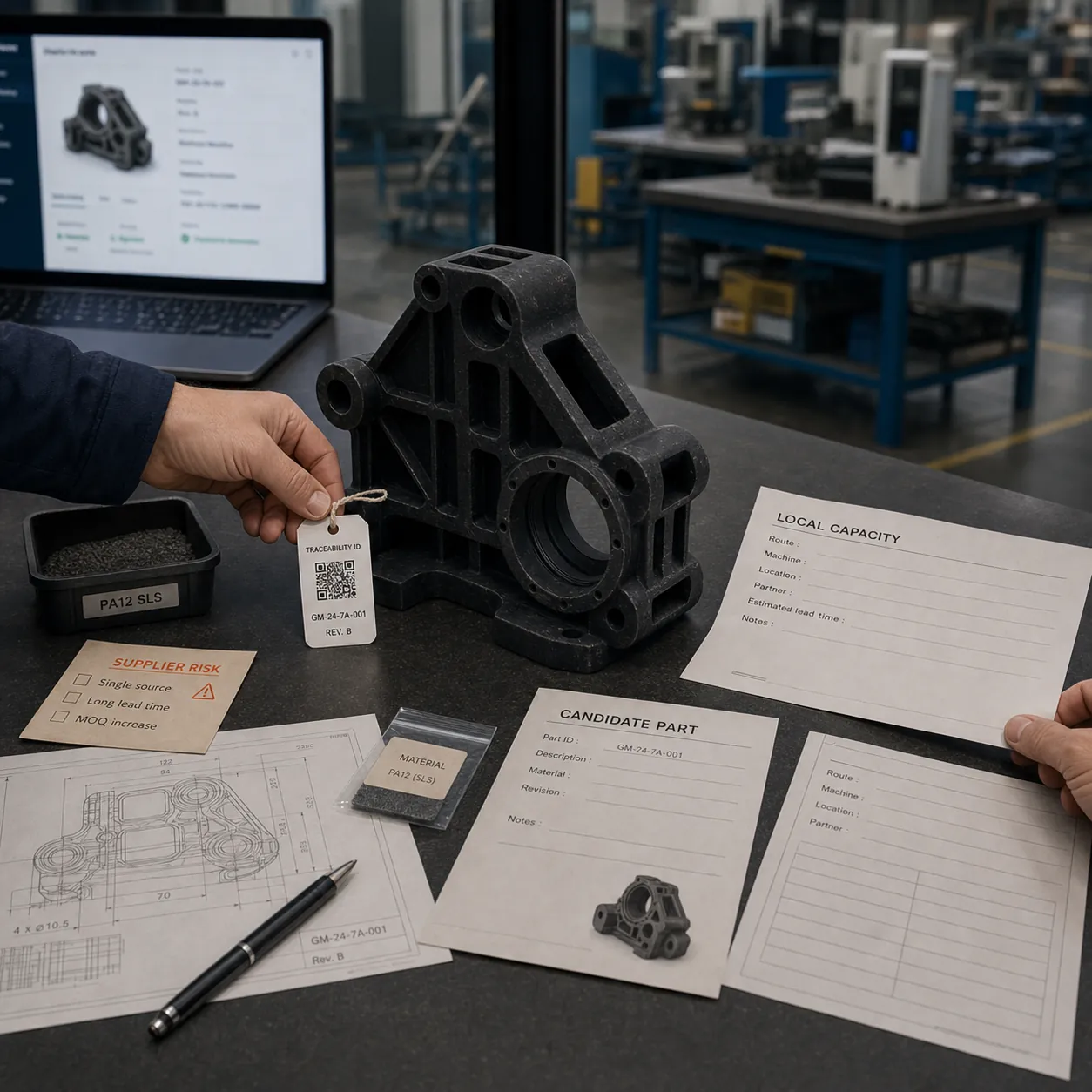
Start with parts where supplier dependency, lead time, inventory exposure, or downtime risk creates a clear business reason to prepare alternatives.
Start with supplier-risk references, long-lead-time parts, obsolete components, and maintenance-critical spares. GhostMatter helps decide which parts deserve governed activation paths.
It prepares selected parts with governed data, readiness, routes, and traceability so alternatives can be activated faster and with more control.
No. It helps decide where digital or hybrid inventory can complement physical stock and reduce part-level exposure.
Prioritize parts with supplier dependency, long lead times, downtime impact, obsolescence, or high inventory cost.
Yes. GhostMatter is designed to preserve approval context, access rights, quality rules, and traceability across activation.