Technical definition
Files, drawings, materials, process assumptions and documentation remain connected to the same part record.

Platform / Production Readiness
Production readiness means knowing whether a part has the data, approvals, quality context, and route information needed before it is sourced, routed, or manufactured.
GhostMatter helps teams expose missing information, qualify selected part records, and move from scattered technical data to controlled production-ready assets.
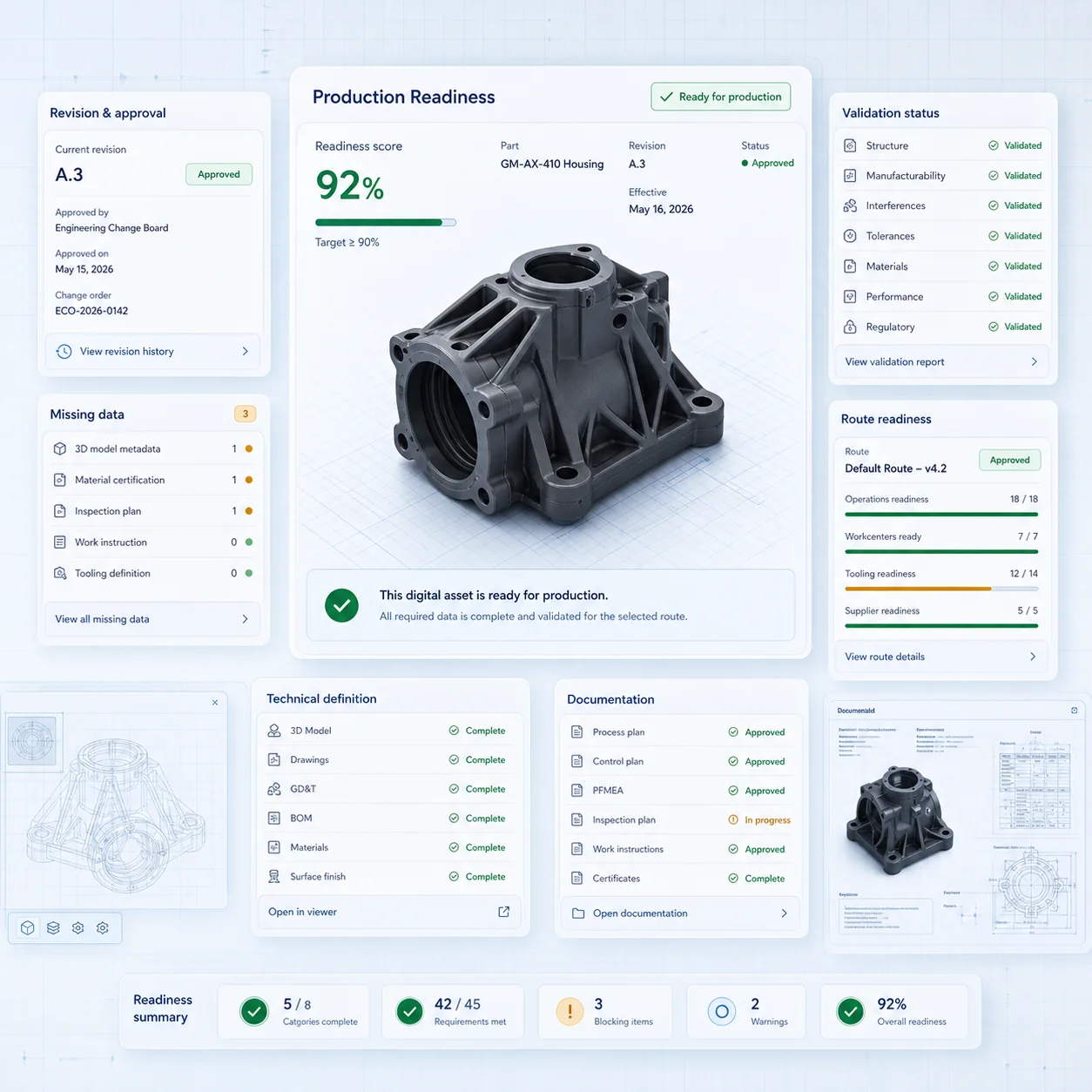
A part can look complete while still missing the information needed for controlled production. GhostMatter makes these gaps visible before they become delays.
Files, drawings, materials, process assumptions and documentation remain connected to the same part record.
Teams can distinguish draft, in-review, approved and blocked assets before activation.
Readiness includes the approved route, quality expectations and production conditions that govern release.
The exact requirements vary by industry, route, and part risk. The operating principle is simple: no release without enough context to manufacture, inspect, and trace.
GhostMatter turns readiness into a repeatable process instead of a last-minute engineering check.
Bring files, drawings and documentation into the controlled part record.
Attach materials, process assumptions, functional requirements and production notes.
Capture critical dimensions and quality expectations when the workflow requires them.
Confirm whether the part is approved, conditional or still blocked before production.
Keep production history and repeatability signals available for future decisions.
Readiness is strongest when engineering definition, supplier route, production constraints, and quality expectations stay connected to the same part record.
Define functional dimensions that matter for homologation and repeatable production.
Use production history to support confidence in recurring on-demand production.
When advanced traceability is enabled, part marking can help connect the physical part back to its digital record.
Start with parts where missing data creates delay, cost, quality risk, or dependency on a small number of experts.
Start with a portfolio of candidate parts. GhostMatter helps identify what is complete, what is missing, and which records can move toward controlled activation.