Complement maintenance systems
Keep GhostMatter focused on production-ready part data, not work-order management.

Use Case / Industrial Maintenance
Industrial maintenance teams need fast access to critical parts without letting files, approvals, and production decisions become improvised. The best maintenance references are prepared before downtime happens.
GhostMatter helps maintenance, operations, and supply chain teams structure selected maintenance parts as governed digital inventory with readiness, routing, and traceability.
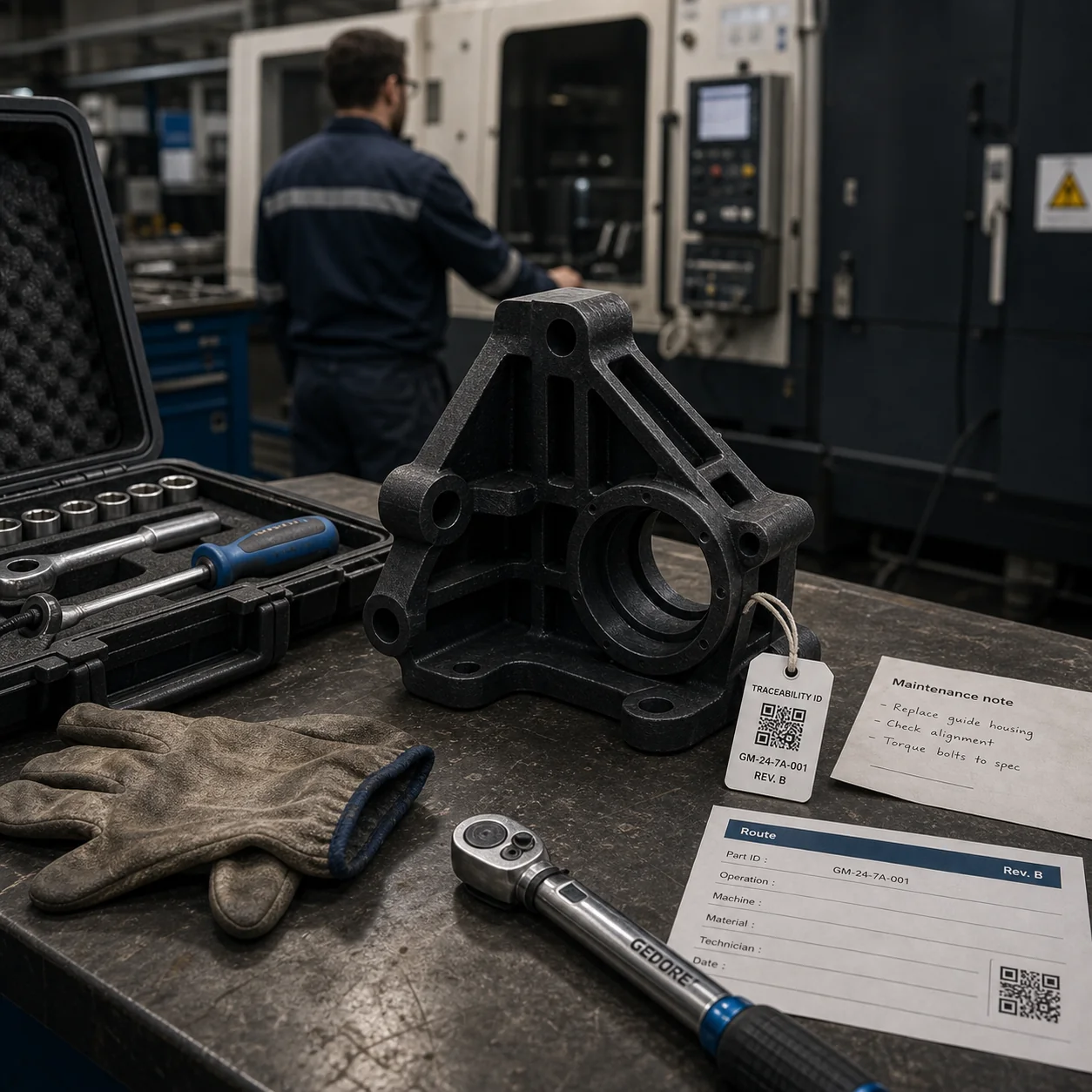
Maintenance systems often track work orders and stock. GhostMatter complements that layer by preparing selected parts for controlled production or sourcing when physical availability becomes a risk.
Keep GhostMatter focused on production-ready part data, not work-order management.
Structure the files, rules, and routes needed before the part becomes urgent.
Release production only when readiness, approvals, and traceability are in place.
Critical maintenance parts are often known, but the data needed to produce, source, approve, or trace them is scattered across systems, sites, and suppliers.
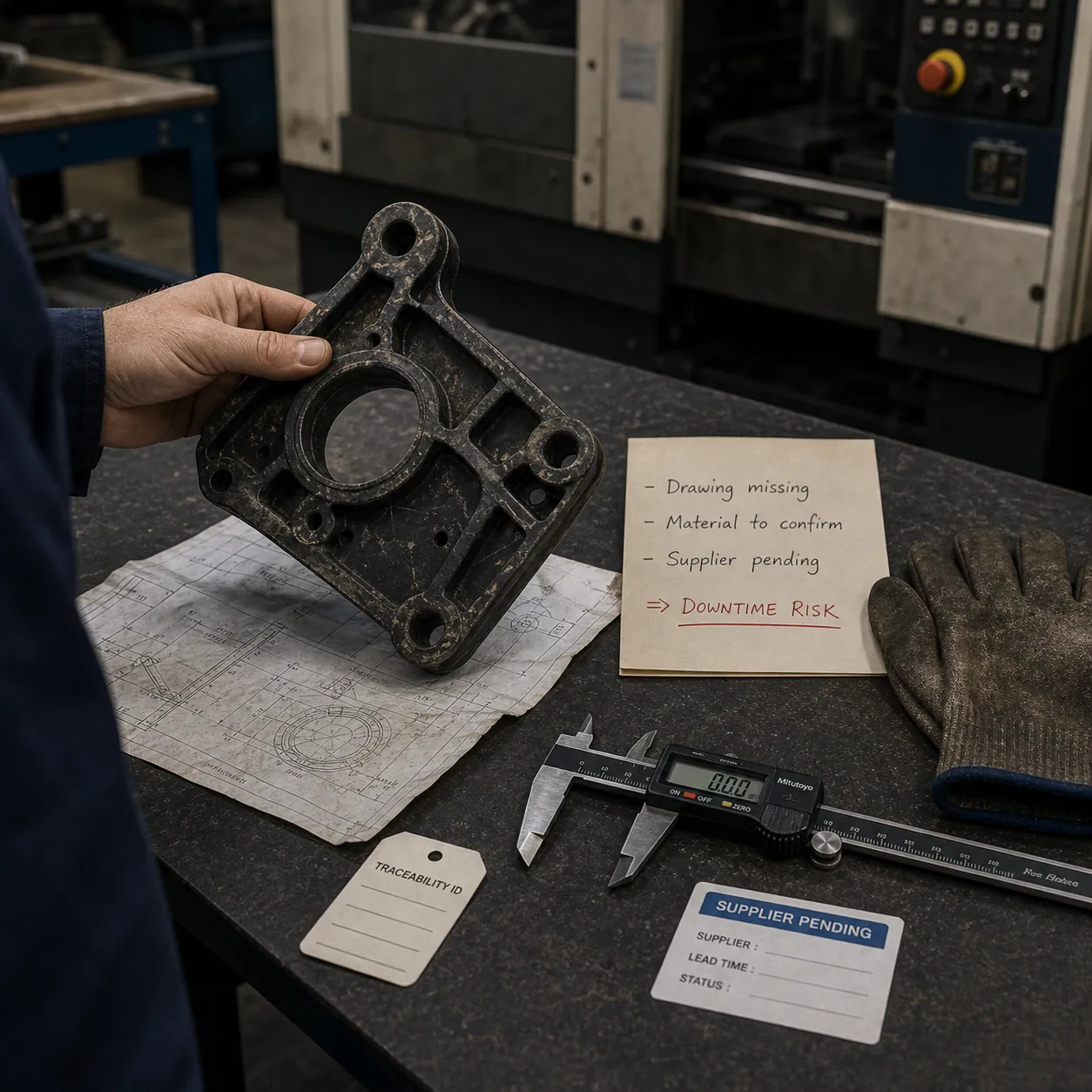
GhostMatter connects maintenance-critical references to technical files, quality expectations, approved production routes, and release rules before a breakdown forces action.
Identify maintenance parts where readiness would reduce downtime risk.
Connect files, specifications, quality rules, suppliers, and production context.
Route production or sourcing through governed paths when needed.
The goal is to reduce the scramble around critical parts while keeping engineering, quality, procurement, and production decisions visible.
The workflow prepares selected maintenance references so demand can move from request to approved production or sourcing with less friction.
Use downtime history, CMMS data, spare lists, and site knowledge.
Connect drawings, 3D files, specifications, revisions, and quality expectations.
Confirm whether the part can be produced, sourced, or routed safely.
Use internal capacity or qualified partners when demand appears.
Keep the request, route, approval, and outcome attached to the part.
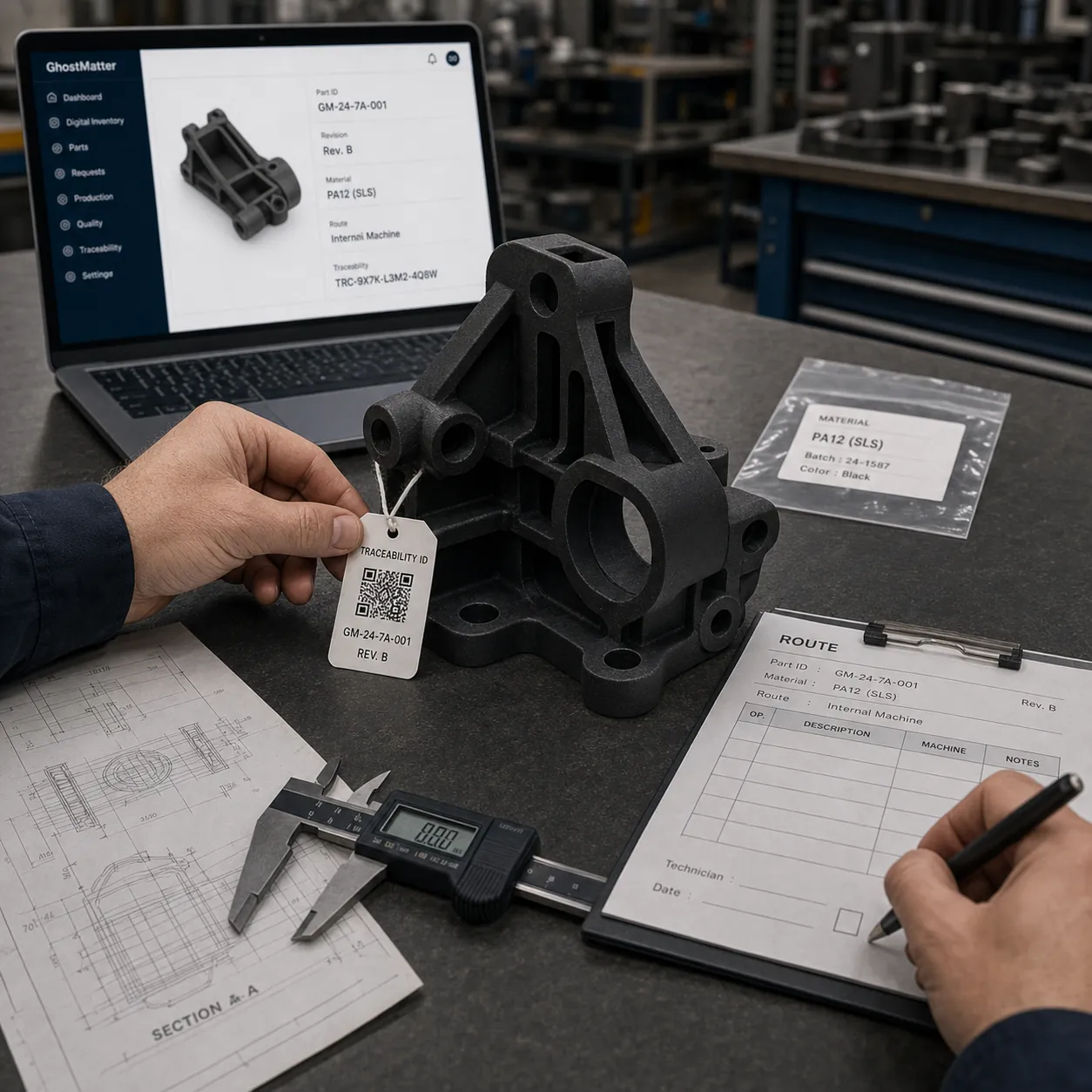
Start with references where unavailability would create downtime, safety risk, supplier escalation, or expensive manual coordination.
Start with CMMS exports, spare parts lists, drawings, or maintenance-critical references. GhostMatter helps identify which parts deserve a controlled digital inventory workflow.
No. It complements them by governing production-ready part records, routes, and traceability for selected maintenance references.
Start with critical, long-lead-time, obsolete, or supplier-risk parts where downtime impact is high.
Yes. It can help structure files, readiness, routes, and traceability for selected obsolete replacement parts.
To identify maintenance-critical parts that should become controlled digital inventory before a breakdown creates urgency.