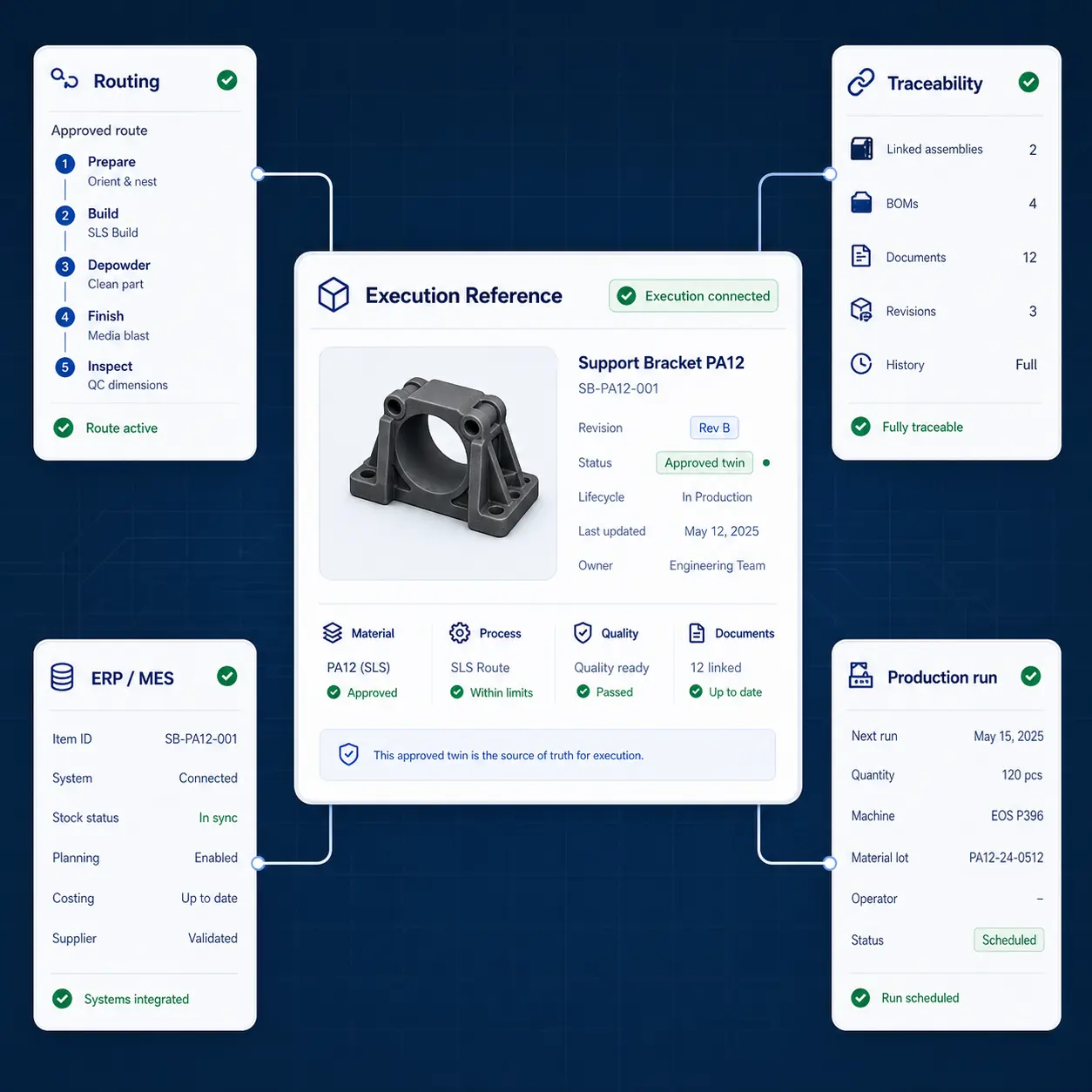
Platform / Traceability

Manufacturing Traceability from Digital Record to Finished Part

Manufacturing traceability connects the finished part back to the right digital record, file version, production route, quality rules, and request history.

GhostMatter helps industrial teams keep traceability attached to the part lifecycle, from digital inventory and readiness through routing, production evidence, and repeat requests.

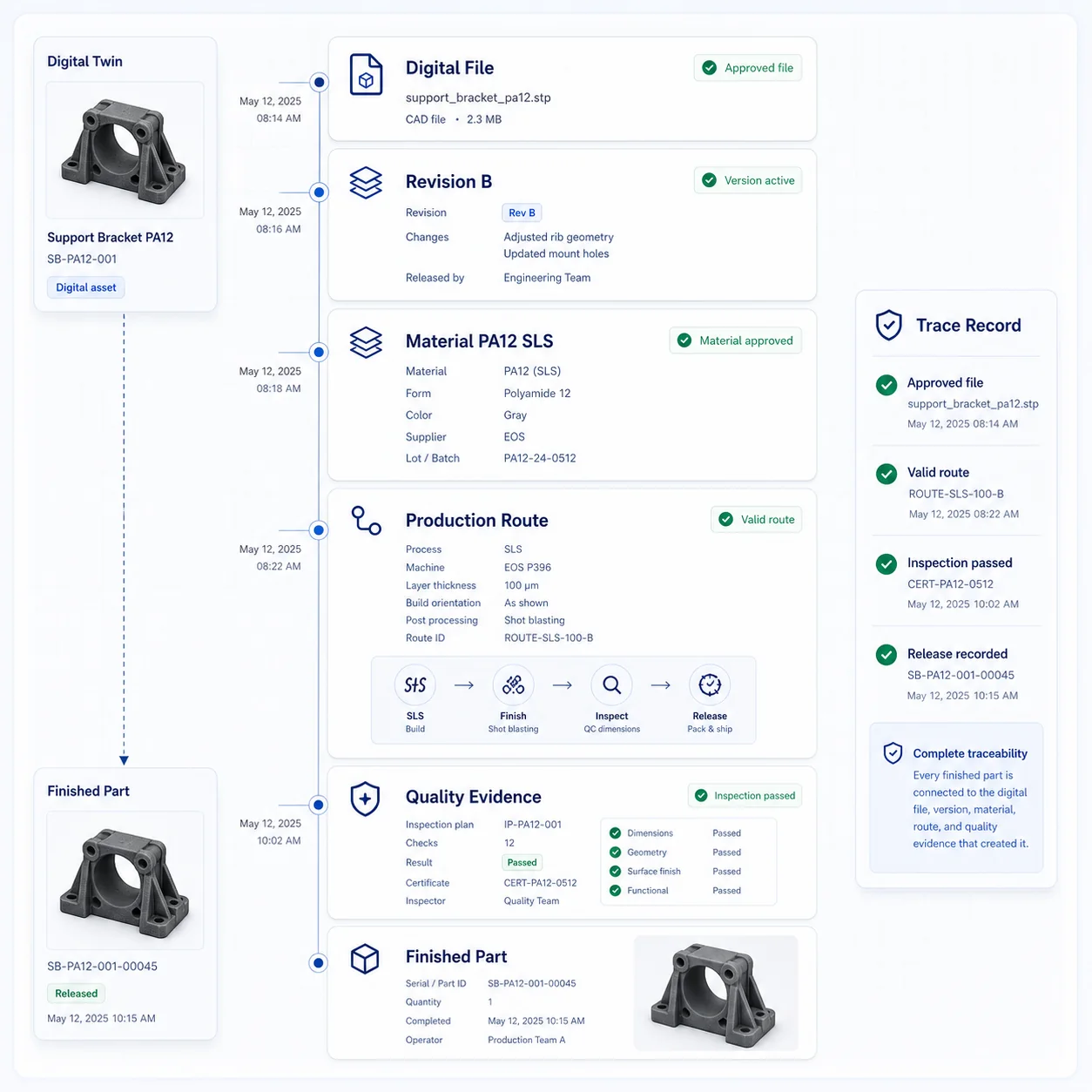
GhostMatter traceability interface showing request history, part revision, production route, quality evidence, and finished part records.

Traceability starts with the right production data

Traceability is only useful when the underlying part record, route, and evidence are connected before production happens.

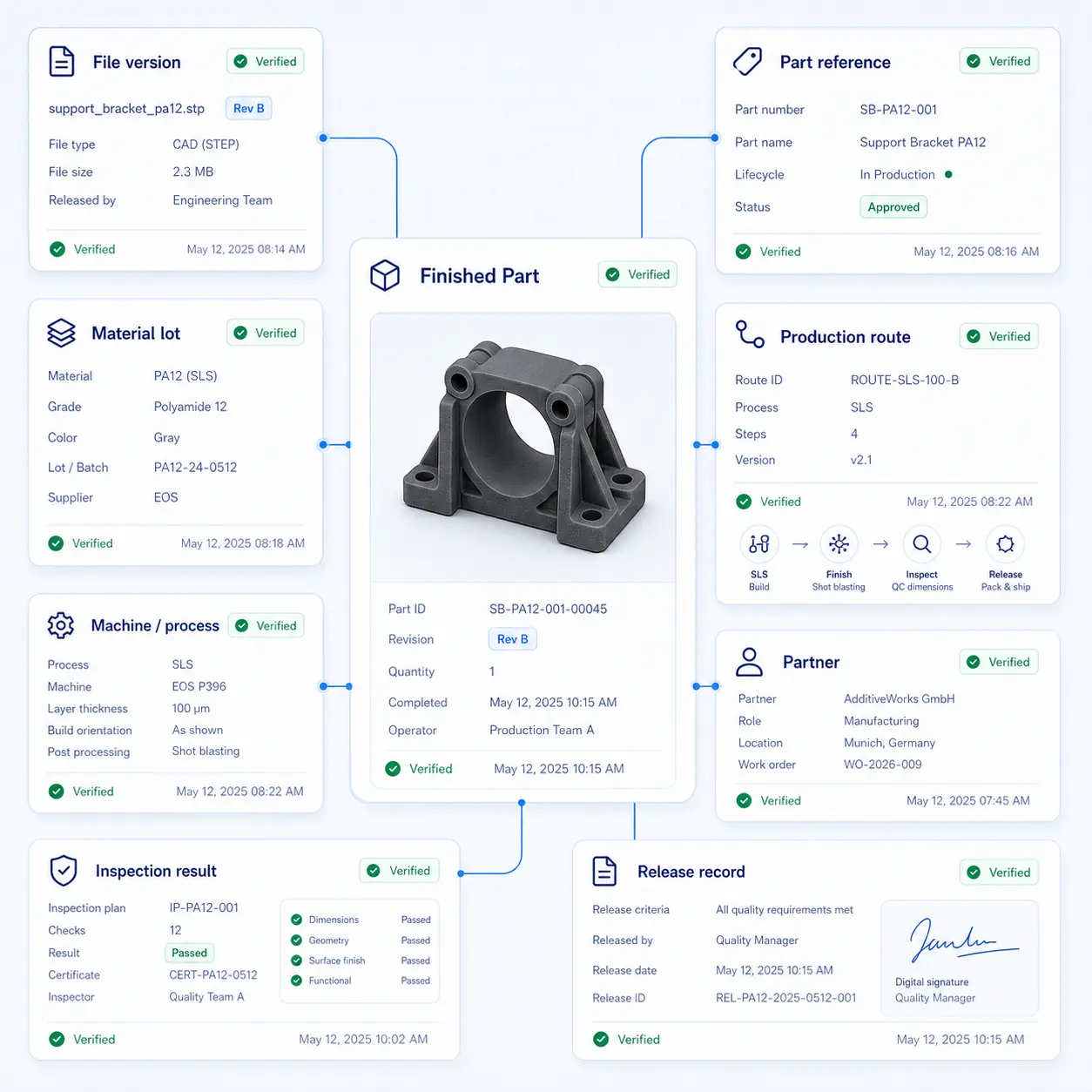
File versionProves which geometry and revision were used.
Part referenceLinks the finished part to the correct digital inventory item.
Material lotSupports material evidence and investigation.
Production routeShows where and how the part was produced.
Machine or processSupports repeatability and root-cause analysis.
Operator or partnerProvides execution accountability where applicable.
Inspection resultShows whether quality requirements were met.
Release recordConfirms approval and handover status.
DocumentationKeeps certificates, reports, and evidence attached.
GhostMatter interface connecting a finished industrial part to file version, part reference, material lot, production route, process context, inspection result, and release record.

Connect part genealogy across versions, routes, and runs

GhostMatter helps preserve the relationship between the digital part record, the approved route, the production request, and the finished part outcome.

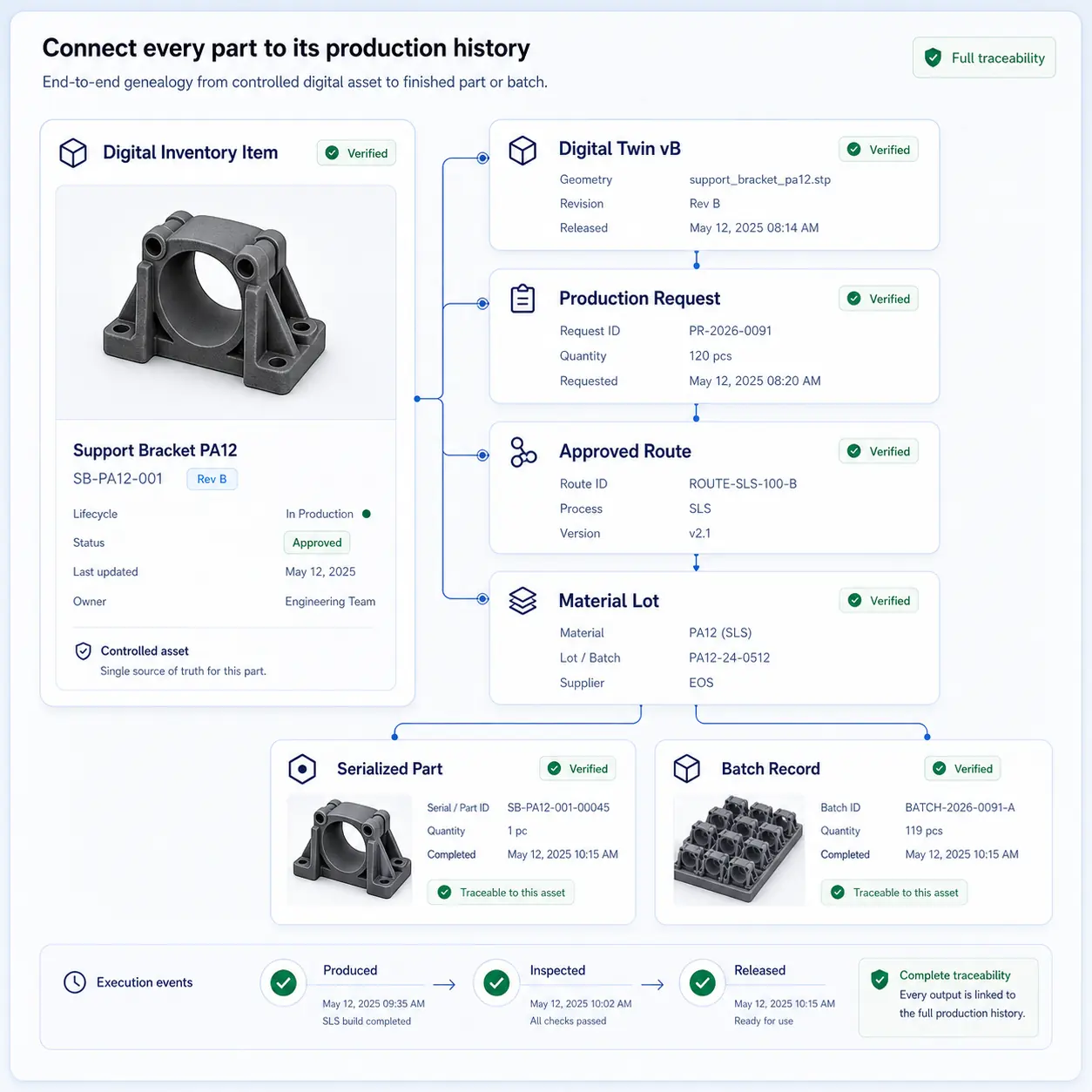
  1. Digital inventory item

    The controlled part record that anchors the traceability model.

  2. Digital twin version

    The approved technical context used for production.

  3. Production request and route

    The demand signal and approved execution path.

  4. Material lot or batch

    The material evidence connected to the finished part.

  5. Production, inspection, release

    The execution events that create the final history.

GhostMatter interface linking a digital inventory item, digital twin version, production request, approved route, material lot, serialized part, batch record, and release events.

Keep quality evidence connected to the part record

Certificates, inspections, route decisions, and release context are more valuable when they stay linked to the part record and future production runs.

GhostMatter interface connecting an approved production record to routing, traceability, enterprise systems, and production runs.

Production status

Requested, routed, accepted, produced, inspected, and released.

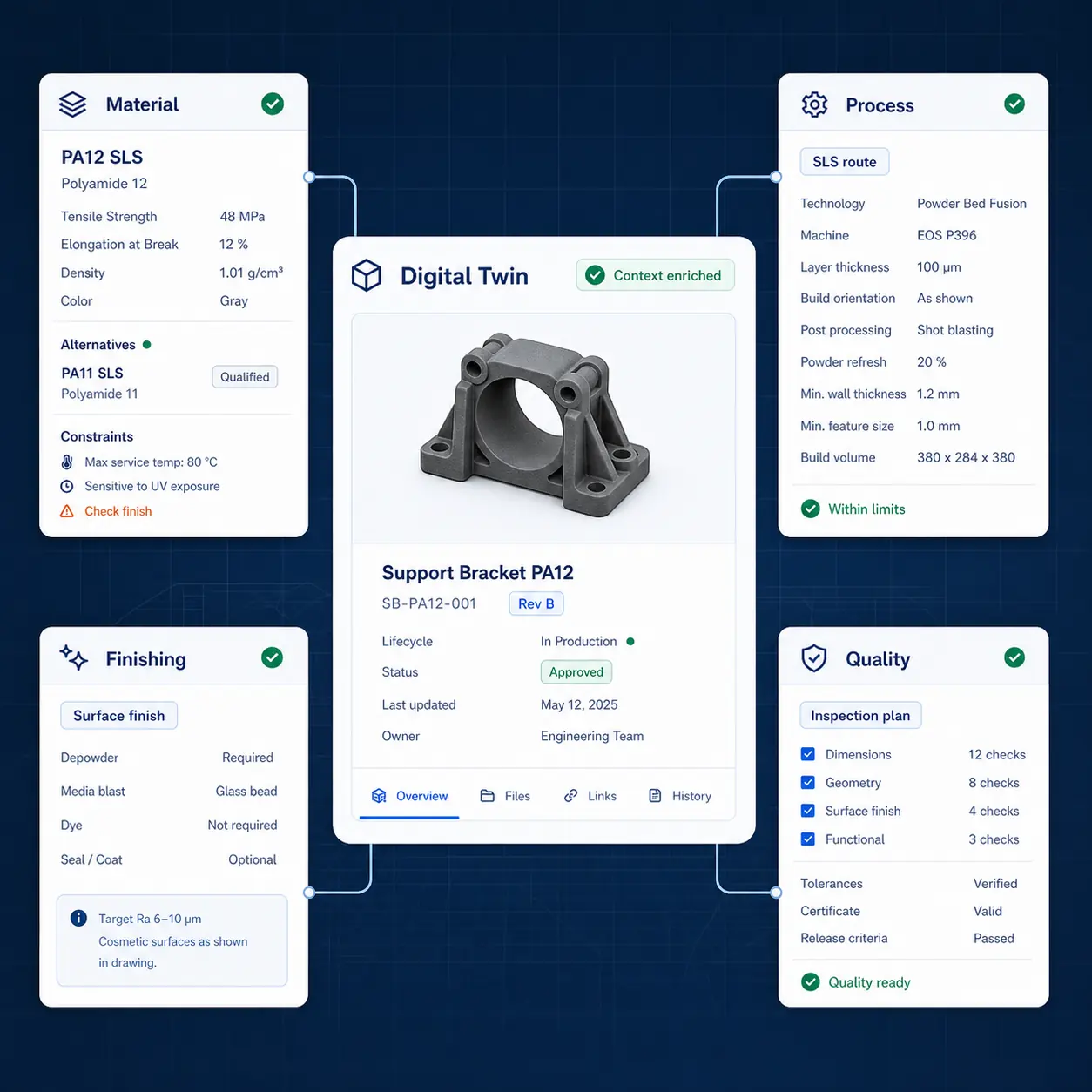
GhostMatter interface showing machine, site, production route, process method, material, finishing, and quality context.

Process context

Machine, site, production partner, route, and method.
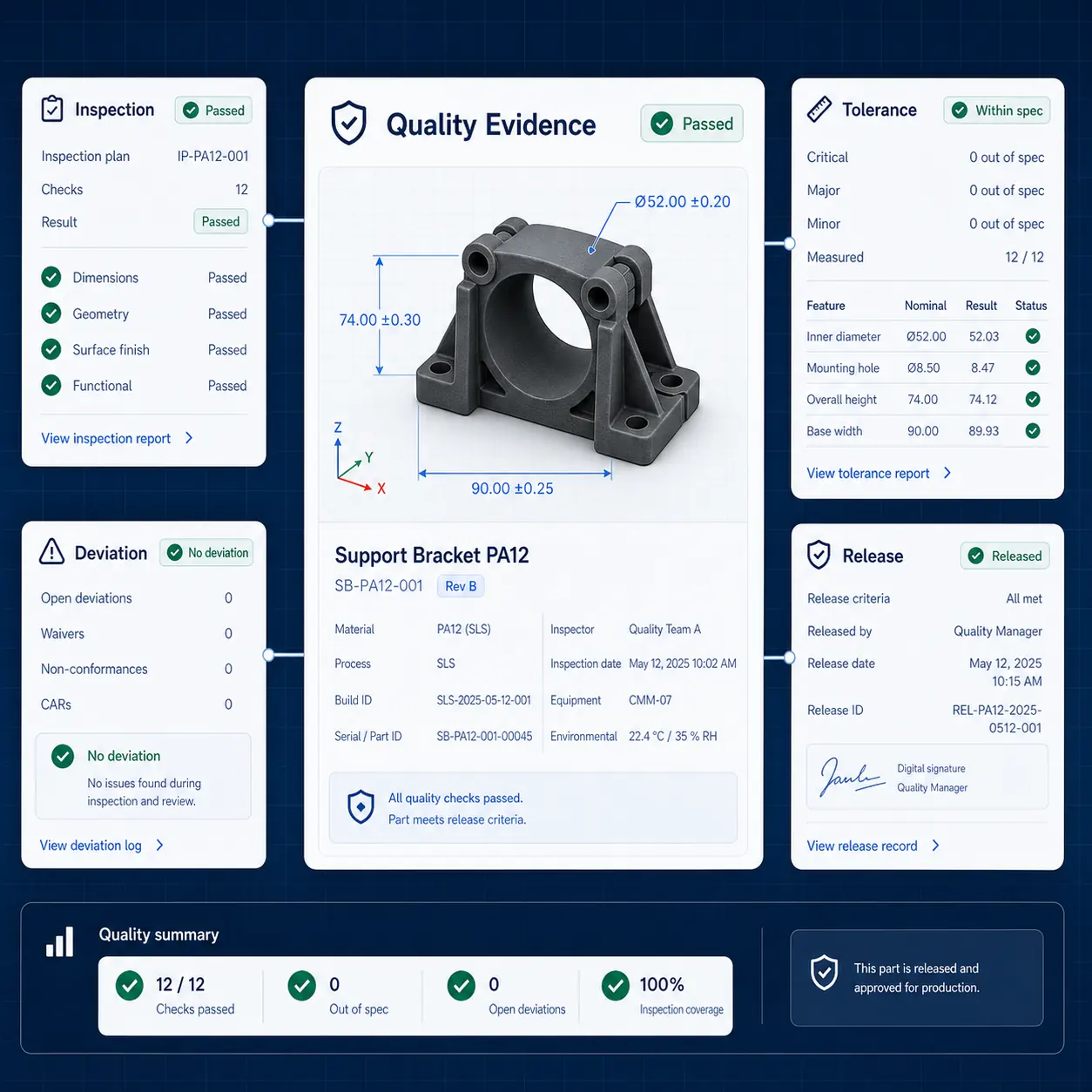
GhostMatter interface showing quality evidence, inspection results, tolerance checks, deviations, and release proof on a traceability record.

Quality checks

Inspection results, deviations, and non-conformity notes.
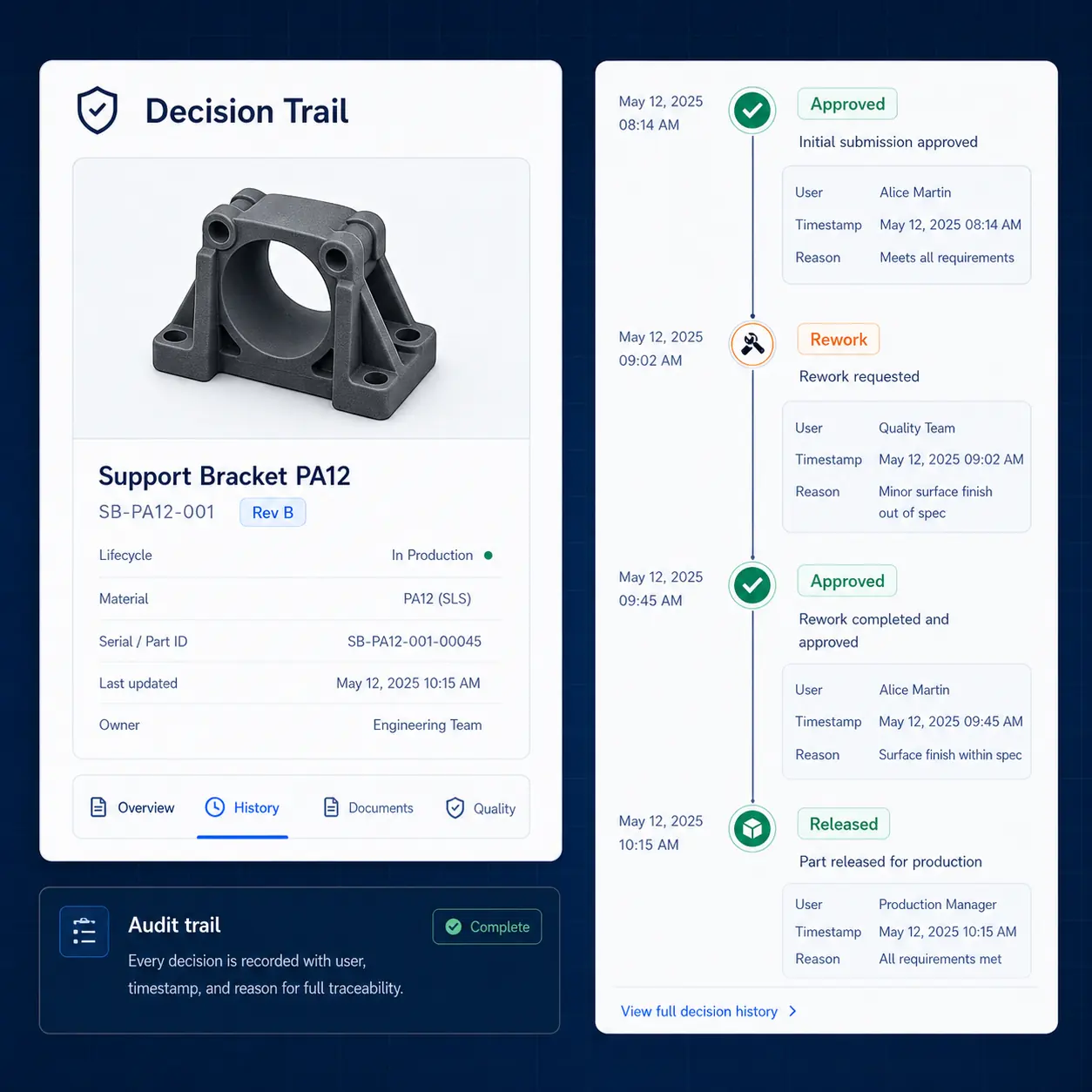
GhostMatter interface showing approval, rework, release, user, timestamp, reason, and audit trail events attached to a part history.

Decision trail

Approval, rejection, rework, release, and audit trail events.

Make production history usable after the part ships

The audit trail should remain useful for maintenance, supplier review, quality improvement, and future activation.
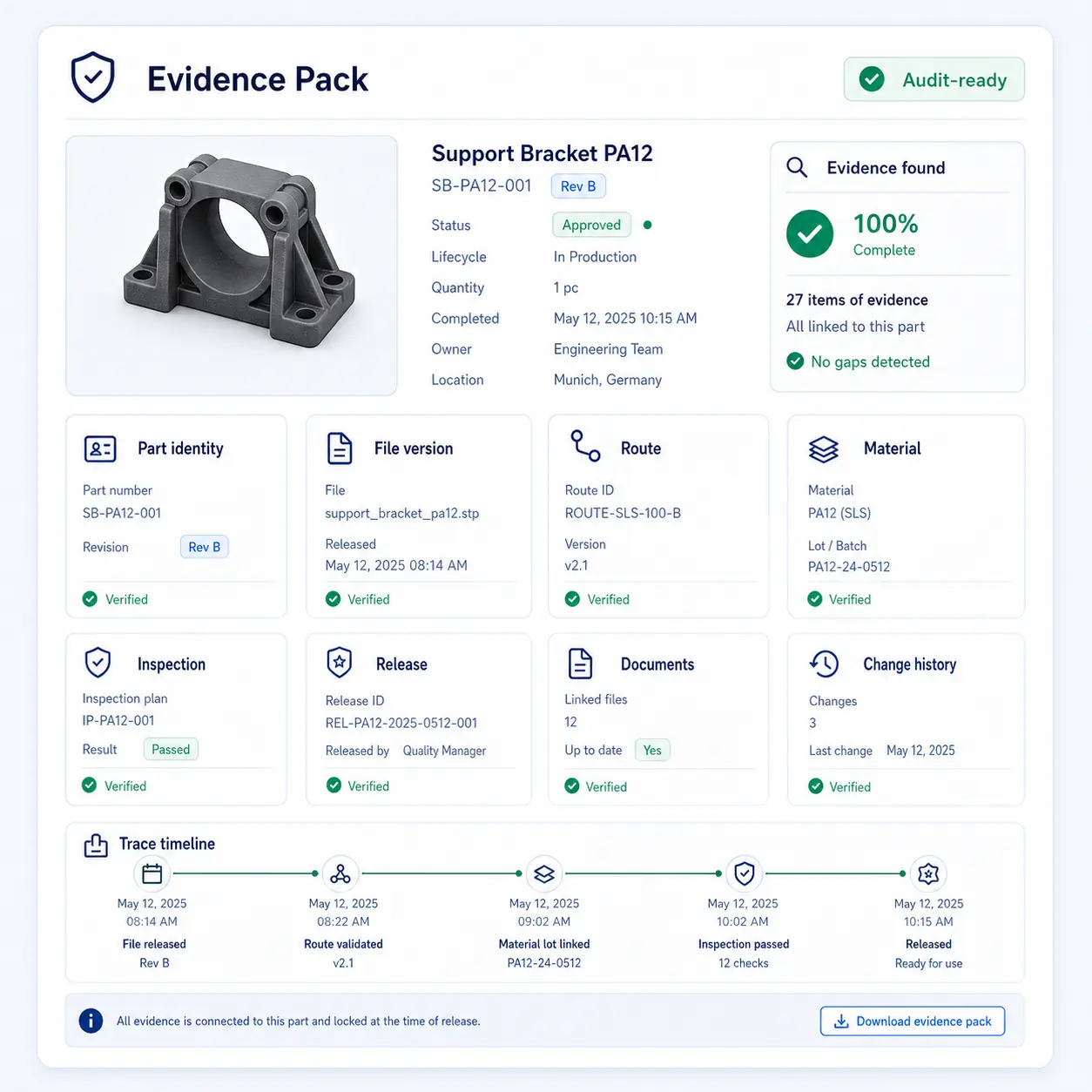
  • Part identity
  • File version
  • Production route
  • Material information
  • Inspection records
  • Release status
  • Linked documents
  • Change history
  • Traceability timeline
GhostMatter interface showing an audit-ready evidence pack with part identity, file version, route, material, inspection, release, documents, and change history.

Use traceability to improve repeatability

A traceable history helps teams understand what worked, which version was used, which route was approved, and how a future request should be handled.
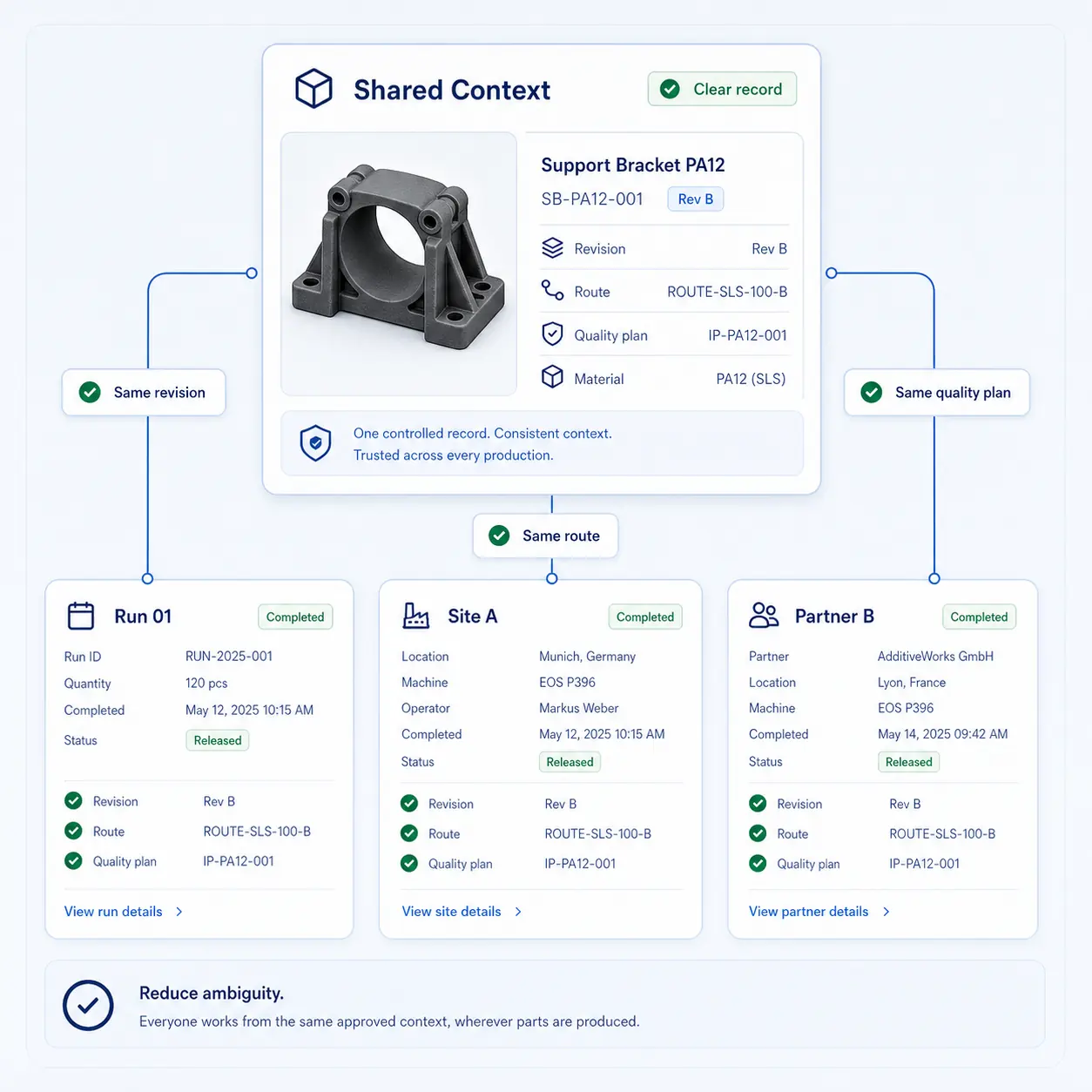
GhostMatter interface showing shared production context across a run, site, and partner with the same revision, route, and quality plan.

Reduce ambiguity

Keep production context clear between runs, sites, and partners.
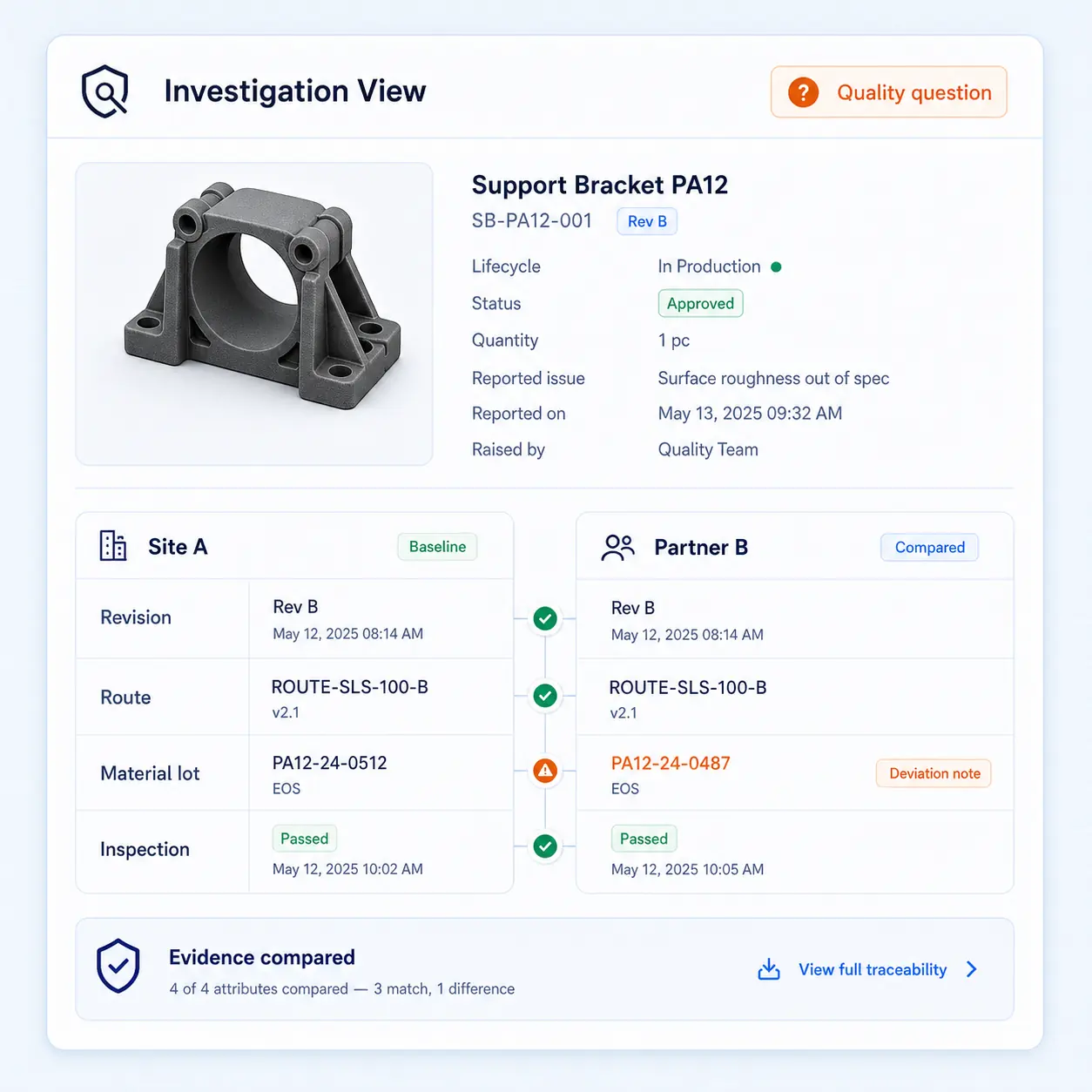
GhostMatter interface comparing revision, route, material lot, and inspection evidence across sites or partners during a quality investigation.

Support investigations

Compare evidence across sites or partners when quality questions appear.
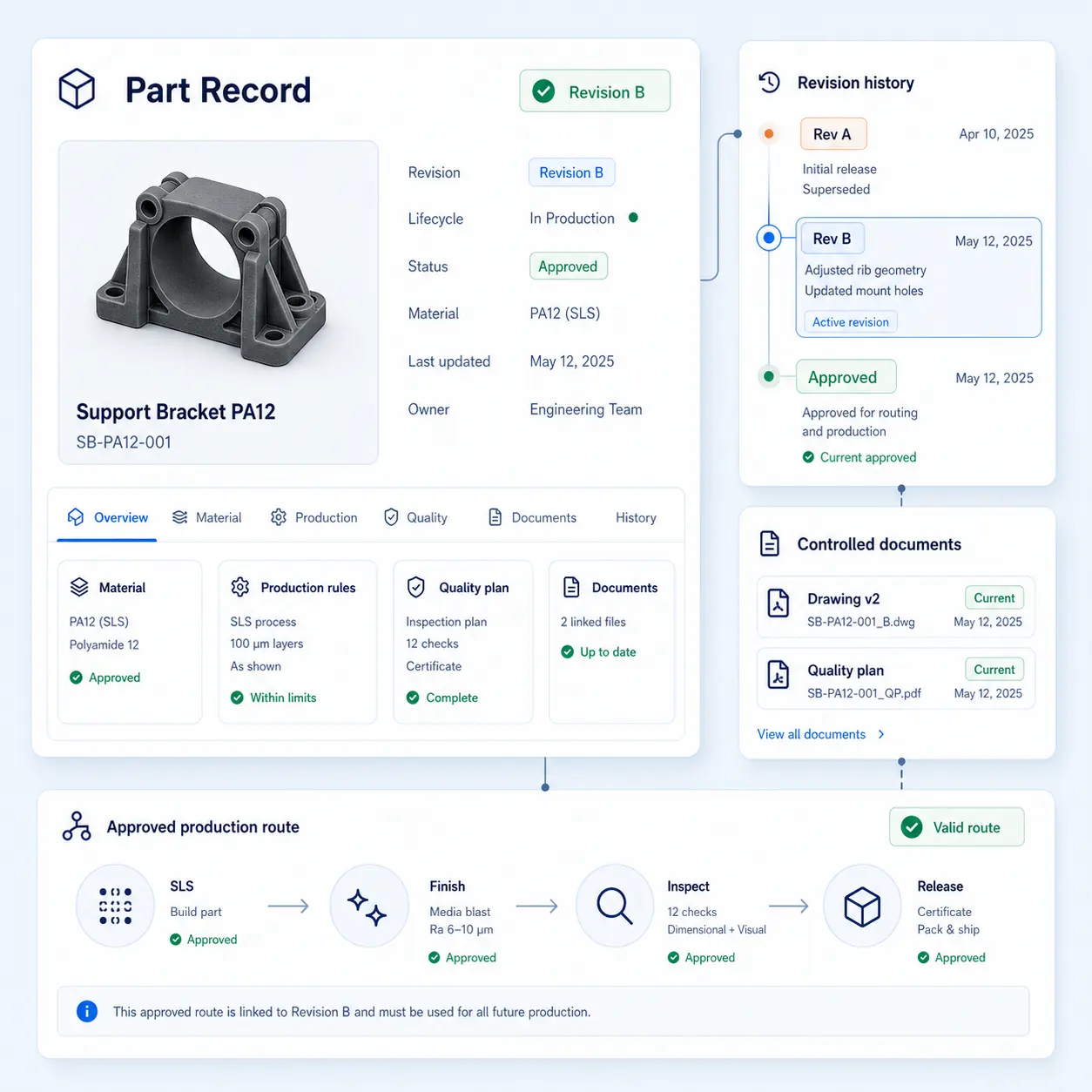
GhostMatter interface connecting the right part revision, documentation, readiness status, and approved production route.

Reuse approved routes

Strengthen governance for repeatable distributed manufacturing.

Support audits without rebuilding the story manually

When production data is scattered, audits become archaeology. Traceability should keep evidence attached to the decision and execution path.

GhostMatter keeps context visible so teams can review what was requested, approved, produced, inspected, and delivered.

Use

  • Supports audit readiness
  • Helps centralize production evidence
  • Supports product data continuity
  • Helps prepare for regulated traceability requirements
  • Supports quality and customer evidence workflows

Avoid

  • Guarantees compliance
  • Makes every product DPP-ready
  • Automatically satisfies all regulatory requirements

Keep every activated part connected to its production history

Start with parts where quality, repeatability, supplier accountability, or regulatory pressure makes traceability essential.

FAQ

What is manufacturing traceability?

Manufacturing traceability is the ability to track the history of a part, batch, material, process, and production decision across the manufacturing workflow.

What is the difference between traceability and genealogy?

Traceability follows what happened across the workflow. Genealogy links a finished part or batch to the components, materials, data, and process steps that created it.

Can GhostMatter track serialized and batch parts?

GhostMatter should be positioned to support both serialized and batch-oriented traceability models where the data structure and production workflow are defined during implementation.

What quality data can be linked to a part?

Quality documents, inspection results, certificates, release records, non-conformity notes, and audit trail events can be connected to a part history depending on the workflow.

How does traceability work across multiple production sites?

A centralized digital record helps keep the part version, production route, and evidence model consistent, even when production is executed through different qualified capacities.