MRO and spare parts
Critical references with uncertain demand, long lead times or high downtime impact.
Explore spare parts
Digital Inventory Assessment
Identify the spare parts, obsolete references, low-volume parts, and critical assets that are the best candidates for governed digital inventory and controlled on-demand production.
GhostMatter helps industrial teams review a selected part portfolio, understand readiness gaps, and define a practical first scope for digital inventory.
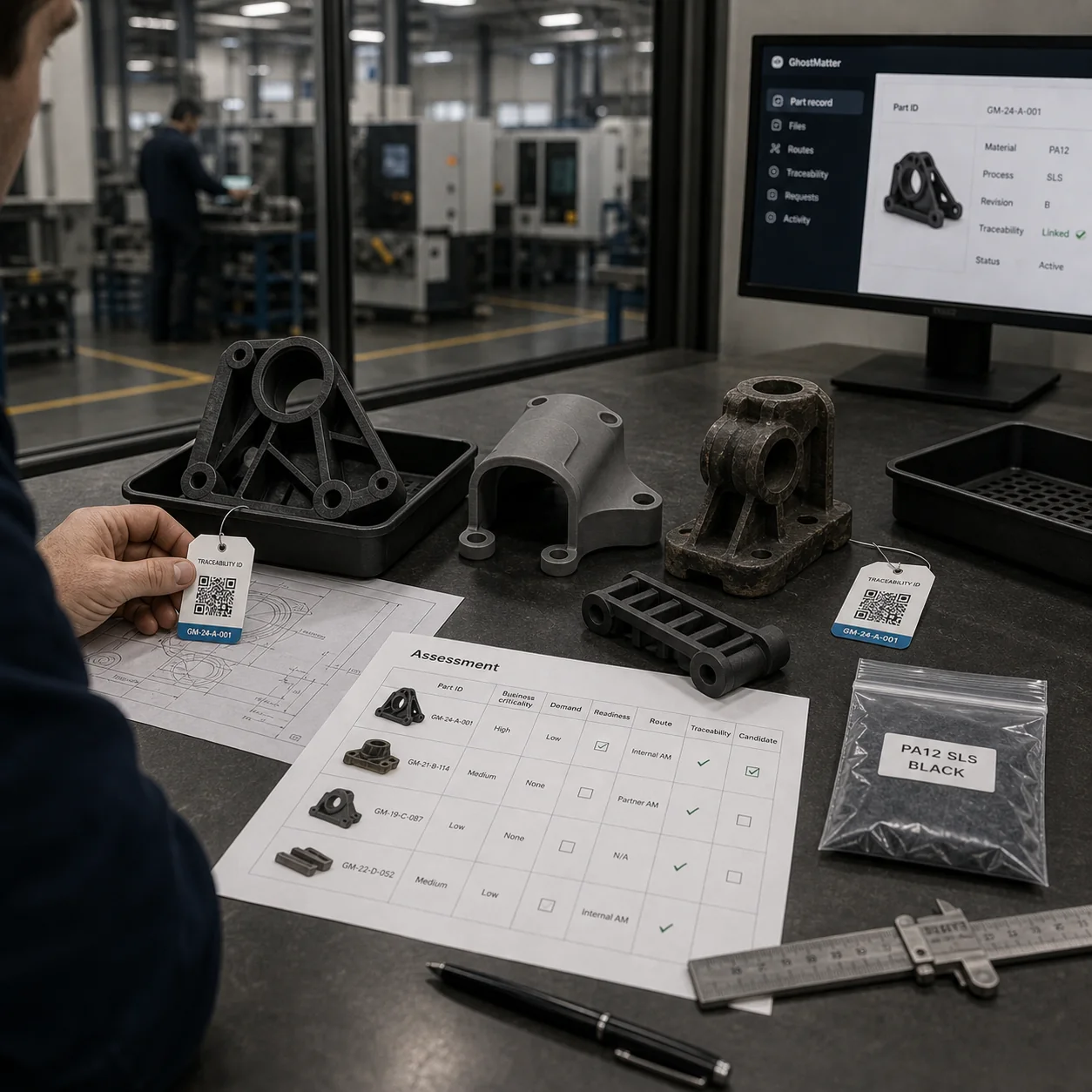
The assessment is designed for industrial teams that need a practical starting point, not a theoretical transformation program.
Critical references with uncertain demand, long lead times or high downtime impact.
Explore spare partsReferences that are difficult to reorder, qualify or replace through traditional sourcing.
Explore obsolete partsParts that consume cash and storage space but are rarely consumed.
Explore low-volume partsParts that may benefit from controlled activation across internal or partner capacity.
Explore distributed capacityWe review your selected portfolio across the dimensions that determine whether a part can move from static inventory to controlled on-demand manufacturing.
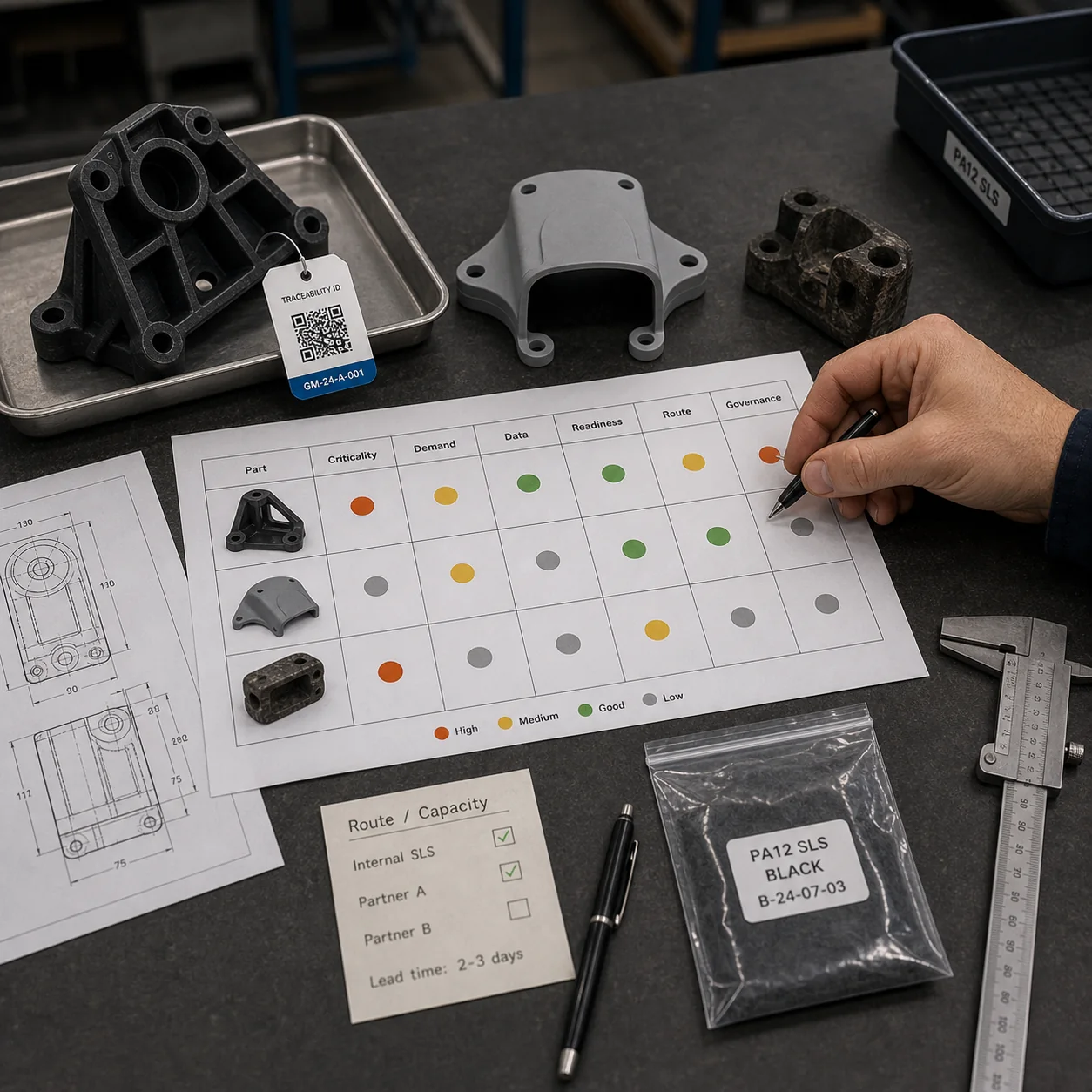
The outcome is not a generic report. It is a practical first view of where digital inventory can start.
A first view of the part families or references that may be worth reviewing in more detail.
A practical view of what is already usable and what is missing: files, metadata, requirements, approvals or traceability data.
A structured way to compare inventory exposure, lead time, obsolescence risk and operational criticality.
A recommended starting point for a focused digital inventory pilot.
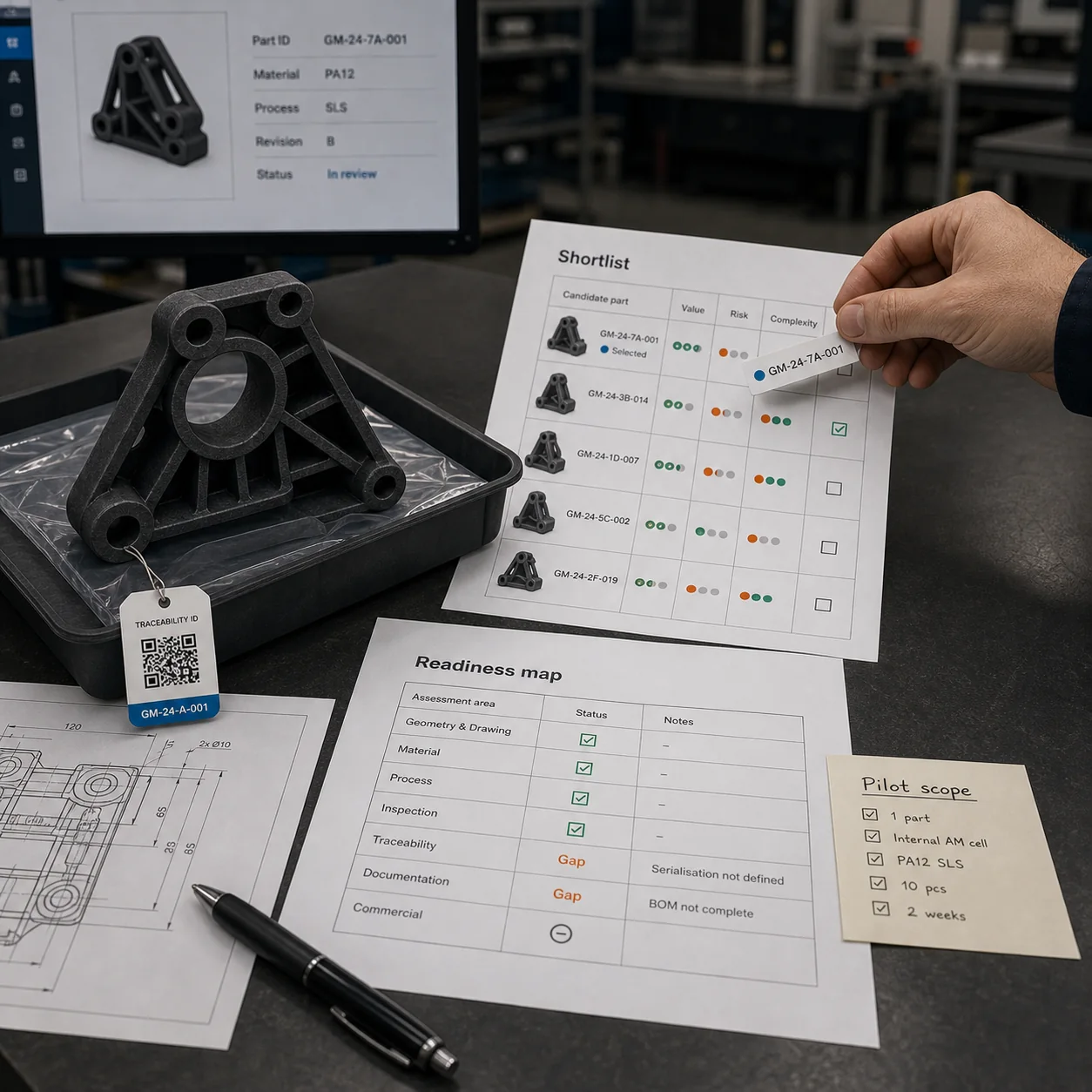
The assessment starts with a focused scope. You do not need a perfect dataset or a complete inventory to begin.
Tell us which part families, sites, systems or operational issues you want to review.
We look at criticality, demand, available data, readiness, production route fit and governance needs.
You get a practical recommendation for where to start, what to prepare and which risks to address first.
You do not need a perfect dataset to start. A focused view of the problem is enough for a first discussion.
ERP means Enterprise Resource Planning. PLM means Product Lifecycle Management. CMMS means Computerized Maintenance Management System.
The best starting point is usually a focused portfolio where operational risk and data availability make the business case easier to evaluate.
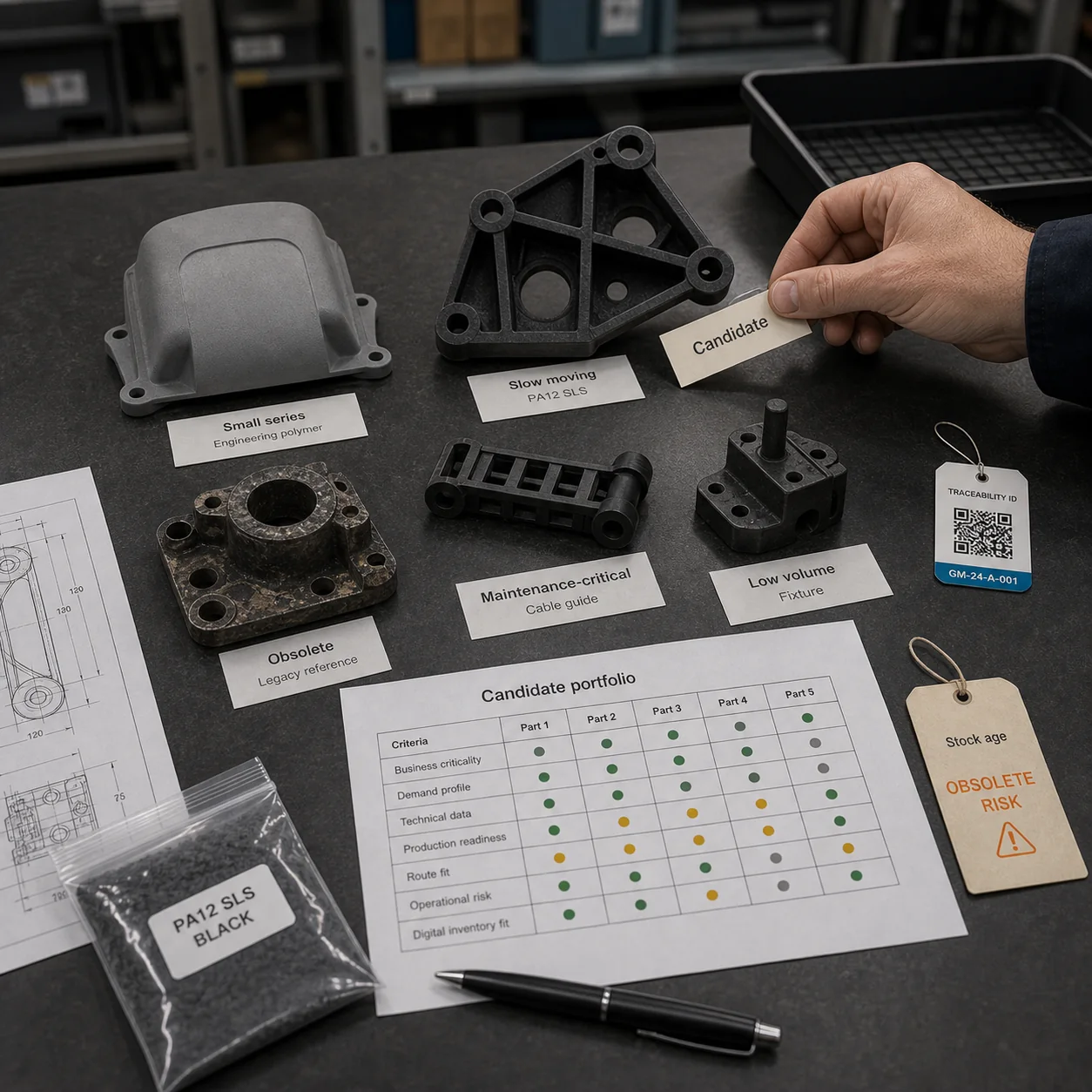
Digital inventory is not about digitizing everything. Some parts should remain physically stocked. Some should stay with traditional suppliers. Some are not suitable for on-demand production. The assessment helps identify where digital inventory makes sense — and where it does not.
You do not need to transform your full inventory at once. Start with a focused set of parts where stock exposure, sourcing delays, obsolescence, or downtime risk make the business case easier to evaluate.
It is a focused review of selected part families or references to identify where governed digital inventory may create operational value.
No. The assessment can start with partial data. Missing drawings, metadata, approvals or requirements are part of the readiness review.
No. Additive manufacturing can be one production route, but the assessment focuses on governed digital inventory, readiness, routing and traceability.
No. The goal is to identify which parts may be better prepared digitally, which should remain physically stocked, and which need further qualification.
The next step is usually a focused pilot scope: selected parts, required data, governance rules, readiness gaps and possible activation routes.