

For many industrial teams, cloud manufacturing sounds simple at first: send a file, choose a route, make the part closer to demand. The operational reality is messier. A drawing may be out of revision, a tolerance may be missing, a supplier route may not be approved, or the team may not know which evidence has to follow the finished part.
That is why the useful question is not only whether a company can access manufacturing capacity through the cloud. The harder question is which parts can move from static records into a controlled operating model, with digital inventory, production readiness, routing, and traceability in place before anyone activates production.
Search teams may reduce this need to a phrase like "cloud for manufacturing." Inside an industrial company, the same idea has to become a governed workflow: which part, which file, which route, which approval, and which traceability record.
In Brief
In practical terms, cloud manufacturing for industrial companies is a governed way to connect production-ready digital inventory with approved manufacturing routes. It is not an open supplier marketplace, a file library, or a 3D printing-only model.
For industrial teams, the question is rarely just "where can this be made?" It is usually closer to: "do we know enough about this part to release it through a controlled route?"
GhostMatter's angle is that cloud manufacturing becomes operational only when industrial part data can be governed, prepared, routed, and traced from file to finished part context.
Cloud Manufacturing and Digital Inventory: Definitions and Challenges
Cloud manufacturing is a production model where companies use connected manufacturing capacity through a digital operating layer. In an industrial setting, that layer has to do more than exchange files or request quotes.
It has to help an operations, engineering, or supply chain team answer practical questions before the part moves:
- Which parts are eligible for digital activation?
- Which files are current, complete, and controlled?
- Which material, process, tolerance, and inspection requirements apply?
- Which production routes are approved?
- Which records need to be kept for traceability?
- Who is allowed to access, modify, or activate the data?
For an Industrial Operations Director, this is not an abstract technology category. It is a way to decide whether selected parts can move from static records to controlled production workflows without losing governance.
In practice, cloud manufacturing may support greater responsiveness when part eligibility and approved production routes are in place. It may also help teams reduce exposure to unnecessary physical inventory where eligible. However, those outcomes depend on the part family, production route, quality requirements, and business context. They should not be treated as guaranteed results.
Why a File Is Not Enough
The weakest version of cloud manufacturing starts with a file and assumes the rest can be solved later. That approach breaks down quickly in industrial environments.
A technical file alone does not tell a team whether a part can be produced repeatably or under the right constraints. A file may not show the current revision status, approved process, material requirements, inspection rules, ownership, supplier restrictions, or traceability needs.
By contrast, digital inventory is different from a file library. It should connect the technical file to the production context around the part. That context is what helps teams decide whether the part can be activated, routed, reviewed, or held back.
For example, a spare part can have a valid CAD file and still be unfit for activation if the material grade is unclear, the revision has not been approved, or the inspection requirement is missing. For a part to be considered in a cloud manufacturing workflow, the file needs supporting information such as:
- revision status;
- part criticality;
- material requirements;
- process requirements;
- tolerance and inspection expectations;
- eligible production methods;
- access-control needs;
- production route options;
- traceability requirements.
Without that context, a company may be moving technical data faster without actually reducing operational risk. In some cases, it may even increase risk by making uncontrolled activation easier.
Production Readiness Comes Before Production
Production readiness is the state where the part data, technical file, and production context are complete enough to support a controlled next step. It does not mean every part is ready for on-demand production. It means the checks are visible before a decision is made.
For a cloud manufacturing workflow, production readiness can include:
- file completeness;
- revision control;
- approved material and process options;
- quality requirements;
- part eligibility notes;
- supplier or route constraints;
- traceability expectations;
- review status.
Cautious language matters here. Cloud manufacturing can help teams evaluate production options, but production still depends on approved routes, validated data, and human review where needed.
How GhostMatter Supports Governed Cloud Manufacturing
GhostMatter frames cloud manufacturing as part of a governed industrial workflow. The goal is not to create an unmanaged manufacturing network. The goal is to turn selected industrial part data into production-ready digital inventory that can be activated through controlled routes.
Step 1: Identify Candidate Parts
The first move is not to digitize everything. A better starting point is a narrow candidate list: parts with sourcing pressure, maintenance relevance, obsolescence risk, low-volume demand, or clear operational value if the data can be governed.
Candidate groups can include:
- maintenance-critical parts;
- selected spare parts;
- low-volume industrial components;
- obsolete or hard-to-source items;
- production-support parts with clear requirements.
Not every part is a good fit. Safety-critical parts, high-volume components, regulated parts, or parts with unresolved quality requirements may need additional review before they can enter a cloud manufacturing workflow.
Step 2: Build Governed Digital Inventory
Governed digital inventory connects the part record, file, production context, and access model. It is designed to make the part understandable before it is activated.
For cloud manufacturing, that means the digital inventory should show more than a file name. It should make the operational status visible: what the part is, what data supports it, what is missing, and what needs review.
Step 3: Check Production Readiness
Before any production route is considered, the part should pass readiness checks appropriate to its risk and use case.
Those checks may include:
- file quality;
- revision approval;
- process fit;
- material compatibility;
- inspection needs;
- route availability;
- traceability requirements;
- human approval.
Any claim that a part can move faster, cost less, or improve availability should be validated with evidence before it is used as a business outcome.
Step 4: Route Production Under Control
Production routing connects the part to the production path. In a governed cloud manufacturing model, this should not be a blind handoff.
Routing should consider:
- approved production methods;
- available manufacturing capacity;
- supplier or site qualification;
- quality expectations;
- lead-time exposure, without promising shorter lead time;
- access to files and production data;
- traceability records.
As a result, cloud manufacturing becomes more credible when routing is governed. It becomes riskier when routing is treated as a marketplace transaction without technical and operational controls.
Step 5: Keep Traceability From File to Part
Traceability links the technical file, part record, route, order context, production event, and finished part context. It matters because industrial teams need to understand what happened, which data was used, and which route was followed.
Cloud Manufacturing vs Traditional Sourcing
Cloud manufacturing should not be positioned as a replacement for every sourcing model. Instead, it is one operating model for eligible parts and controlled production routes.
| Decision area | Traditional sourcing | Governed cloud manufacturing |
|---|---|---|
| Inventory model | Physical-first planning and reorder logic | Digital-first activation where part eligibility is validated |
| Activation | Purchase order, supplier request, or reorder workflow | Controlled activation from production-ready digital inventory |
| File governance | Often distributed across teams, suppliers, and systems | Governed access to files, metadata, and production context |
| Production route | Usually tied to known suppliers or established sourcing | Approved routes selected according to process, quality, and traceability needs |
| Traceability | Varies by supplier and process | Designed to connect file, route, order, and finished part context |
| Best fit | Stable demand, established supply, and predictable replenishment | Eligible parts that need flexibility, obsolescence support, or controlled local/distributed production |
| Main risk | Supplier dependency, long reorder paths, fragmented part knowledge | Uncontrolled activation if readiness, routing, and governance are missing |
The point is not to declare one model better in every case. The point is to identify where cloud manufacturing can be operationally sound, subject to validation.
Deployment Roadmap: From Candidate Parts to Controlled Activation
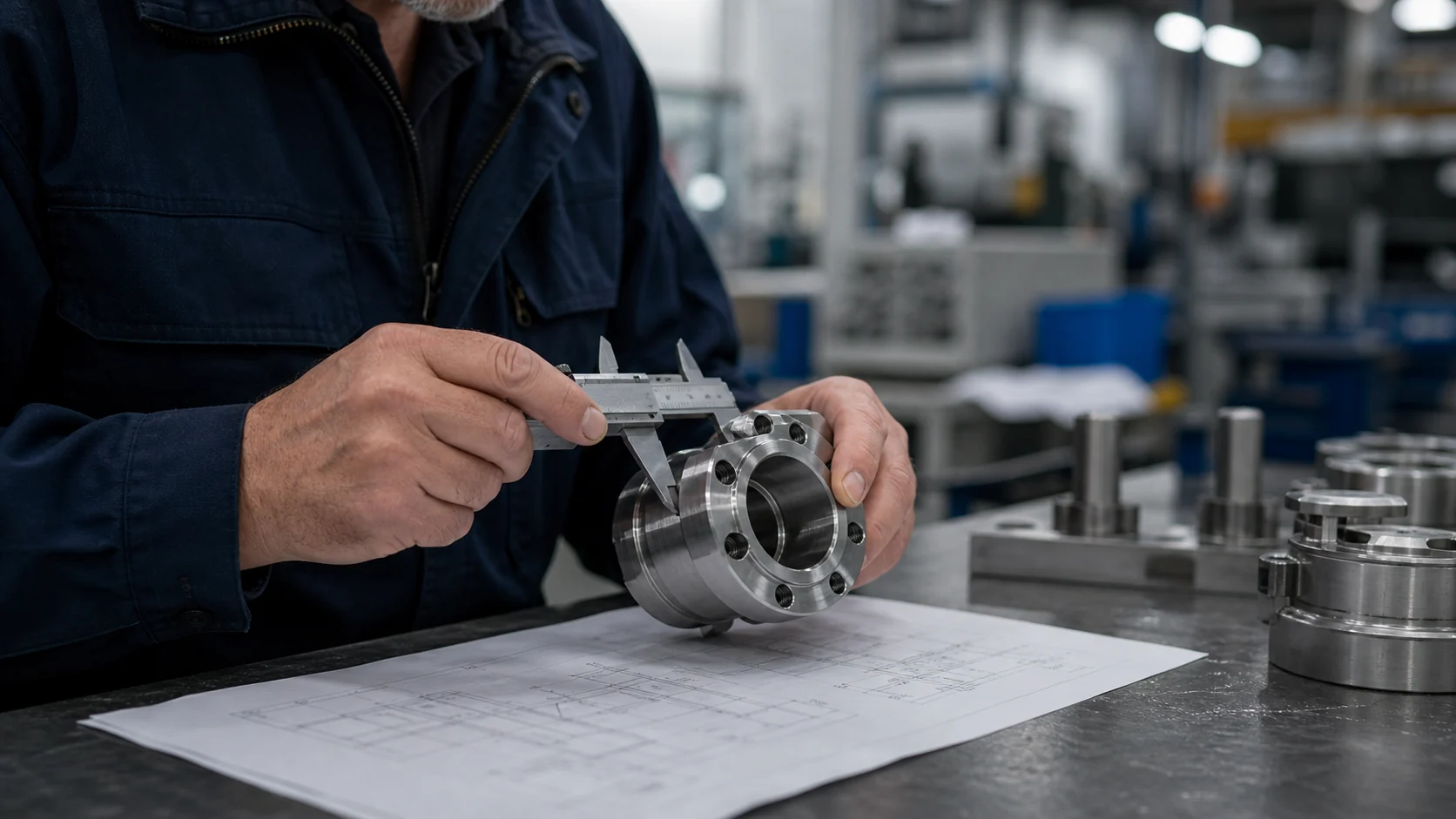
Before using cloud manufacturing, industrial teams should evaluate the part, the data, the route, and the business case boundaries. This is where the work becomes practical: a team has to decide what can move now, what needs more evidence, and what should stay outside the workflow.
Part Suitability
Part suitability depends on:
- criticality;
- geometry;
- material;
- process requirements;
- inspection needs;
- use environment;
- replacement frequency;
- risk if the part fails.
As a result, teams should not activate parts with unclear requirements just because a file exists.
Data Readiness
Data readiness asks whether the technical information is complete enough to support a production decision. A missing tolerance, unclear material, or unresolved ownership question can be enough to stop the workflow.
Useful questions include:
- Is the file current?
- Is the revision controlled?
- Is ownership clear?
- Are requirements documented?
- Are inspection expectations known?
- Is missing information visible?
If the answer is unclear, the part needs more preparation before cloud manufacturing is considered.
Supplier And Route Governance
In addition, cloud manufacturing may involve distributed manufacturing, local production, or other approved production routes. Each route needs governance.
That includes:
- route approval;
- capability fit;
- quality expectations;
- file access rules;
- production data handling;
- traceability records.
Without route governance, cloud manufacturing can drift toward unmanaged outsourcing.
Business Case Boundaries
Teams may use Total Cost of Ownership (TCO), cash-flow exposure, maintenance risk, and obsolescence risk as decision lenses. However, these indicators are useful for assessment, not guaranteed outcomes without validated proof.
Safe framing:
- Cloud manufacturing can help teams evaluate alternatives when part data is production-ready.
- It may support more responsive production when part eligibility and approved production routes are in place.
- It may help reduce exposure to unnecessary physical inventory where eligible.
Claims to avoid without proof:
- guaranteed cost reduction;
- guaranteed shorter lead time;
- total stock elimination;
- guaranteed resilience outcome;
- measured customer outcomes.
Common Misconceptions to Avoid
Cloud Manufacturing Is Not Just 3D Printing
For example, additive manufacturing can be one possible route inside a broader cloud manufacturing model. It should not define the whole model.
Industrial cloud manufacturing may include different production methods, route decisions, quality requirements, and data controls. In other words, the core issue is not the production process alone. The core issue is whether a part can be activated through an approved, traceable workflow.
GhostMatter should not be described as a platform limited to 3D printing.
Cloud Manufacturing Is Not A Supplier Marketplace
By contrast, a marketplace mainly connects buyers and suppliers. That is not enough for industrial cloud manufacturing.
Industrial companies need file governance, production readiness, access control, route approval, and traceability. Without those controls, a marketplace-style workflow can move faster than the company's ability to manage risk.
GhostMatter should not be described as an open marketplace for manufacturing capacity.
Digital Inventory Is Not A File Library
A file library stores files. By contrast, digital inventory connects files to industrial context.
That context can include part identity, revision status, eligibility, requirements, access rules, production routes, and traceability expectations. Therefore, this context makes digital inventory useful for cloud manufacturing.
GhostMatter should not be described as a file library.
Where GhostMatter Fits
GhostMatter is designed around governed, traceable digital inventory that can be prepared for controlled on-demand production. For cloud manufacturing, that means the platform's role is not to make unsupported production promises. Its role is to structure the data, readiness checks, and activation logic that industrial teams need before production decisions are made.
The cloud manufacturing technology page remains the main destination for GhostMatter's Cloud Manufacturing capability. This article supports that page by explaining the operating conditions around it.
GhostMatter connects several layers:
- digital inventory for governed part data;
- production readiness for activation checks;
- production routing for controlled manufacturing decisions;
- traceability for records from file to part context;
- distributed or local production routes where approved.
The value is in the controlled system around the part, not in a claim that every part can be produced instantly or anywhere.
How To Start
Industrial teams evaluating cloud manufacturing can begin with a narrow, controlled scope.
1. Build A Candidate Part List
Start with a defined set of parts. Good candidates may include selected spare parts, obsolete components, low-volume parts, or maintenance-related items where the current sourcing model creates operational pressure.
Avoid starting with every part category at once.
2. Assess Digital Inventory Readiness
For each candidate part, check whether the technical file and production context are complete enough to support review.
If the part is missing revision status, material information, process requirements, or quality expectations, it is not ready for activation.
3. Identify Route And Proof Requirements
Before production, define what route could be approved, what proof is required, and what data must be retained.
This includes technical, operational, and business review. In some cases, it may also include security, legal, or compliance review depending on the part.
4. Explore The Platform Or Book A Demo
If your team is evaluating cloud manufacturing as part of a digital inventory strategy, the next step is to review the platform layer that governs activation.
Explore the platform or book a demo to discuss how digital inventory, production readiness, routing, and traceability can support controlled cloud manufacturing workflows.
FAQ
What is cloud manufacturing for industrial companies?
Cloud manufacturing for industrial companies is a governed way to connect production-ready digital inventory with approved production routes. It should include readiness checks, route control, and traceability, not just file transfer or supplier matching.
How is cloud manufacturing different from a supplier marketplace?
A supplier marketplace mainly connects demand with suppliers. Cloud manufacturing for industrial companies needs more governance: controlled files, part eligibility, production readiness, approved routes, and traceability from file to finished part context.
Why does cloud manufacturing require digital inventory?
Cloud manufacturing requires digital inventory because a technical file alone does not show whether a part is current, eligible, complete, approved, or ready for production. Digital inventory connects the file to the production context needed for controlled activation.
What makes a part ready for cloud manufacturing?
A part may be ready when its file, revision, material requirements, process needs, quality expectations, approved routes, and traceability requirements are clear enough to support a controlled production decision. The exact threshold depends on part eligibility and human validation.
Can cloud manufacturing reduce physical inventory?
Cloud manufacturing may help reduce exposure to unnecessary physical inventory where eligible, but it should not replace physical stock planning. Some parts still need physical stock, and every decision depends on risk, demand, eligibility, and approved production routes.
Is cloud manufacturing only about 3D printing?
No. 3D printing can be one possible production route, but cloud manufacturing is broader. For industrial companies, the key issue is governed activation of production-ready digital inventory through approved and traceable routes.
Conclusion
Cloud manufacturing becomes practical when industrial teams can govern the data, readiness checks, routes, and traceability around each eligible part.
To see how GhostMatter structures that operating layer, explore the platform.
If your team already has a cloud manufacturing or digital inventory initiative, book a demo to discuss the workflow.