Central asset
Keep approved files, revisions and technical context connected before production is triggered.

Technology / Distributed Manufacturing
Distributed manufacturing only works when production can move closer to demand without losing control over files, routes, quality, and traceability.
GhostMatter helps industrial teams connect approved internal capacity and qualified partners around controlled digital inventory, so distributed production stays governed instead of becoming fragmented sourcing.
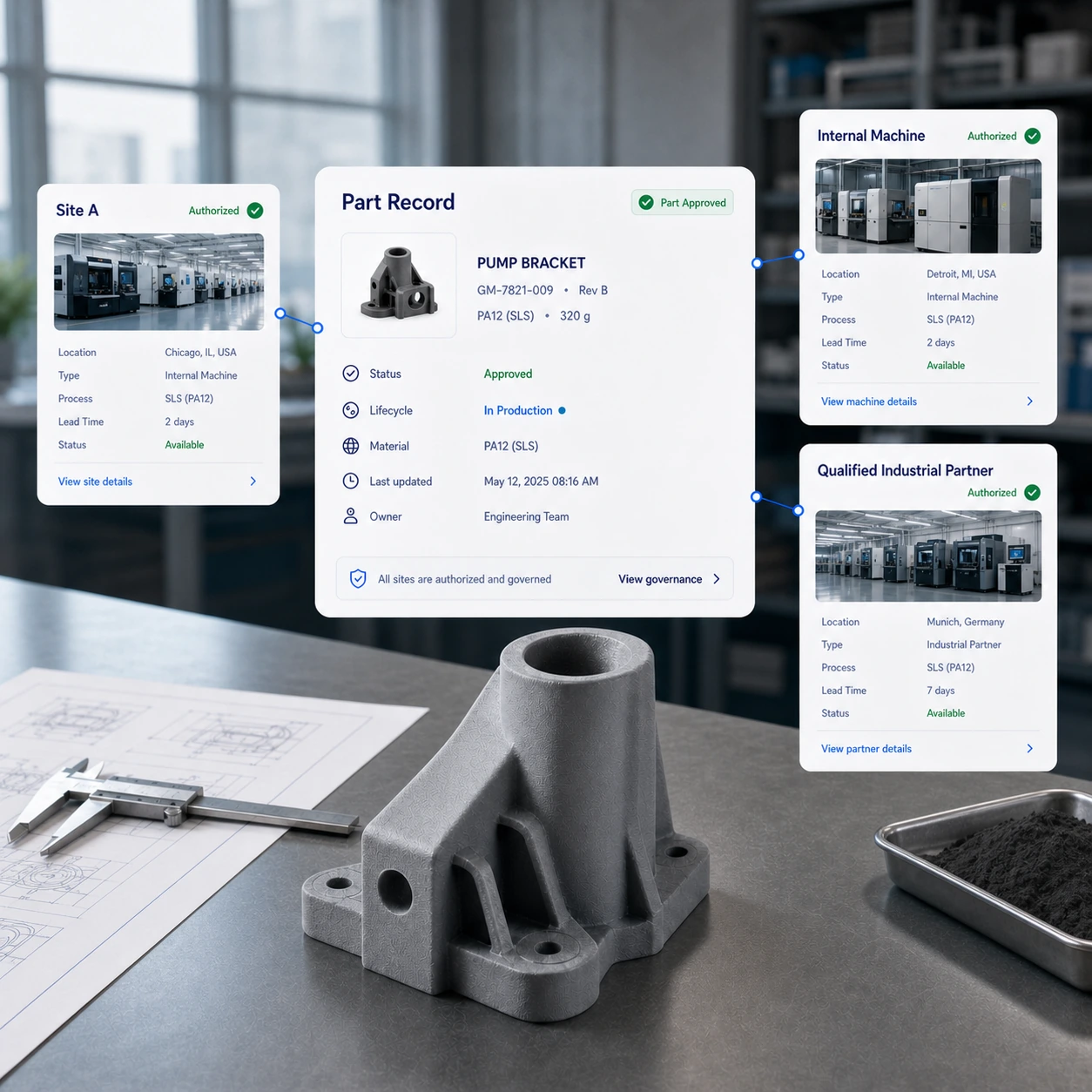
The challenge is not only finding capacity. It is ensuring that the right file, revision, material, route, and quality context travel with the part.
GhostMatter is the governance layer for distributed production. The platform stores the approved digital asset, controls who is authorized to manufacture the part, records where it can be produced and preserves traceability across internal and external capacity.
Keep approved files, revisions and technical context connected before production is triggered.
Use internal machines or qualified local partners only when the route is defined and approved.
Record request, execution, quality and history against the same digital inventory asset.
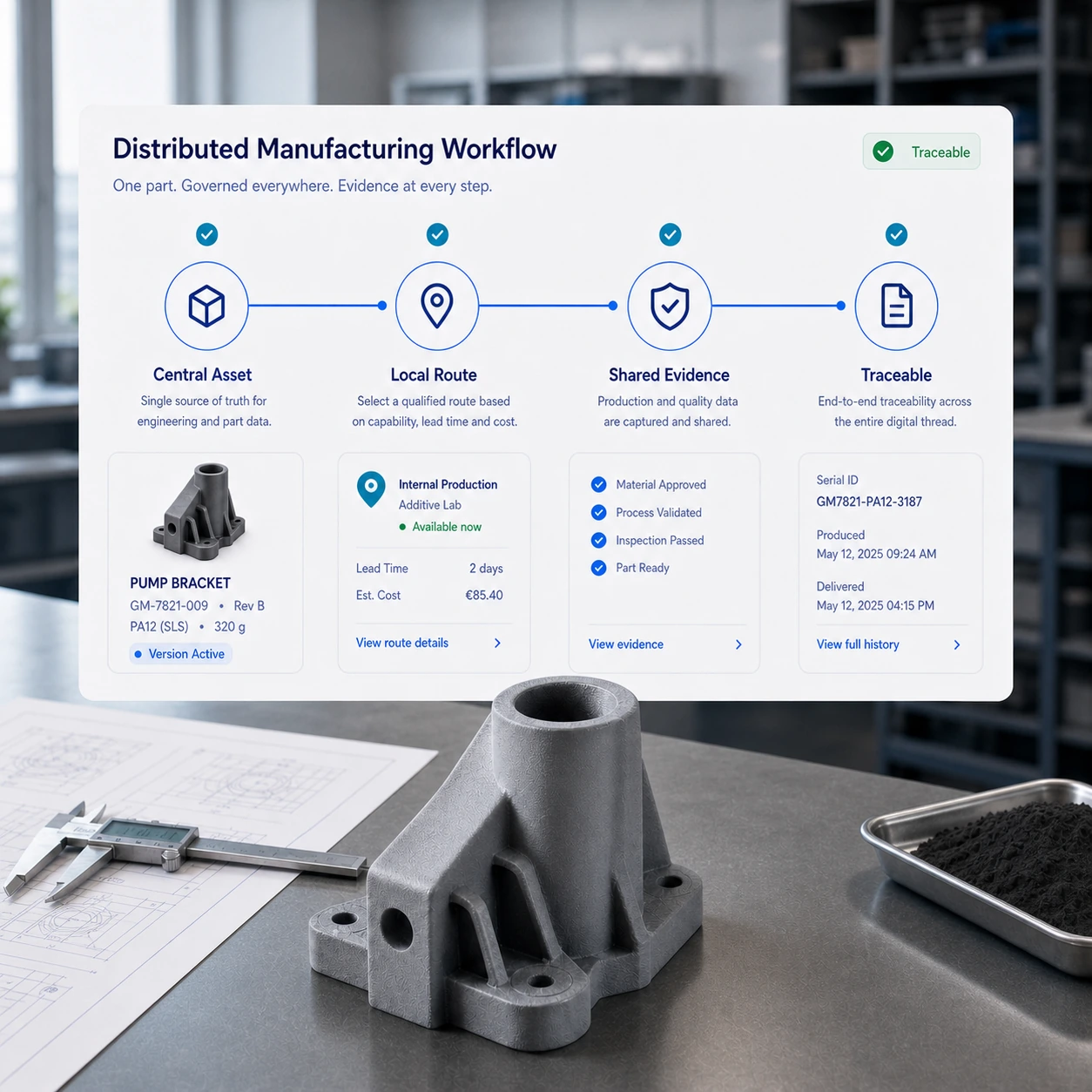
It helps companies avoid the binary choice between carrying stock everywhere and waiting for centralized supply.
Activate qualified local capacity for selected parts when centralized supply creates delay or risk.
Explore spare partsSupport regional service and equipment uptime with controlled production routes close to demand.
Explore maintenanceReduce dependency on single sources when a qualified route can respond faster.
Explore emergency sourcingUse distributed capacity to preserve operations without losing file, quality or route governance.
Explore resilienceA production partner or internal machine is not useful unless the route is defined. GhostMatter turns capacity into an operational route by connecting capability, location, authorized sites, quality and approval status.
Identify internal machines, sites and local partners that may support selected parts.
Connect material, process, equipment, location and lead-time context to the route.
Define quality expectations, access rights, approval status and release authority.
Link the approved digital inventory record to the route that can produce it.
Preserve production evidence, partner context and order history after each activation.
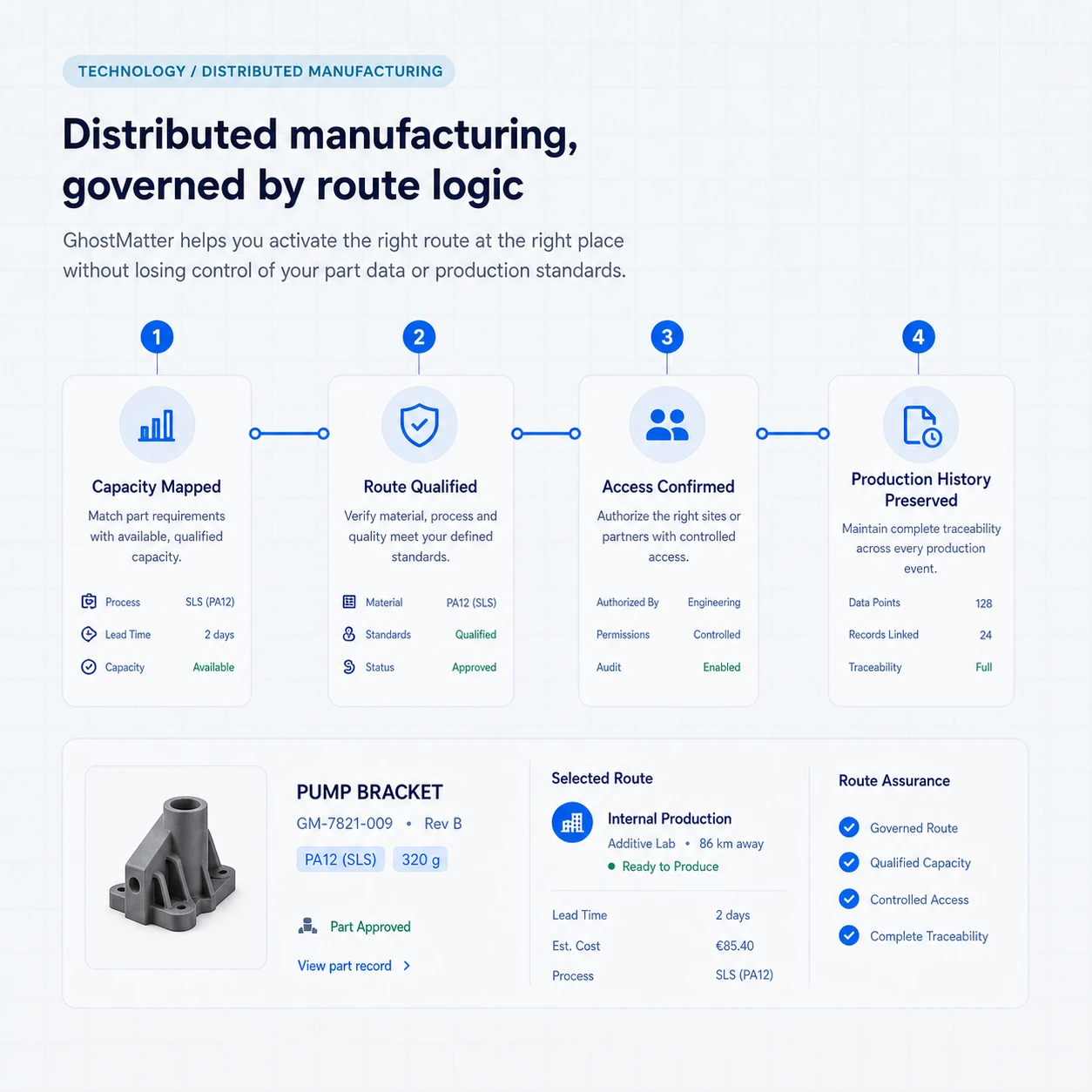
Distributed manufacturing becomes usable when local execution is attached to a governed operating model.
Use qualified capacity closer to demand when it reduces delay or operational risk.
Explore local productionRoute work to specialized industrial partners without losing governance.
Explore distributed capacityKeep execution history linked to the digital inventory asset.
Explore traceabilityThe strongest candidates combine regional demand, clear technical rules and available qualified capacity.
Use GhostMatter to identify which parts can be routed through internal or partner capacity with the right readiness, permissions, and traceability in place.
Distributed manufacturing means using multiple production locations, such as internal sites or qualified partners, instead of relying only on one centralized source.
Because the same file, revision, material rule and quality requirement must remain controlled even when production happens through different sites or partners.
It can reduce dependency on single sources and long transport paths for selected parts, provided the production routes are qualified and controlled.
GhostMatter is the operating layer that can connect digital inventory to internal machines and qualified local partners. It should not be framed only as a network.