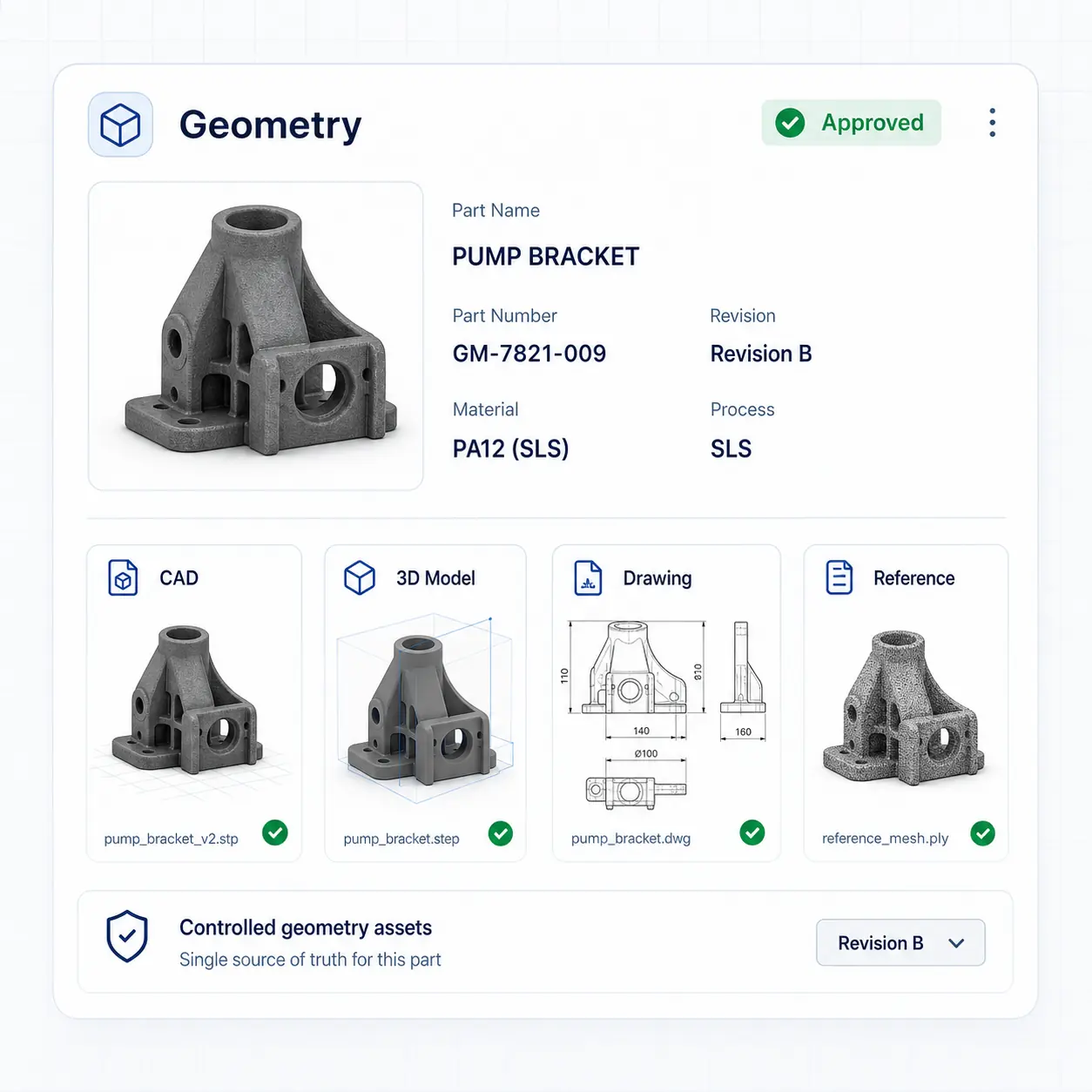
Geometry
3D files and versions associated with the record.

Digital Inventory
Bring together technical data, requirements and approvals before preparing a new order.
Your digital inventory brings together selected parts’ digital twins and associated information, within the configured scope.
One record, connected information
In the GhostMatter method, the digital twin is the part’s quality reference. It is essential to quality management in MaaS — Manufacturing as a Service, where manufacturing is delivered as an on-demand service.
Qualification is a human decision for a defined application, material, process and acceptance criteria. A displayed status or uploaded file does not by itself authorize manufacturing.
Physical stock tracks available quantities. Digital inventory prepares information for future requests within the scope agreed with your teams.
Within the configured scope, the record associates 3D files, requirements, documents and recorded history. Confirmed versioning concerns 3D files.
3D files and versions associated with the record.
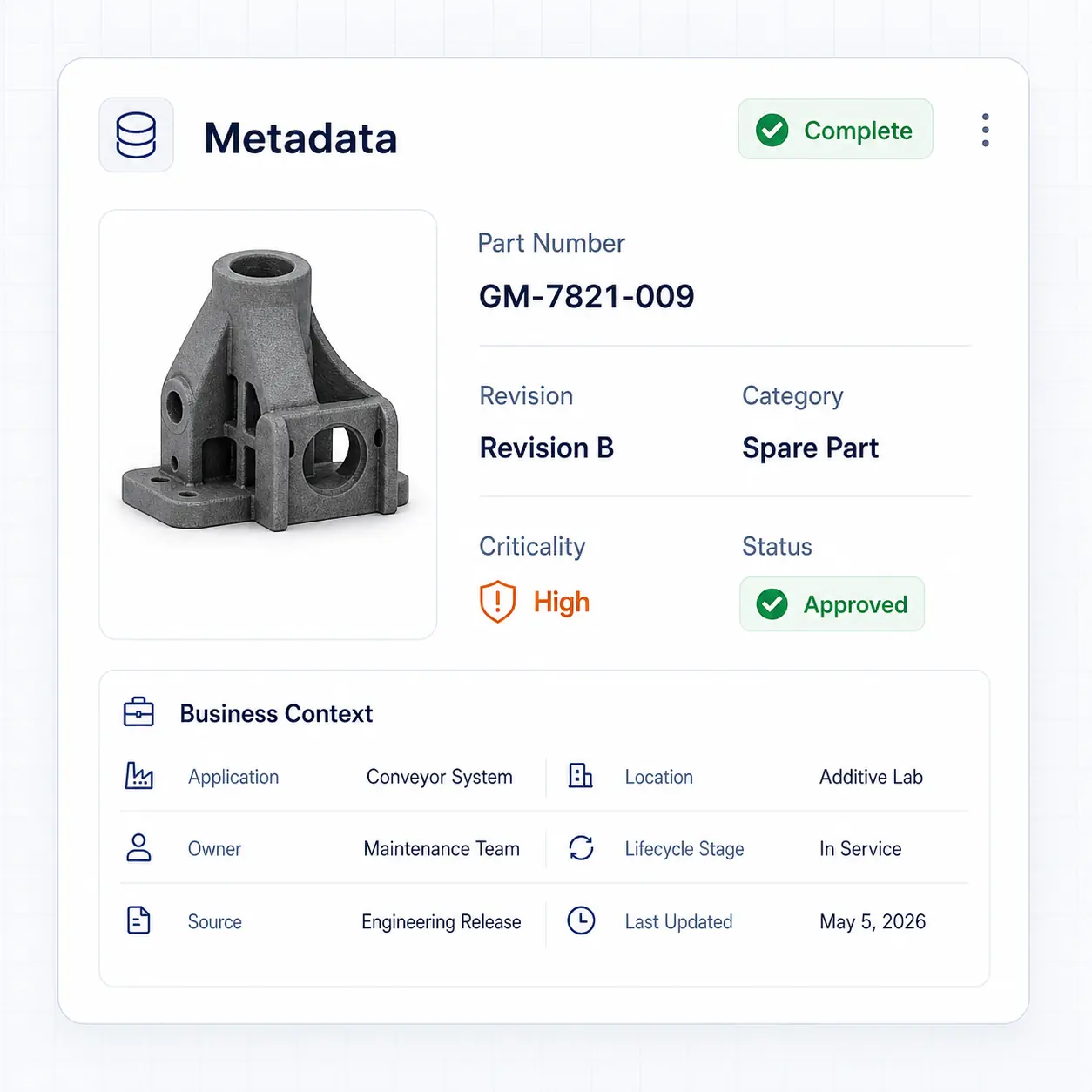
Reference, description and information used to identify the part.
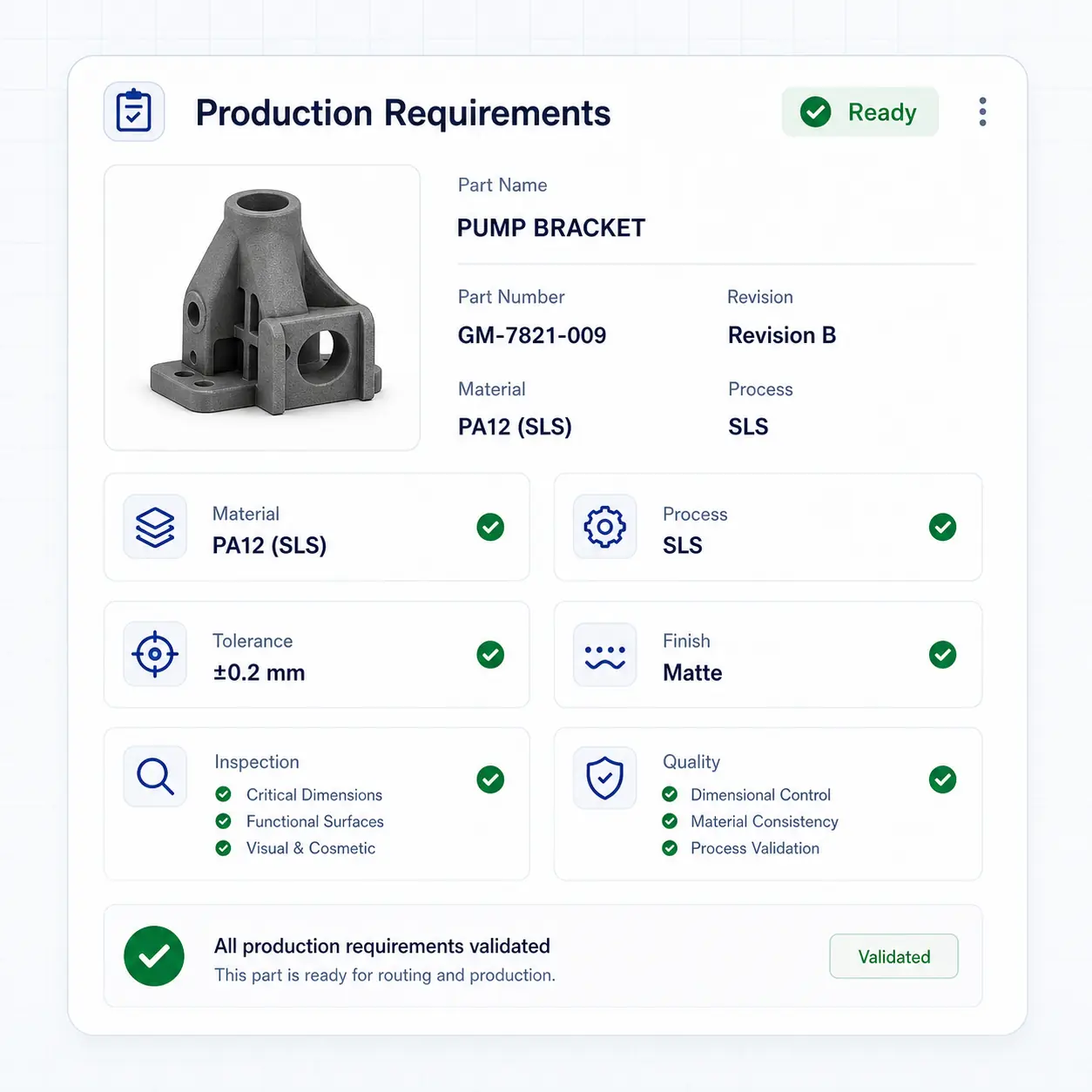
Application, material, process and acceptance criteria to agree.
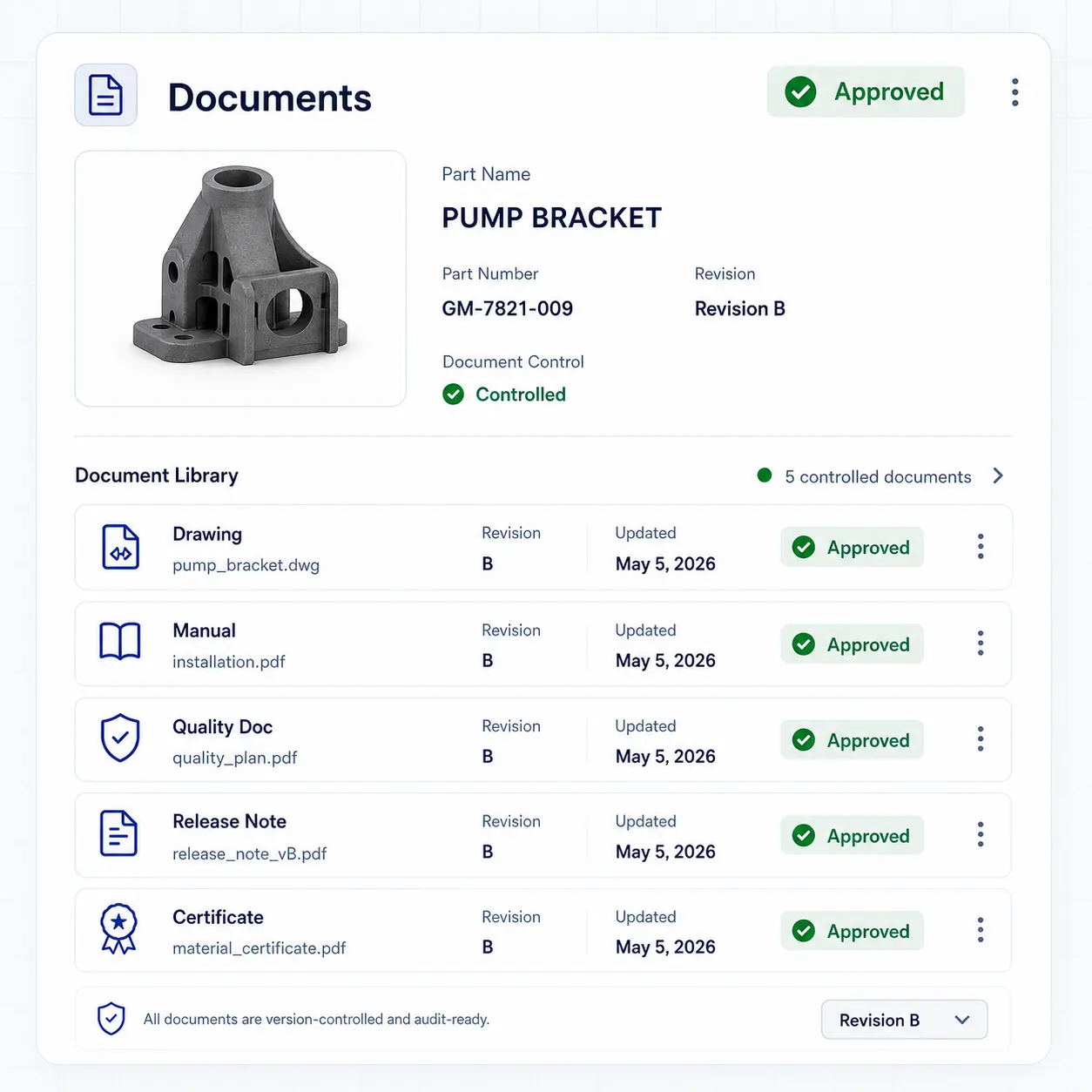
Associated documents within the configured scope.
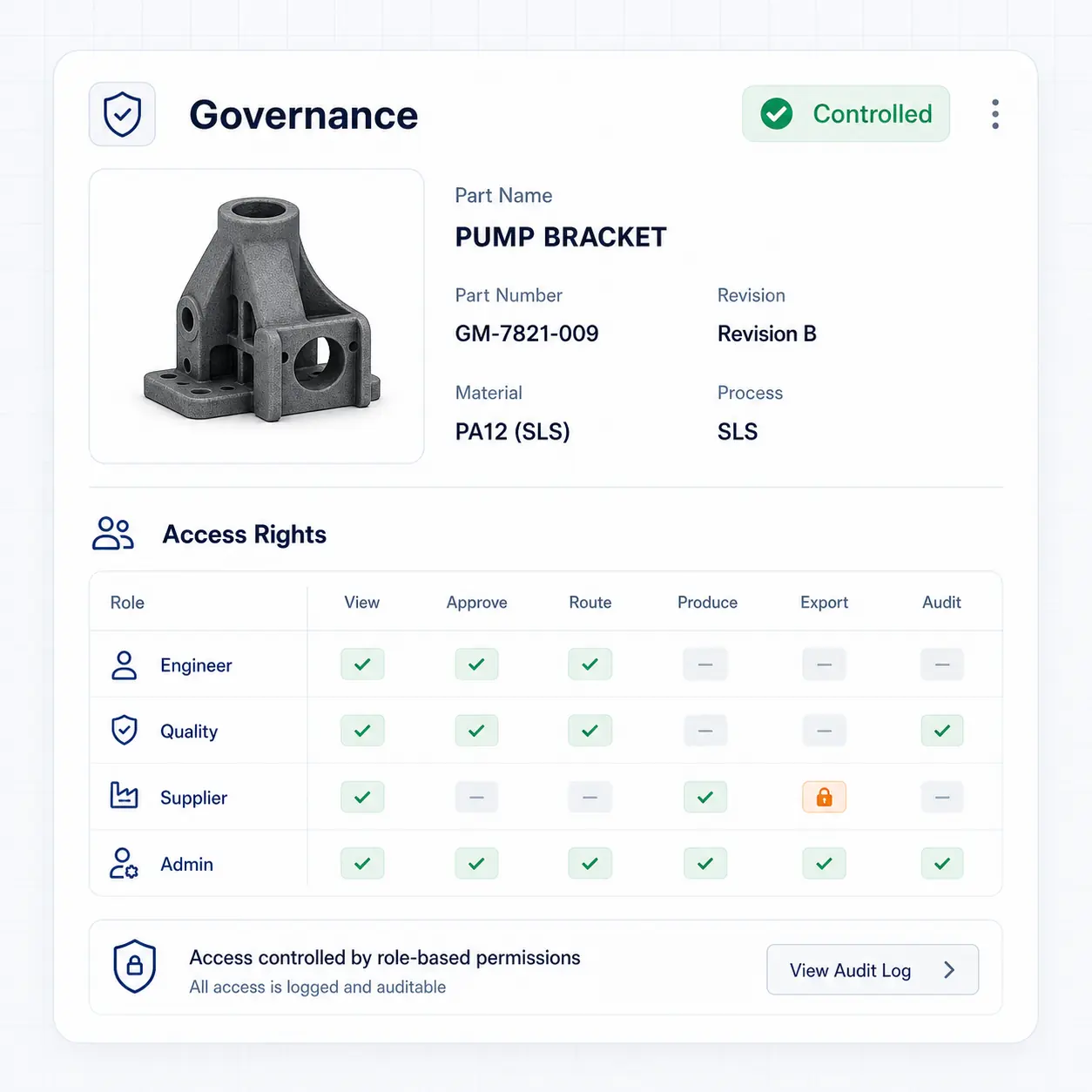
Simple Ghost space roles and inter-space sharing when enabled.
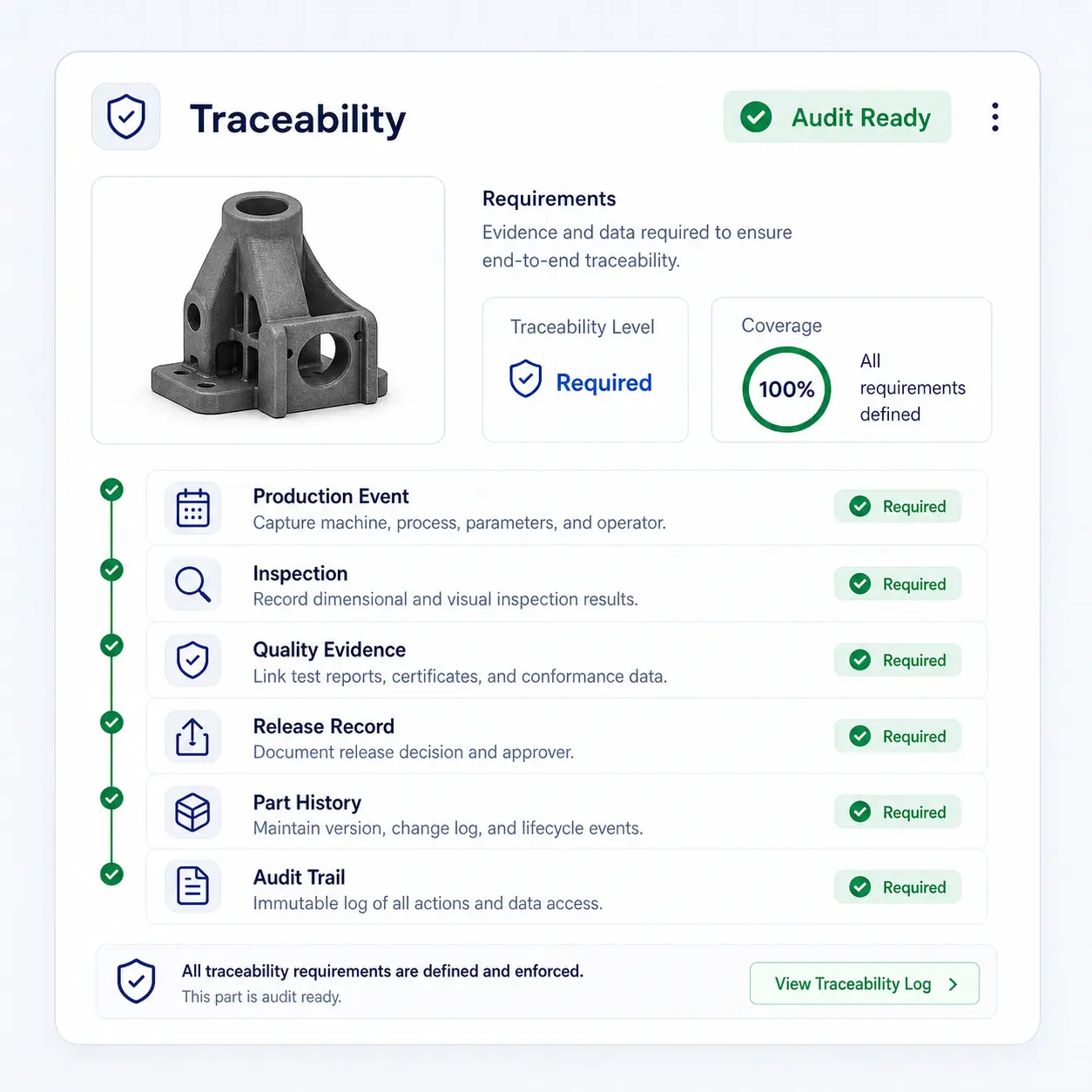
History of orders and production recorded in GhostMatter.
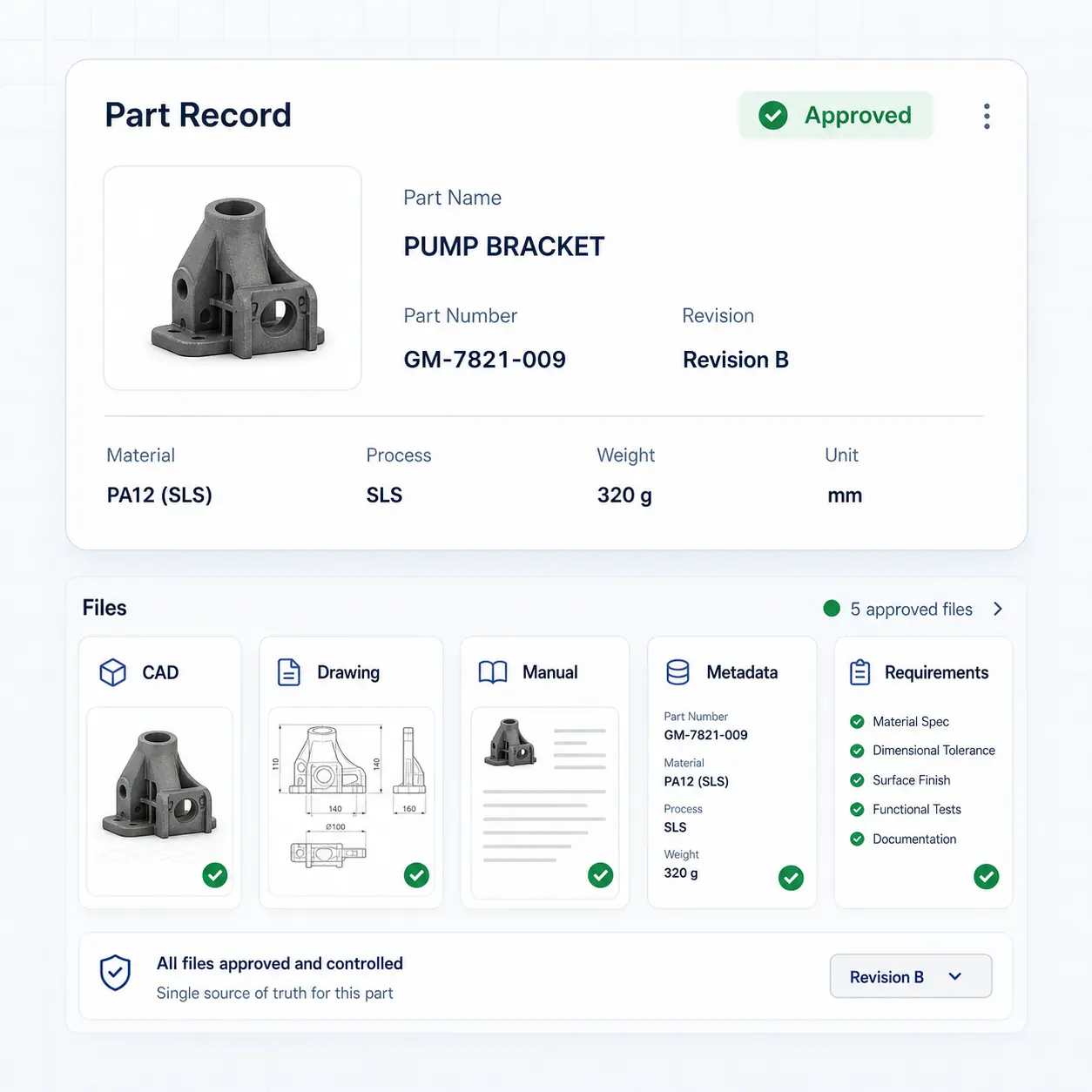
Organize records for selected parts.
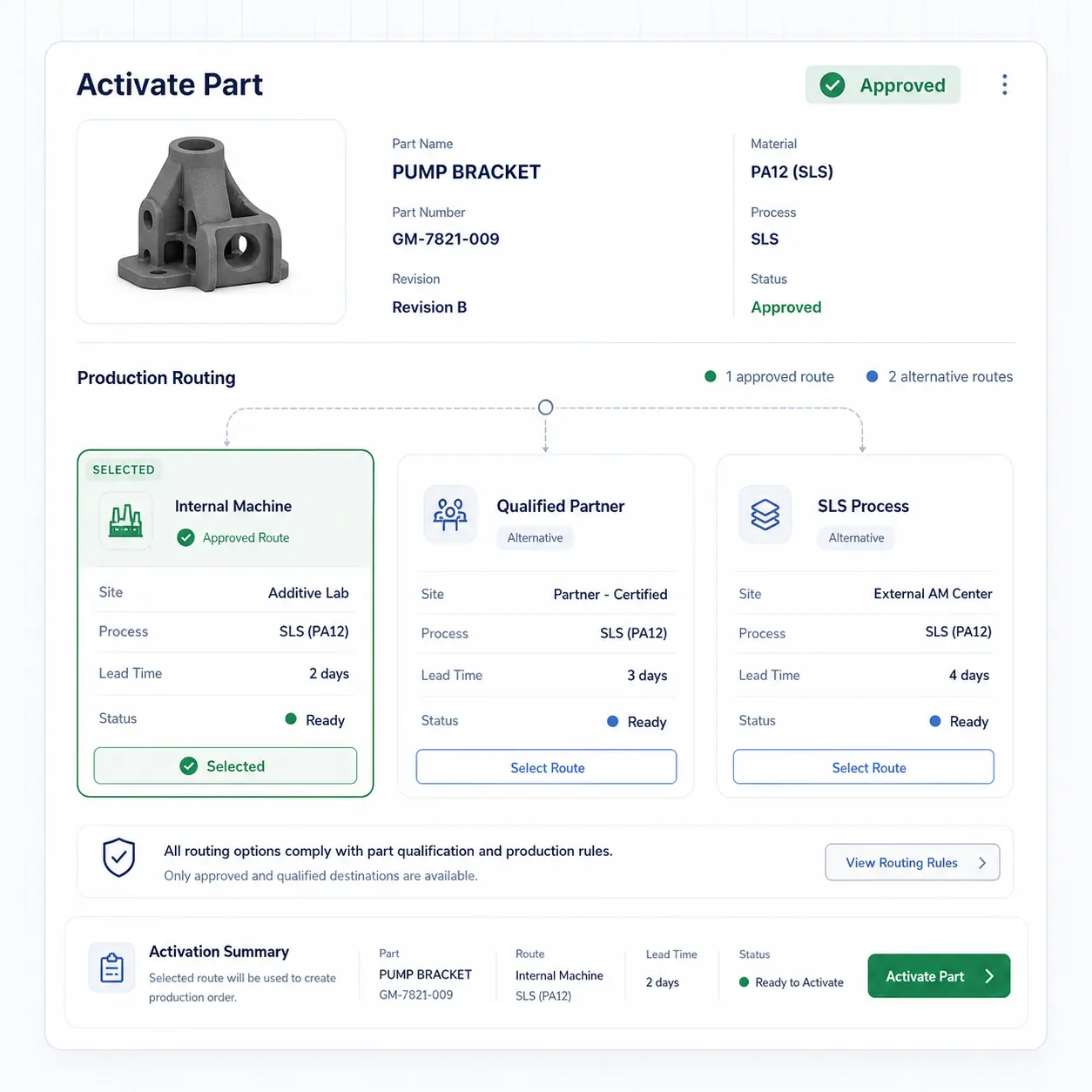
Define the conditions and approvals needed before manufacturing with your teams.
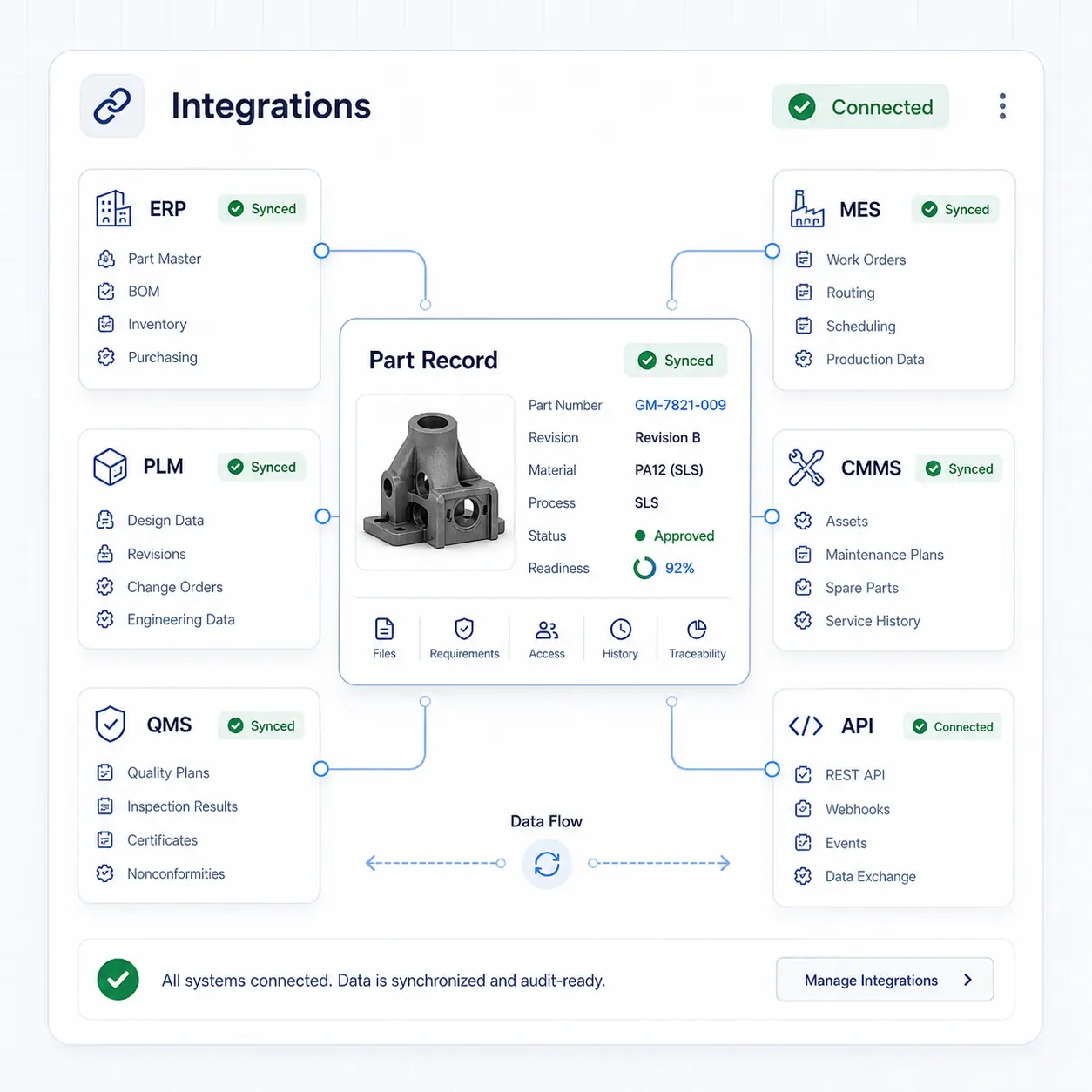
Scope ERP, MES, PLM or CMMS connections. Development, testing and validation may be needed.
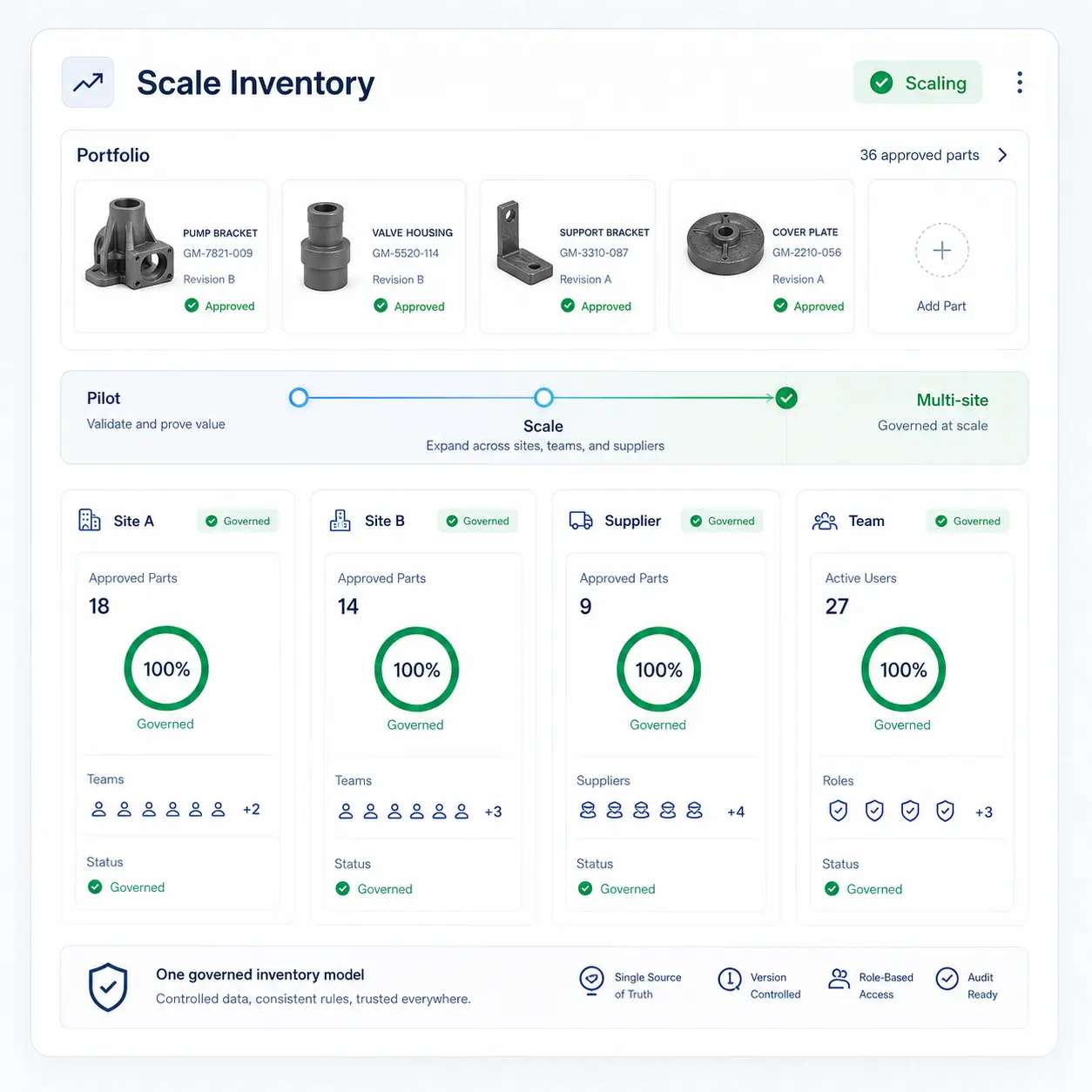
Before reusing a record for another asset or site, check application requirements and necessary adaptations.
Parts are selected according to the need, available data and manufacturing constraints. These criteria guide the industrial conversation; they do not represent an automatic software calculation.
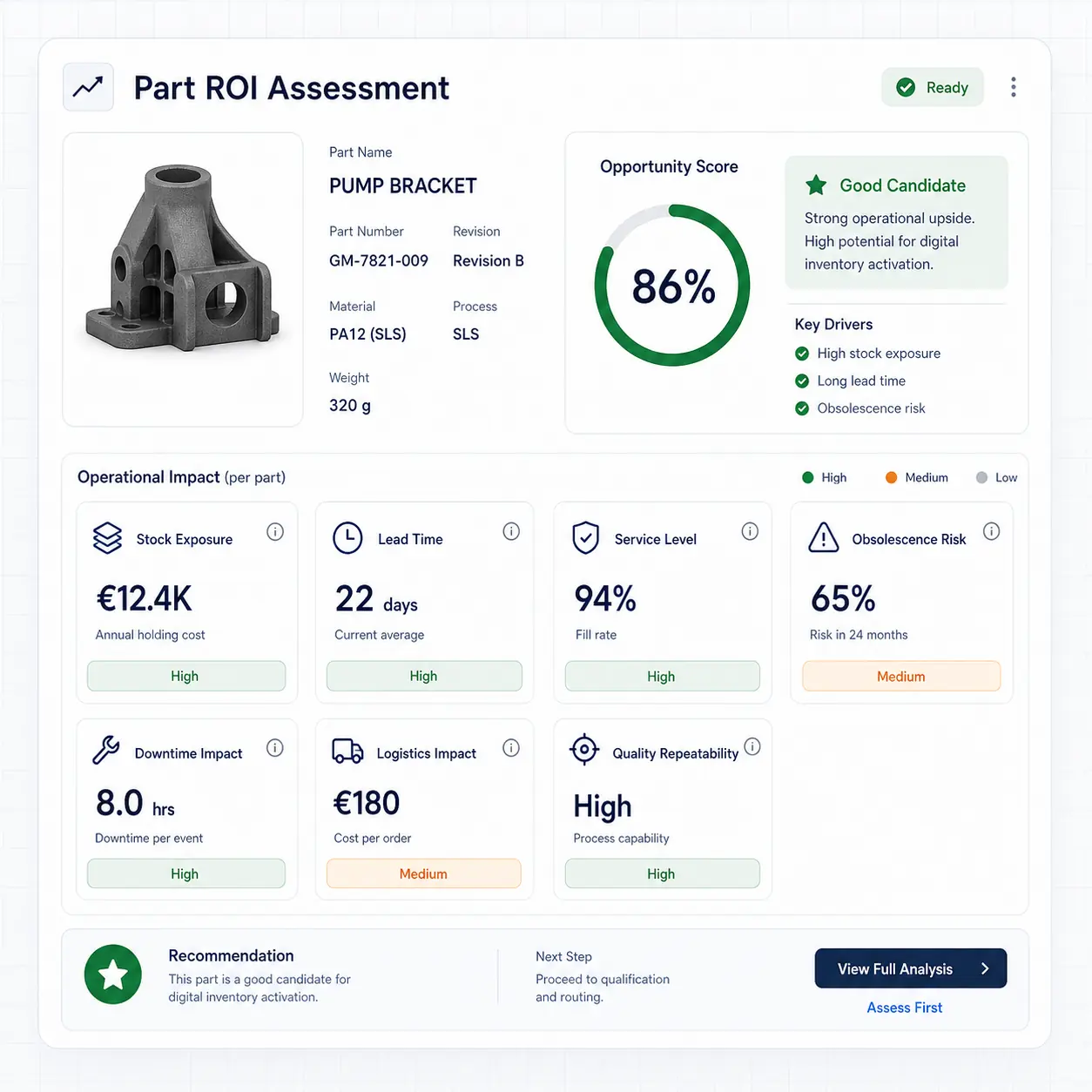
Simple administrator and user roles organize the Ghost space. Histories cover orders and production recorded in GhostMatter. Inter-space sharing and integrations require an appropriate scope.
Start with a defined scope. Complete the records, coordinate approvals and add the selected parts with the organization and support suited to your teams.
A collection of records for selected parts. Within the configured scope, they associate 3D files, validation status, documents and recorded history.
The digital twin is the reference for one part. Digital inventory brings those references together so associated information can be found.
No. It complements physical stock for selected parts and does not replace a stock quantity management tool.
Yes, when the application, material, process and quality criteria are defined and the necessary human approvals have been completed.
Integrations are scoped for your environment. They may require configuration, development, testing and validation; no universal connector is implied.