Govern the part record
Connect geometry, drawings, material assumptions, quality rules, access rights, and release decisions.

Use Case / Additive Manufacturing Industrialization
Additive manufacturing industrialization starts when promising pilots become controlled, repeatable production workflows. The challenge is not only printing parts, but governing files, materials, routes, quality rules, and release decisions.
GhostMatter helps industrial teams turn selected additive manufacturing candidates into production-ready digital records connected to approval context, routing logic, and traceability.
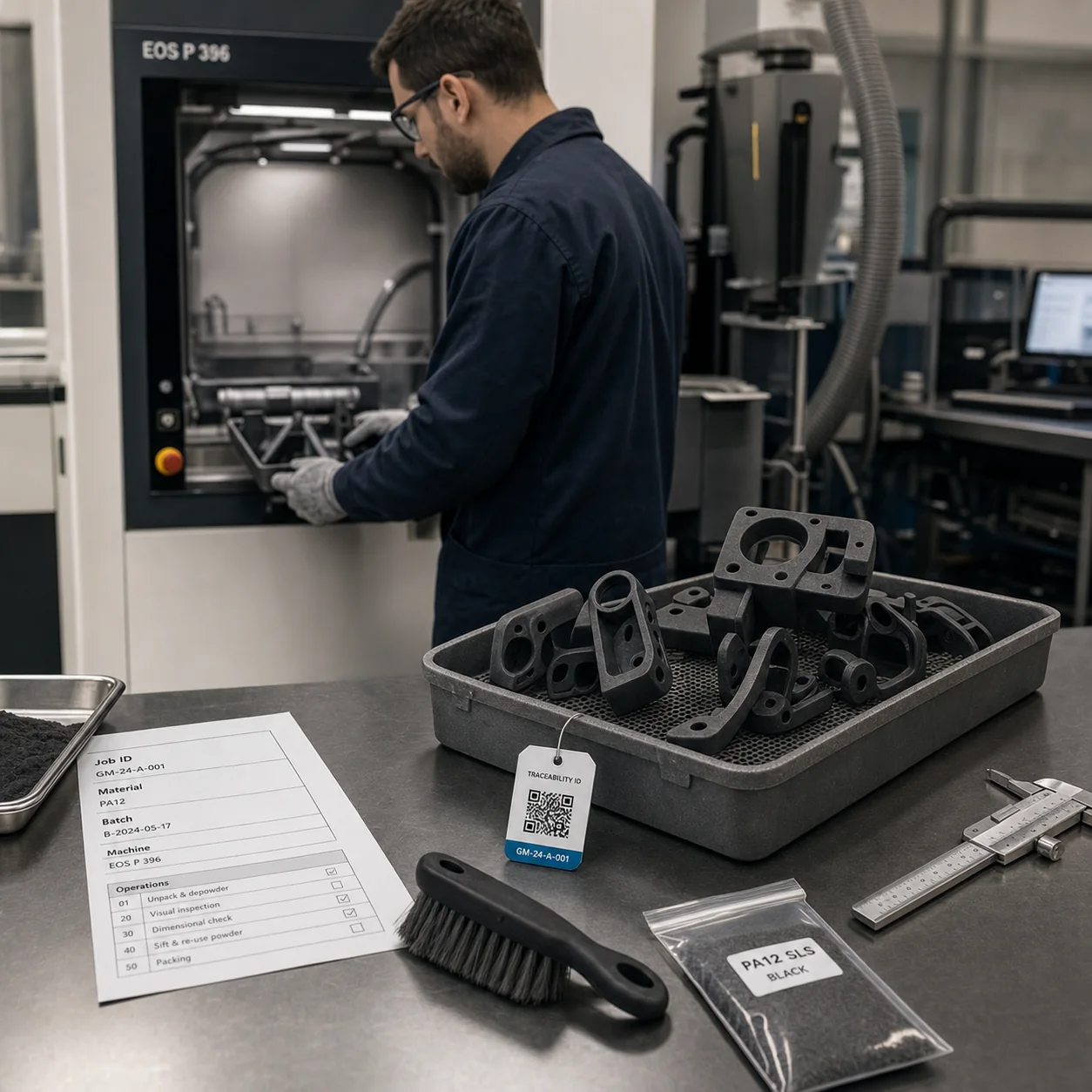
Many additive manufacturing projects prove technical feasibility but stall before production. Industrialization requires a controlled operating layer for part data, release rights, production routes, quality evidence, and traceability.
Connect geometry, drawings, material assumptions, quality rules, access rights, and release decisions.
Track whether a part is only feasible, conditionally ready, or approved for controlled production.
Keep the context needed to reproduce a production decision instead of rebuilding it from local files.
A successful prototype does not automatically become a repeatable production process. Without governed records, teams recreate decisions, lose evidence, and struggle to prove readiness for future demand.
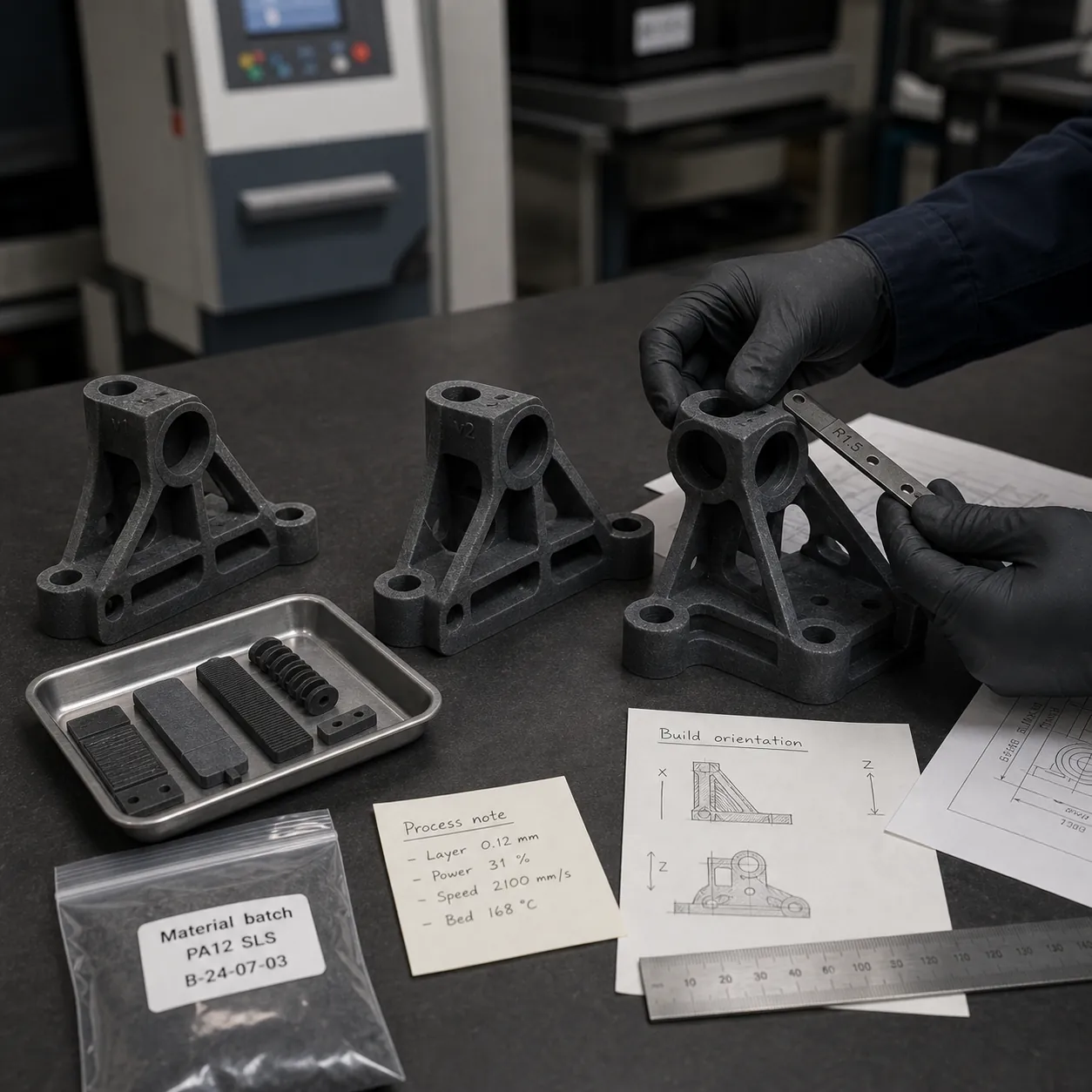
GhostMatter structures additive manufacturing candidates as controlled digital inventory records so teams can decide what is ready, how it should be produced, and who can release it.
Identify parts where additive manufacturing has technical and operational relevance.
Structure files, specifications, materials, quality requirements, and approval status.
Release production only through approved routes with traceability attached.
The value is not a one-off print. The value is keeping the technical, operational, and quality context reusable every time the part is requested again.
The workflow connects candidate selection, digital asset governance, production readiness, route approval, and traceability before demand becomes urgent.
Review pilot parts, spare parts, fixtures, low-volume references, and supplier-risk items.
Connect files, specifications, materials, quality rules, and access rights.
Confirm the part has the information required before controlled production.
Select internal capacity or qualified partners only when route conditions are clear.
Attach request, file version, route, evidence, and finished part history.
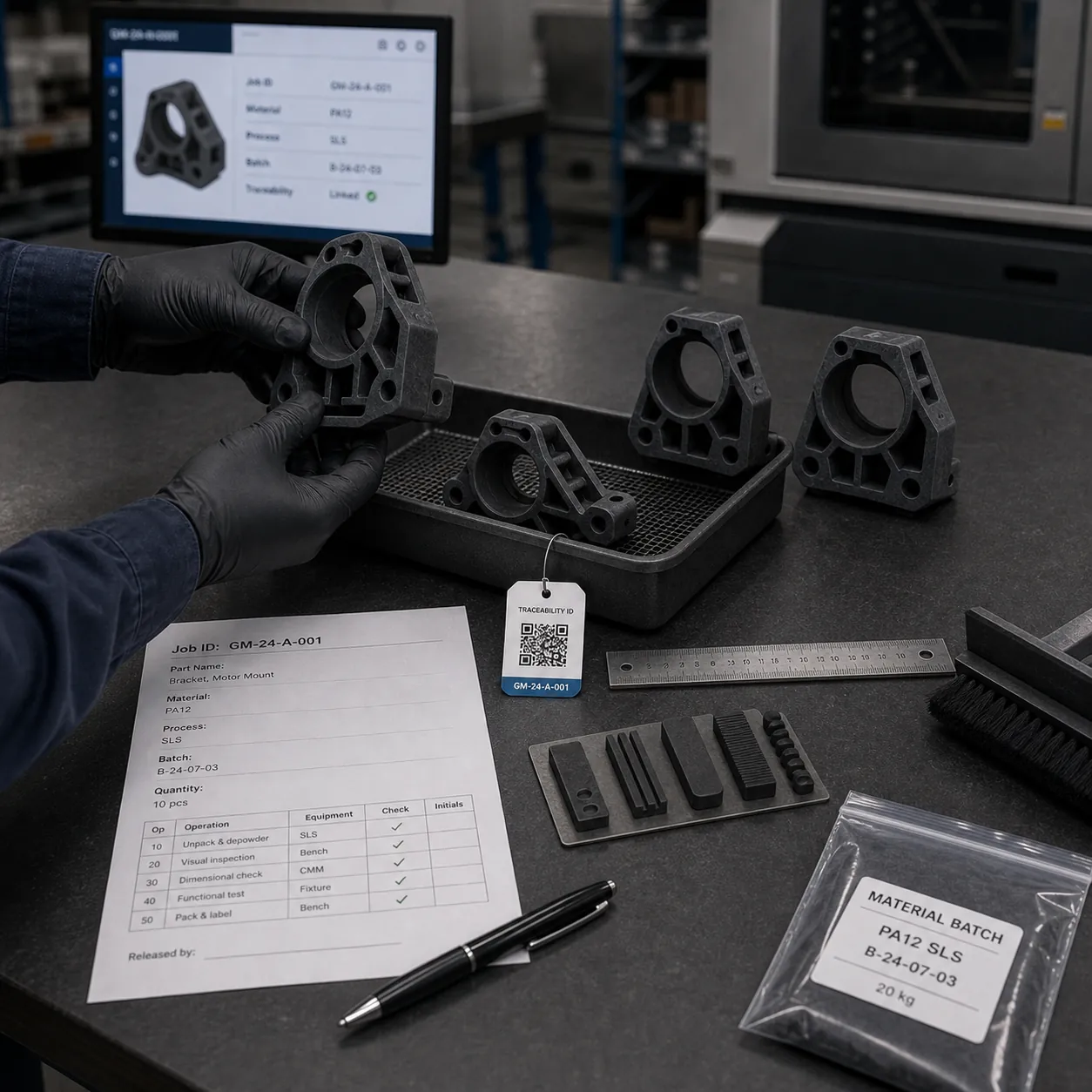
Start with parts where additive manufacturing has a realistic role and where governance matters more than experimentation.
Start with existing AM candidates, spare parts, drawings, 3D files, or maintenance references. GhostMatter helps decide which records are ready for controlled activation.
No. GhostMatter is a SaaS platform for digital inventory, readiness, routing, and traceability. Additive manufacturing can be one approved production route.
It requires governed files, material and process context, quality rules, repeatability, approval rights, and traceability.
Yes. It can govern production through internal capacity and qualified local industrial partners when routes are approved.
Because the production outcome depends on file version, material, machine, route, process context, and quality evidence.