Control the digital asset
Keep files, specifications, rights, and quality context attached to the part record.

Use Case / Distributed Manufacturing Capacity
A distributed manufacturing network only creates value when capacity is controlled. Industrial teams need to know which parts are ready, which routes are approved, and how production can be released without losing traceability.
GhostMatter connects selected part records to qualified internal sites and local industrial partners so distributed production remains governed, auditable, and usable under pressure.
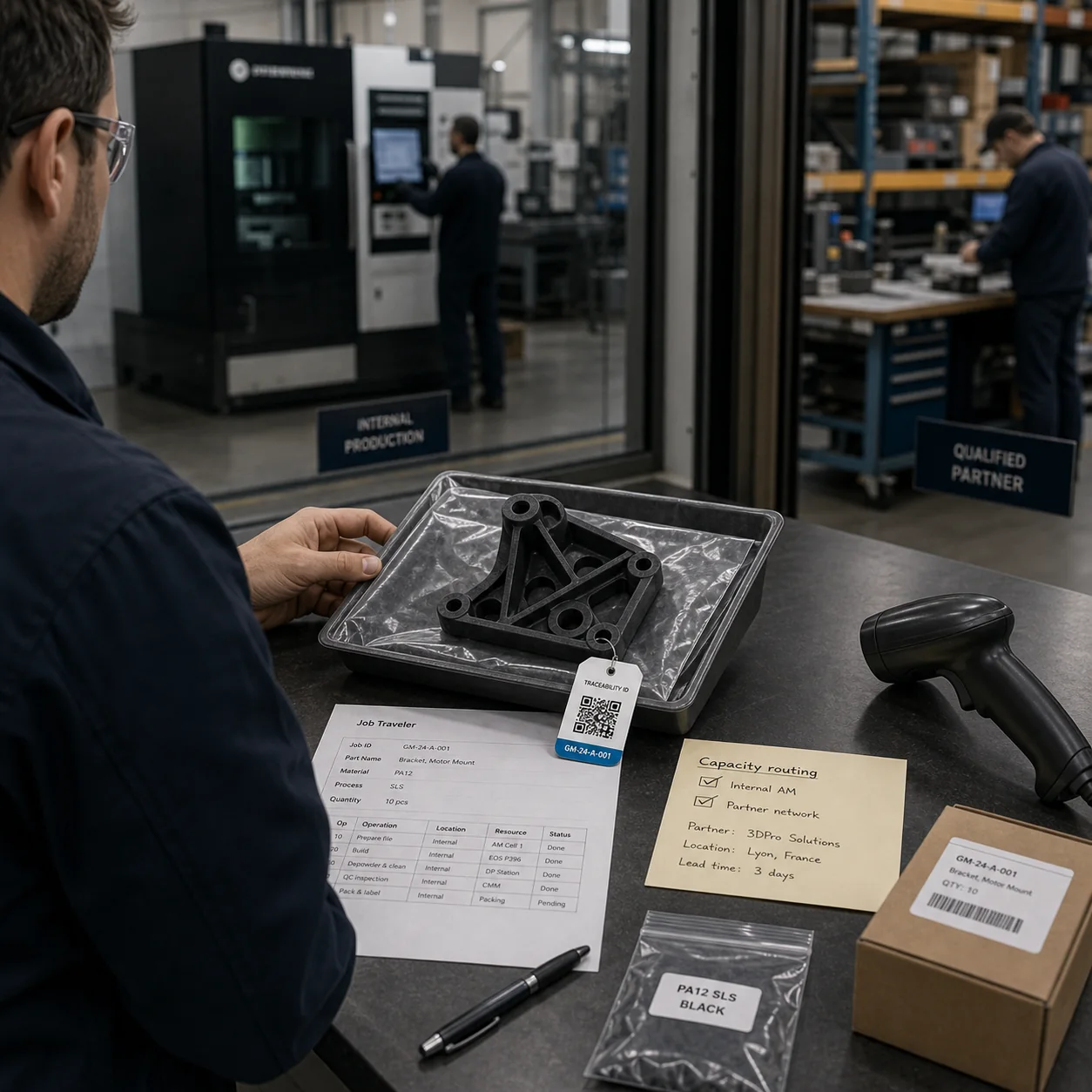
Capacity alone is not enough. Distributed manufacturing depends on governed part data, route eligibility, supplier qualification, quality rules, and release control.
Keep files, specifications, rights, and quality context attached to the part record.
Connect parts to internal sites or partners only when route conditions are explicit.
Preserve request, release, route, and finished-part history across the network.
When part data and production capacity are managed separately, teams struggle to decide what can be produced where, by whom, and under which quality conditions.
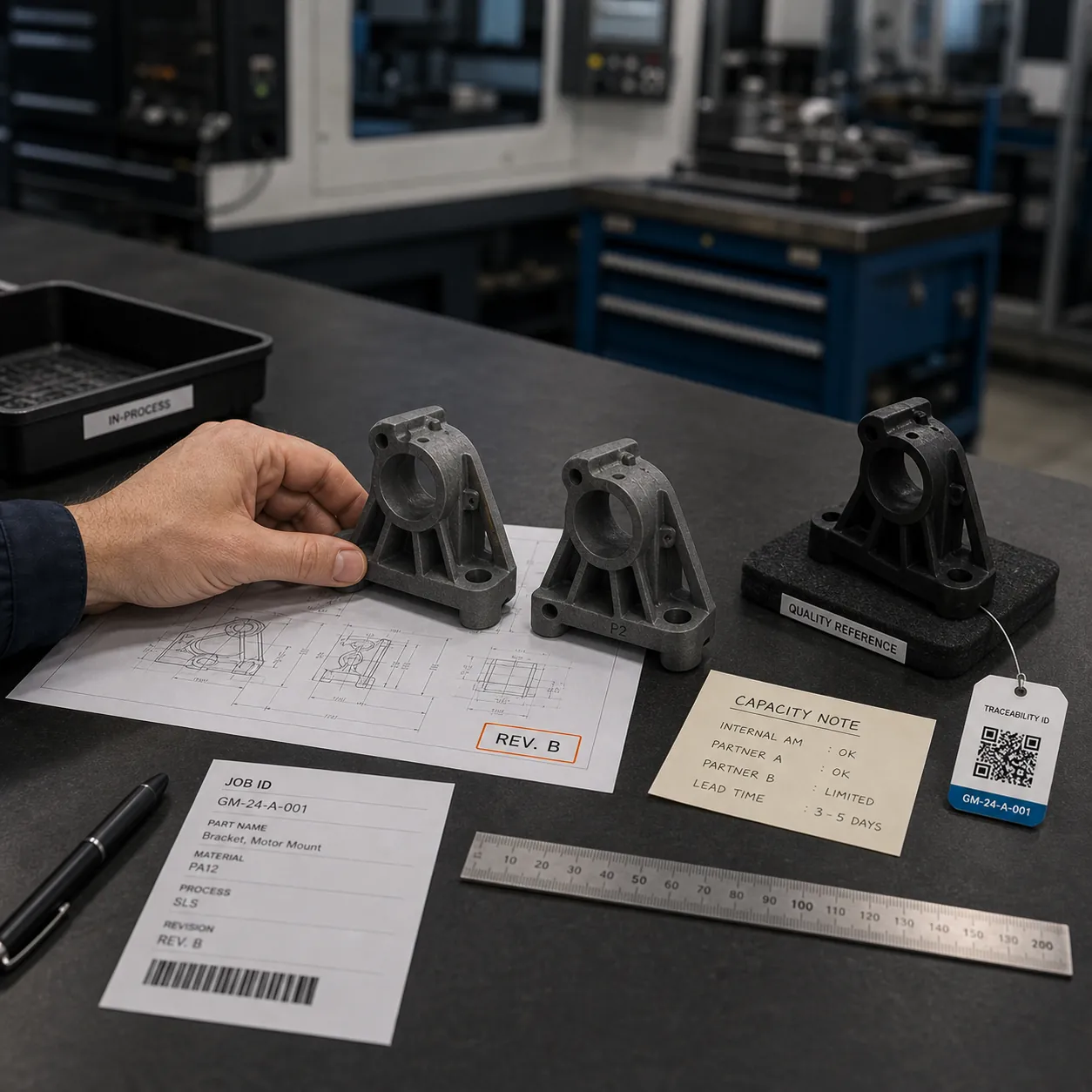
GhostMatter structures the part record first, then connects it to the right production route only when readiness, capacity, and controls are aligned.
Prepare selected part records before they need to be produced.
Associate each part with qualified internal or partner routes.
Route production with access control, quality context, and request history attached.
The goal is not to send files everywhere. The goal is to make selected parts activatable across approved capacity while preserving IP protection, quality expectations, and traceability.
The workflow turns a candidate part into a controlled record, validates production readiness, then routes demand to approved capacity.
Review urgent, low-volume, spare, or site-critical references.
Connect geometry, documentation, quality rules, rights, and route constraints.
Confirm where the part can be produced and under which conditions.
Send the request to approved internal capacity or qualified local partners.
Keep request, release, route, quality evidence, and outcome visible.
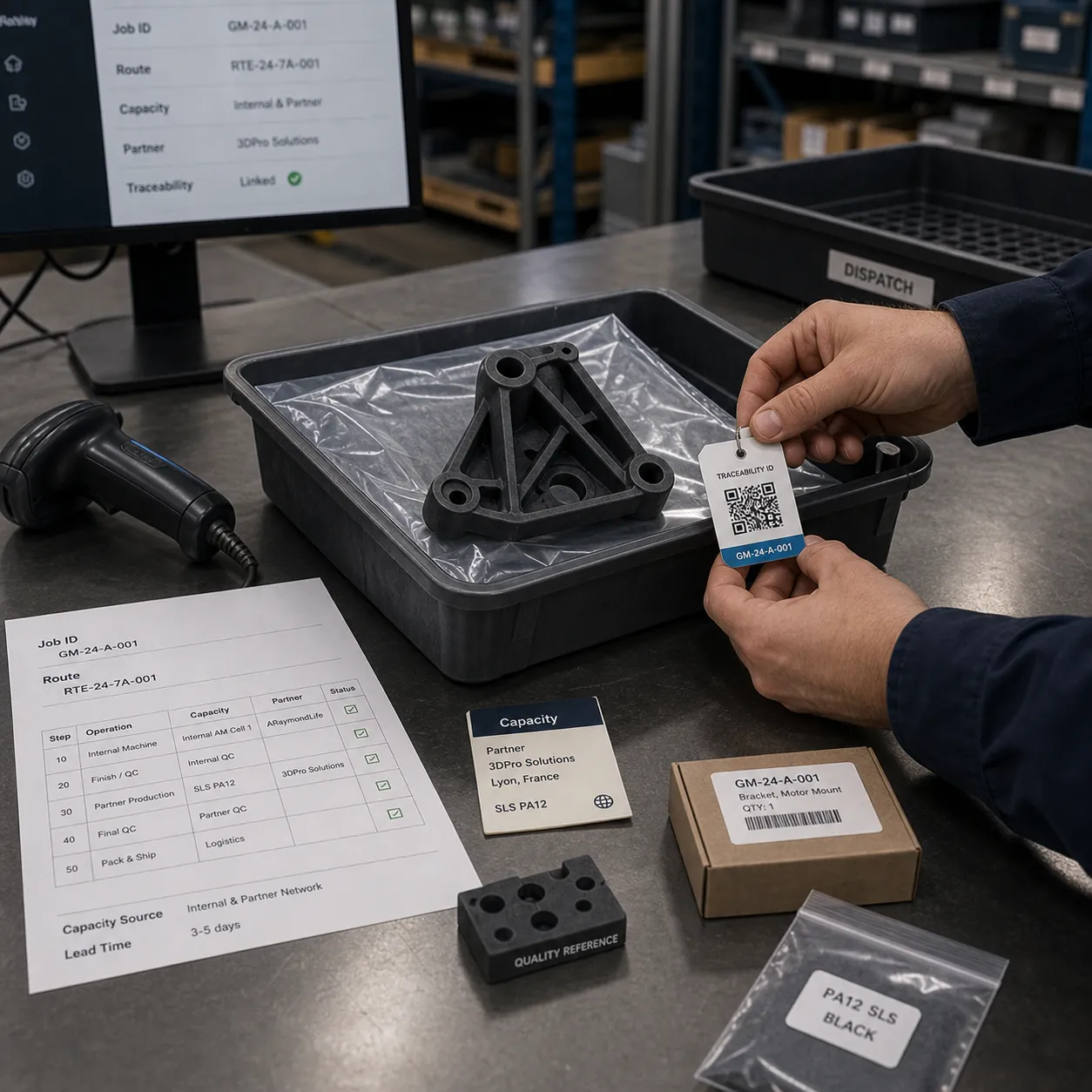
Start with parts where local production capacity can reduce delay, risk, or dependency without compromising control.
Start with parts, suppliers, sites, or local partners that matter operationally. GhostMatter helps decide which records can be activated through a governed network.
It is the ability to produce selected parts through multiple approved internal sites or qualified partners while keeping control of data, quality, and traceability.
No. It helps structure and use approved production routes; qualification decisions remain governed by the industrial team.
It can reduce dependency on a single site or supplier when parts are production-ready and routes are approved.
Yes. GhostMatter is designed around controlled access, release decisions, and traceable production context.